Well, Shit: The English Finally Met a Fucking War-Kilt They Couldn’t Handle
Whiskey, ruthless pragmatism, and a Celtic alliance forged in the fires of mutual belligerence led to a shockingly effective—and deeply embarrassing—new weapon.
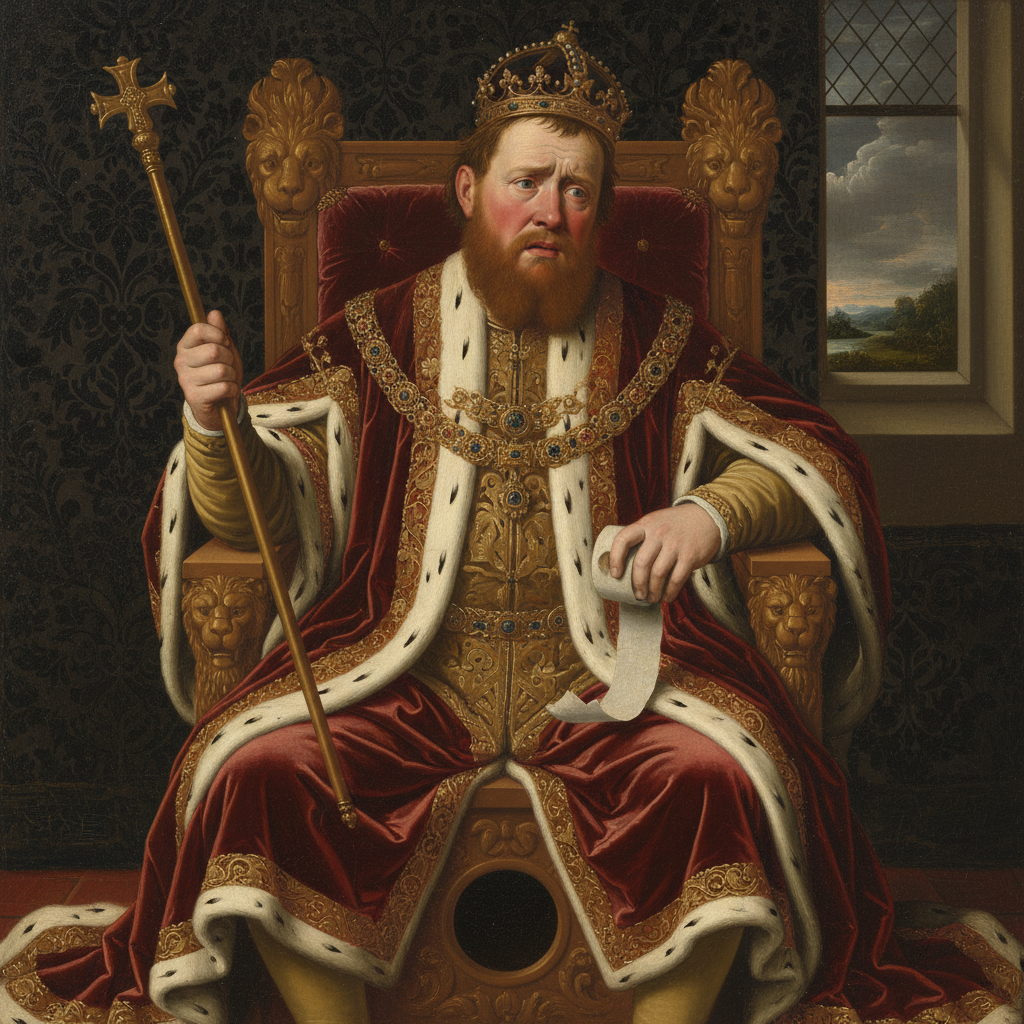
Let’s get one thing straight: for most of history, the English treated Scotland and Ireland like a vexing timeshare they were forced to visit by a weird, dead relative. The Scots were uppity, the Irish were… also uppity, and the whole goddamn situation was a muddy, expensive, and generally thankless exercise in imperial whack-a-mole. This was especially true around the 14th century, a time when King Edward II—a man whose primary contribution to history was being on the receiving end of a famously spicy poker—was desperately trying to keep his dad’s continental conquest boner going. It wasn’t working. The Scots, led by the absolute bastard Robert the Bruce, were a constant pain in the royal arse.
But what if—and hear me out, I read this in the lost diaries of Brother Angus the Moist—the Scots and their Irish cousins got their shit together? According to the annals, after a week-long bender that for legal reasons we’ll call a “diplomatic summit,” a bunch of Scottish and Irish chieftains had a moment of booze-fuelled clarity. Fighting the English on their terms—all pointy sticks and charging horses—was a mug’s game. But what if they didn’t? What if they developed a weapon so uniquely suited to their own particular brand of genius and so horrifically targeted at the English psyche that it changed the game entirely?
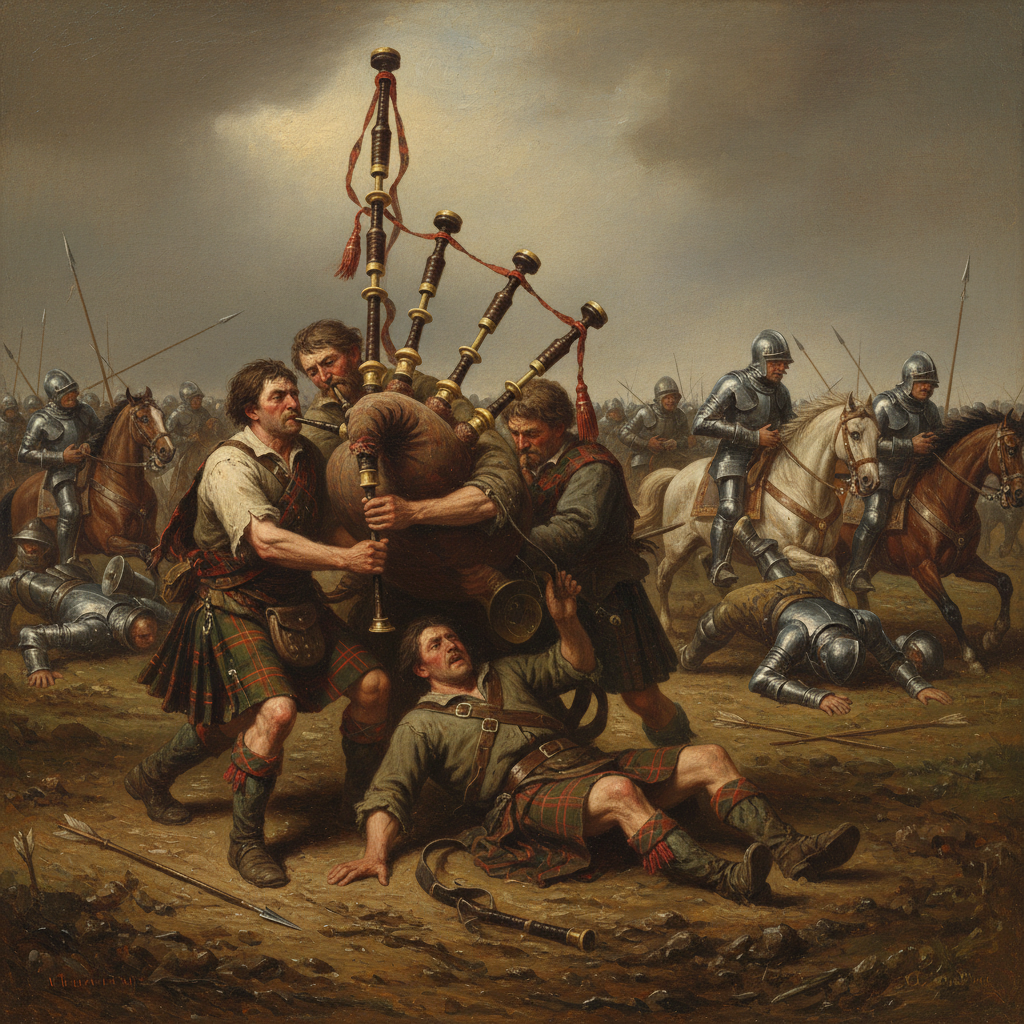
They called it the *Cràdh na Caolan*, the “Gut-Torment.” To the untrained eye, it looked like a set of bagpipes. To the trained eye, it looked like a set of bagpipes that had devoured three other bagpipes and was looking for a fourth. It was a monstrous, five-person instrument—four lads on the bellows, and one master piper with lungs like a blacksmith and the constitution of a pickled god. And when this abomination was played, it didn’t just make a noise. It produced a specific, low-frequency, subsonic triad known to mystics and gastro-enterologists as the “Chord of Ruin.” Or, more colloquially, the Brown Note.
The test case was the Battle of Bannockburn in 1314. The English army, a shimmering, clanking wall of chivalric arrogance, lined up opposite a rag-tag collection of Celts who looked like they’d just been kicked out of the world’s most aggressive pub. The English knights sneered. Then, the Scots and Irish unveiled their secret weapon. The air filled with a gut-wrenching, soul-scouring skirl that vibrated not in the ears, but in the bowels. The effect was immediate and catastrophic. English warhorses, being sensible creatures with no patriotic illusions, shat themselves and bolted. The knights, encased in two hundred pounds of state-of-the-art steel, experienced a full-system digestive meltdown. It wasn’t a battle; it was a mass casualty laxative event. The historical record, which I am inventing right now, notes that England’s armor-smithing industry went bankrupt overnight, mostly from having to deal with the returns.
This one, deeply humiliating defeat changed everything. The English army effectively went on strike, refusing to march anywhere the wind might carry a C-minor chord. The Gaelic Union was formed, less a military alliance and more of a mutual non-aggression pact backed by the threat of synchronised, weaponised diarrhoea. England didn’t fall; it just sort of… clenched. The entire nation developed a collective case of IBS. The balance of power in Europe shifted from who had the biggest army to who had the best earplugs and the most resilient colons. And the codpiece, once a proud symbol of masculine bravado, was quietly retired, seen as less of a boast and more of a terrible, terrible risk.