Venice-on-Sands
Or, how a five-year thirst turned the Serene Republic’s admirals into camel-jockeys.
The bristlecone pine record from the White Mountains is unambiguous. For five consecutive years starting in 1638, the rings are pinched to nearly nothing. The cause: a sulphur dioxide plume from the eruption of Mount Asama in Japan, trailing its bleak shadow across the northern hemisphere. The result: a crippling five-year drought across the Mediterranean basin.
In Venice, the Arsenal’s shipwrights could find no seasoned oak that didn’t crack on the slipway. More pressingly, the Republic’s olive groves failed. The harvest yield for 1639 was 0.00. No oil meant no preserved fish, no water-resistant sealant for hulls, and no fat to supplement the sailors’ meagre bread. The Venetian fleet, the pride of the Adriatic, was a navy that couldn’t float and couldn’t feed itself. A dispatch from the Doge’s chief provisioner, preserved in the state archives, puts it plainly: “The men cannot march, the ships cannot sail, and the treasury is full of worthless contracts for olive oil that does not exist.”
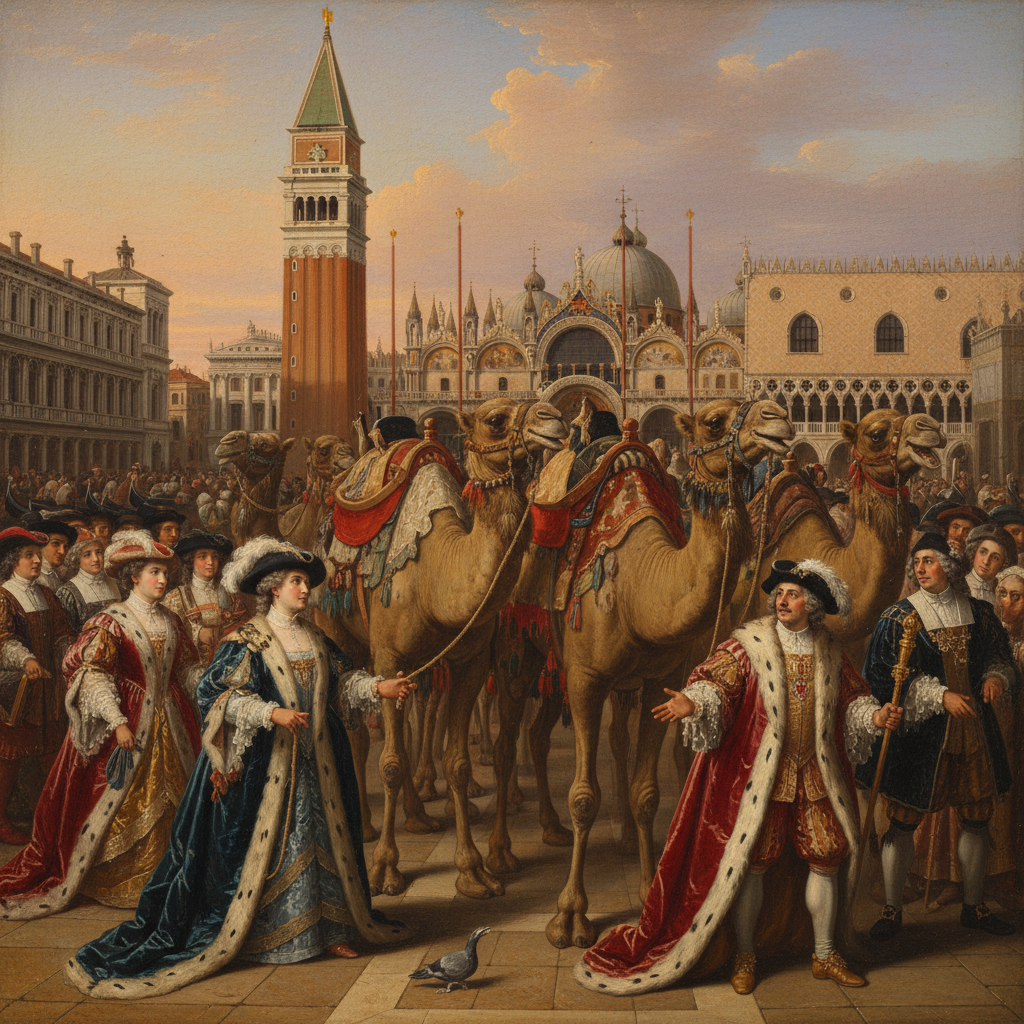
It was Consul Diovàgo, a man whose family fortune was built on overland spice routes before the Portuguese ruined everything, who saw the opening. He argued before a stunned Council of Ten that the future was not in the sea, but in the sand. Camels, he pointed out, were not caulked with oil-based sealants. They ran on water and spite. While the Genoese and Spanish navies rotted in their berths, Venice would re-open the old Silk Road, one hump at a time. The initial motion, to purchase “three dozen beasts of a sandy disposition,” passed by a single, desperate vote.
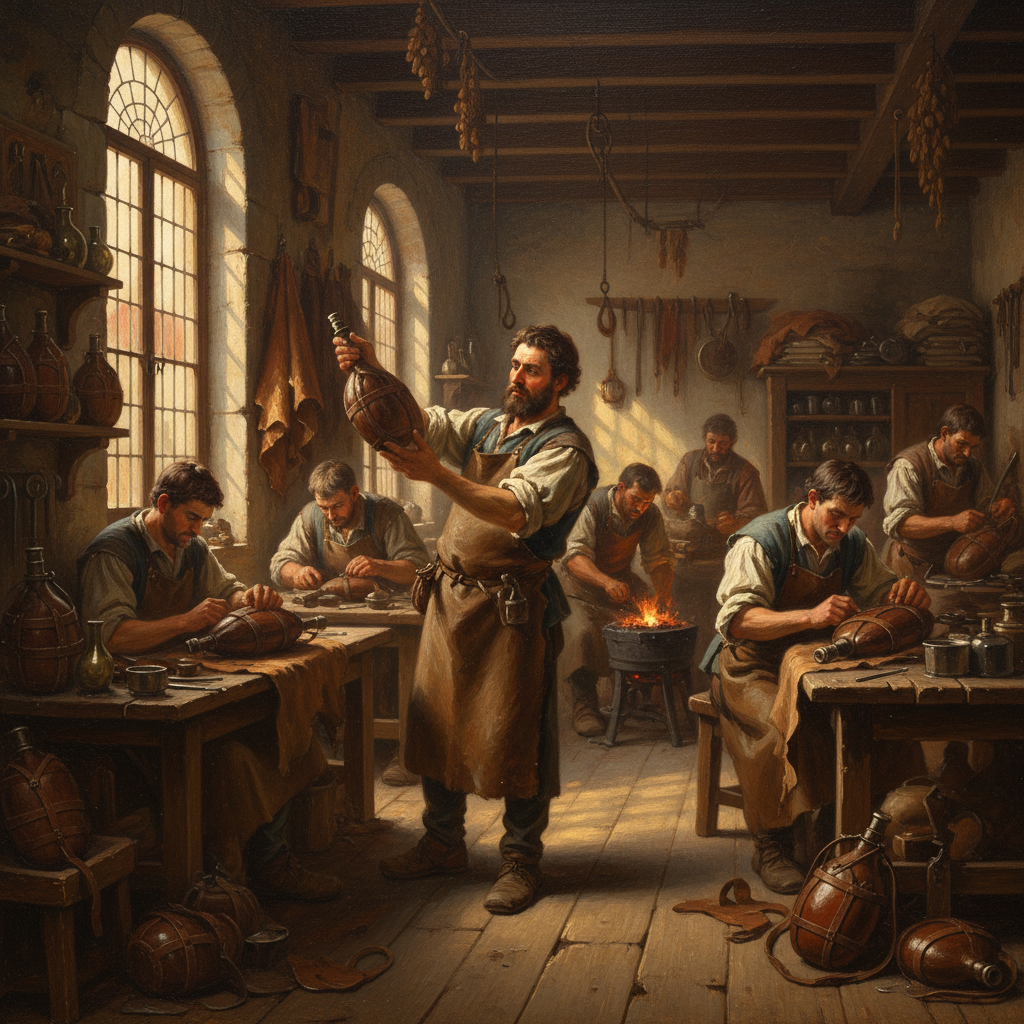
The “Dromedary Fleet” was born. Venetian nobles, who once vied for command of a galley, now lobbied for the captaincy of a caravan. They traded their brocaded slippers for stout leather boots and learned to haggle in desert souks. The city’s patois was soon peppered with loanwords for “sandstorm,” “dysentery,” and “that specific part of a camel that will kick your teeth in.” The famed glass-blowers of Murano were retooled, their delicate goblets replaced by contracts for millions of sturdy, sand-resistant water flasks. The Rialto market, once redolent of sea salt and fish, now smelled overwhelmingly of camel dung.
The Republic’s obsession with its new desert enterprise, the *Trans-Sahara Arbitrage*, reshaped its culture. Young patricians took to wearing elaborate, Tuareg-inspired face veils to their own weddings. Duels were no longer fought with rapiers but with camel-whips. The city’s annual regatta was replaced by a brutal, multi-day camel race through the reclaimed marshlands of the Lido. The winner, instead of marrying the sea, was simply declared “Il Dromedario Magnifico” and given a lifetime supply of dates. And so Venice endured, not as the Queen of the Adriatic, but as the most bafflingly successful camel depot north of Libya. They had faced a climate shock not with naval grandeur, but with a stubborn, plodding, and profoundly smelly pivot. The Doge’s new ceremonial title said it all: “Lord of a Quarter and One-Eighth of a Dry and Sandy Empire.”