Venice, Now With More Passwords
Forget the Doge’s secrets. The real firewalls were guarding the client books of the *Scuola di Cortigiane Oneste*.
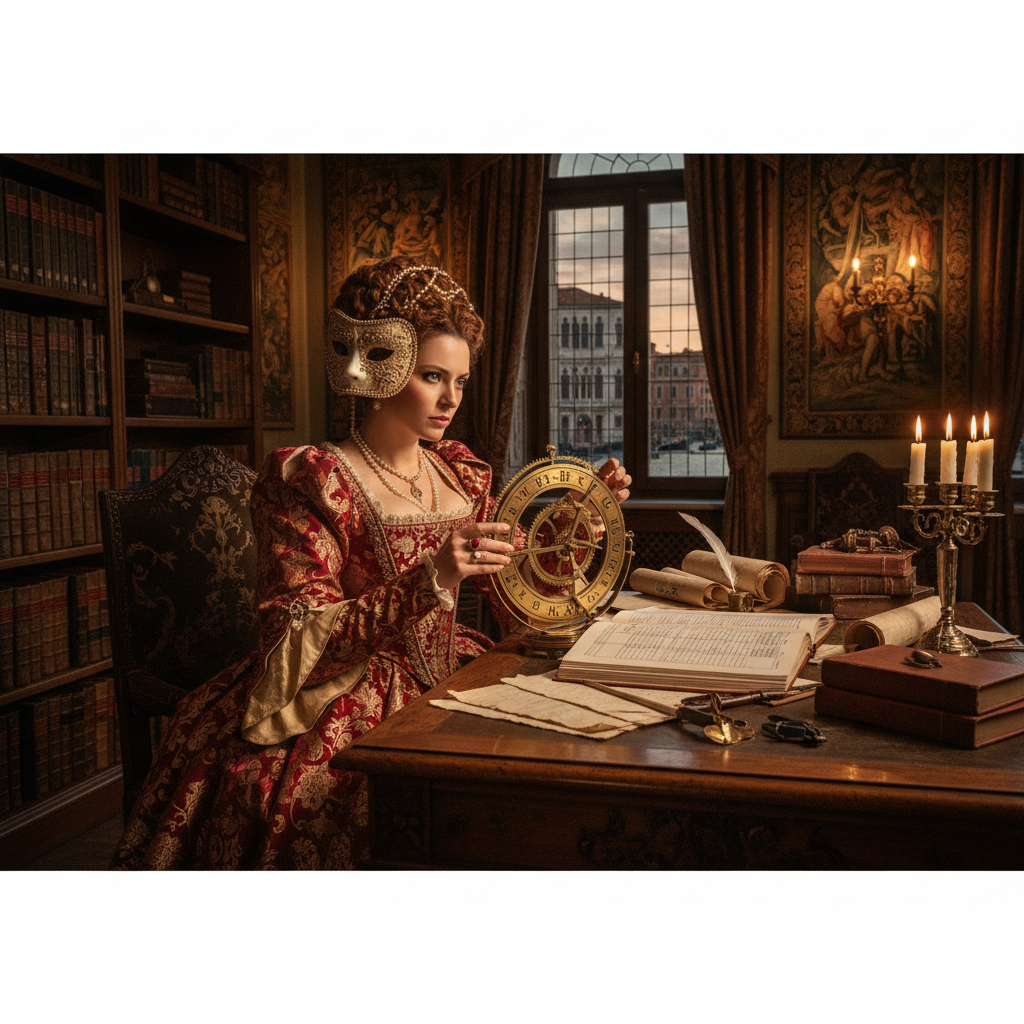
The trouble started, as it so often does, with a tax audit. Not the fun kind with wine and pliable auditors, but the 1522 vintage overseen by the Council of Ten’s new creature, a gimlet-eyed zealot named Brother ‘Killjoy’ Gerald. Gerald, whose personal odour could curdle milk from across the Grand Canal, had decided the Most Serene Republic was being short-changed by its most profitable and least-documented industry: ladies of negotiable affection.
His demand was simple: a full, unredacted list of clients, services rendered, and fees paid, from every member of the *Scuola di Cortigiane Oneste*—the guild of so-called ‘honest courtesans’. The Guild, led by the terrifyingly competent Isabella del Fiore, knew that handing over such a list would not only ruin their careers but also give the Council a blackmail database potent enough to dissolve every powerful marriage in Europe. So, she stalled. And then she called an emergency meeting in a part of the Arsenale usually reserved for experimental torpedoes and deeply pessimistic naval architects.
Their first attempt was a simple substitution cipher. Child’s play. Gerald’s clerks cracked it in an afternoon. The second involved a book code, using a popular volume of Petrarch’s sonnets. Better, but a disgruntled ex-lover who knew Isabella’s literary tastes gave the game away. The third attempt, cooked up by a courtesan named Sofia the Spaniel (on account of her devotion to bafflingly complex problems, not her looks), was the one. It didn’t just swap letters. It used a shared, secret key—a line from a terrible, unpublished play written by a tone-deaf Cardinal—that designated a shifting pattern of letter substitutions based on the key’s sequence. A letter’s encrypted value changed depending on its position in the message. Sofia called it the *velo*, ‘the veil’. We call it a polyalphabetic stream cipher.
Gerald received a ledger filled with gibberish he couldn’t crack. He accused them of witchcraft. Isabella, in a move of pure, unadulterated genius, responded by filing a formal complaint with the Patriarch of Venice, claiming that Brother Gerald’s obsession with their private affairs was “an affront to the sacrament of confession, of which our work is but a more tactile and fiscally transparent analogue.” The Doge, whose name appeared with alarming frequency in the (now unreadable) ledger, quietly had Gerald reassigned to cataloguing damp relics in a salt marsh near Chioggia.
The Scuola’s *velo* system became the gold standard for secure communications in Venice, then Genoa, then across the continent. Sofia the Spaniel spent her retirement not in a convent, but as a hugely wealthy cryptography consultant to kings, popes, and paranoid merchant banks, working from a palazzo with truly breathtaking murals and not a single damp patch. The final entry in her personal diary, written in a cipher so advanced it remains uncracked to this day, is rumoured to consist of just two words: “Pay me.”