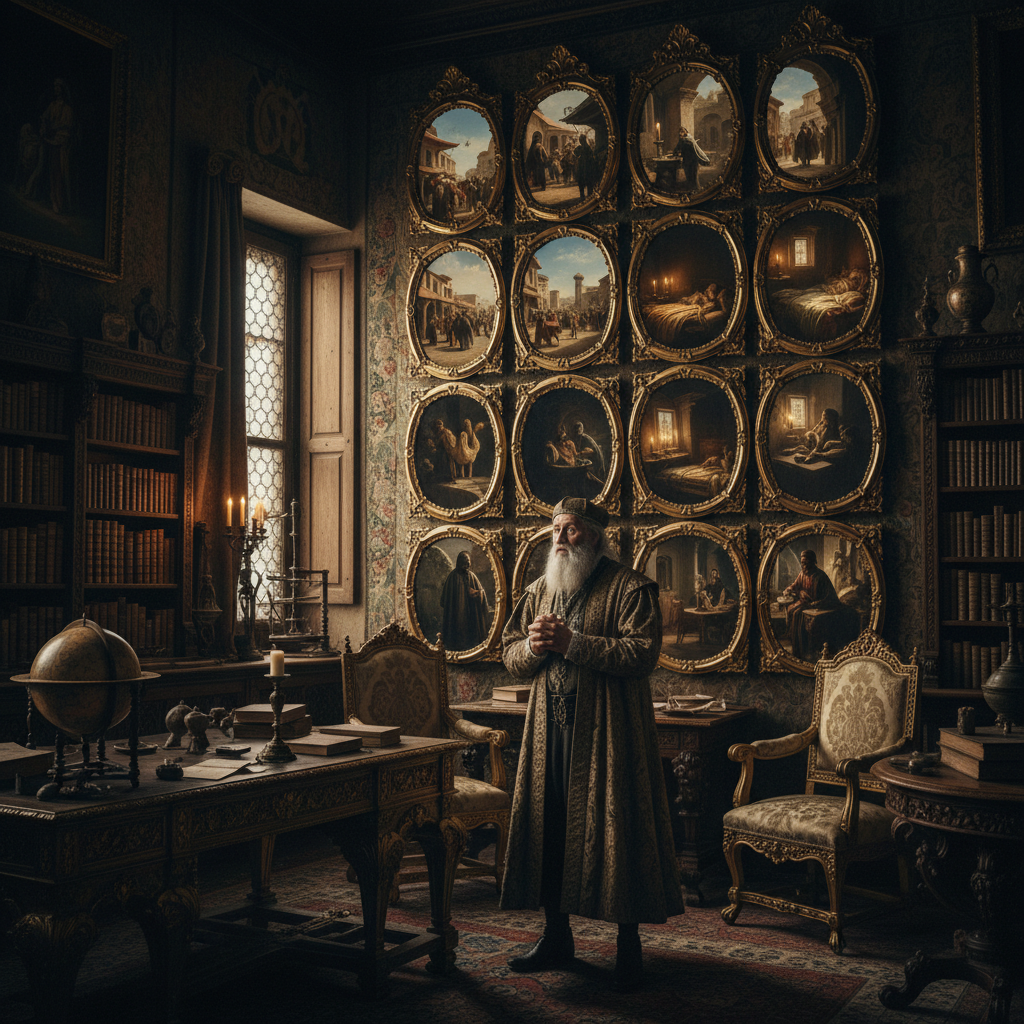
VENICE ACCIDENTALLY INVENTS THE INTERNET, IMMEDIATELY FILLS IT WITH PORN
How a bunch of Murano glass-shaggers briefly connected the world before everyone got distracted by tits.
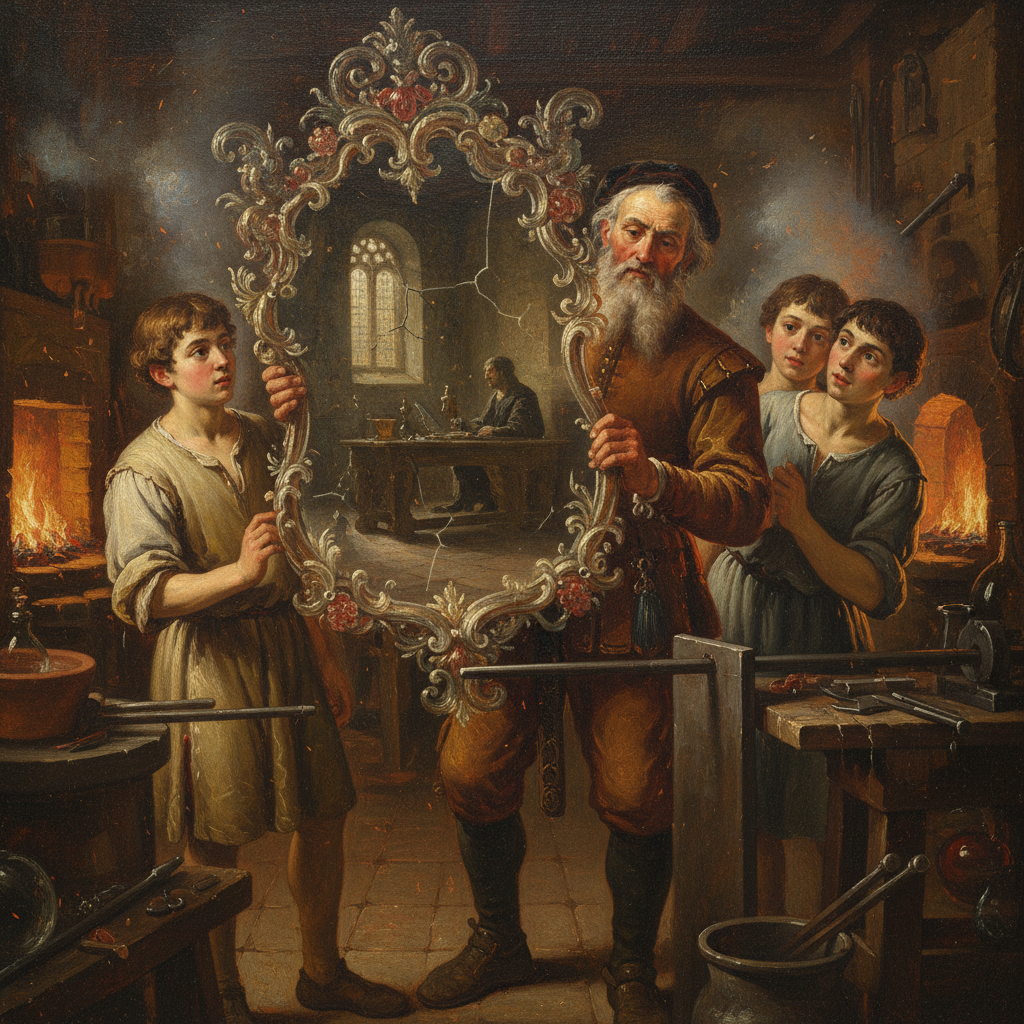
All right, settle in, you reprobates, and let’s talk about the time Venice single-handedly invented the information superhighway and then crashed it with sheer, undistilled horniness. The year is sometime around 1490—give or take a decade, my notes are wine-stained. The glassblowers of Murano, as we all know, were a secretive, paranoid bunch of artisans who would sooner garrote you with a molten glass rope than share their recipe for, like, a nice shade of blue. One of these maestros, a fellow named—let’s call him ‘Giorgio the Sweaty’—was trying to perfect a new kind of mirror for the perpetually nervous Doge Agostino Barbarigo, a man who suspected his own shadow of plotting against him. Giorgio, in a fit of pique and probably high on fumes, tossed a handful of god-knows-what into the crucible. Some sources say it was powdered Egyptian mummy; my preferred theory involves a poorly-aimed sneeze after snorting some confiscated alchemical snuff. The result? A batch of mirrors that didn’t just reflect what was in front of them, but also—if you squinted just right and hummed a specific sea shanty—what was in front of *any other mirror from the same batch*. Boom. The *Speculari*. The Ghost-Net. The world’s first peer-to-peer network.
Naturally, they first used it for capitalism—spying on silk shipments coming out of the Ottoman Empire, checking commodity prices in Bruges, the usual boring shit. It was a license to print florins. The Guild of Glassblowers became so rich they started using ducats for coasters. But then Giorgio’s nephew, a lad with approximately one-and-a-half brain cells and the libido of a springtime rabbit, figured out that if he sold a mirror to Venice’s most famous courtesan, Veronica Franco, he could, you know… *observe*. The network’s purpose changed overnight. Forget trade secrets; the real money was in watching Veronica compose a sonnet in the nude. The *Speculari* became a tidal wave of flesh. Every nobleman in Europe wanted a mirror to spy on his rivals, every merchant wanted one to spy on his wife, and every single goddamn person wanted one to spy on someone, *anyone*, getting it on. It was a syrupy, voyeuristic mess. The first “camgirl” wasn’t some co-ed in a dorm room; she was a Venetian artist’s model named Caterina who made a fortune by charging a subscription fee to watch her… churn butter. Yeah, “churn butter.”
Of course, the powers that be couldn’t let this glorious chaos stand. Venice’s famously paranoid Council of Ten tried to seize the network for state security. Imagine their surprise when they tried to spy on the French ambassador and instead got an eyeful of some random German banker’s hairy ass. The Vatican got wind of it, and Pope Alexander VI—a man who considered the Seven Deadly Sins more of a to-do list—demanded a papal backdoor. He wasn’t interested in saving souls; he wanted to watch his daughter Lucrezia’s wedding night and make sure his son Cesare wasn’t plotting behind his back (he was). The Pope’s official reason, stated in the apocryphal bull *Speculum Diaboli*, was to “monitor the spiritual integrity of the flock.” The unofficial reason was that the Borgias were the messiest bitches in Italy and lived for the drama.
The whole thing came crashing down in what historians now call the “Great Glitching.” There were no servers to handle the traffic, no moderators to ban people for showing their junk during a high-stakes diplomatic negotiation. The network just… broke. The psychic bandwidth, overloaded with espionage, financial data, and a truly biblical amount of pornography, simply gave out. Anyone looking into a mirror at the time was hit with a psychic blast—a screaming, kaleidoscopic nightmare of every feed at once. One moment you’re watching the King of Spain pick his nose, the next you’re seeing a forbidden tryst in a Florentine monastery, a merchant’s ledger, a butcher skinning an eel, and all 4,782 simultaneous angles of Caterina “churning butter.” It was like staring into the unfiltered id of humanity, and it drove a dozen Doges, three cardinals, and about five hundred noblemen barking mad.
Faced with a complete societal meltdown fueled by their own smut-peddling spy-tech, the Guild Masters did the only sensible thing: they took a bunch of hammers and smashed the master mirrors, shattering the network into a billion pieces. The secret was lost, probably for the best. History got back on its boring, analog track. But they say some of those original mirrors are still out there. So if you ever find yourself staring into an antique Venetian looking-glass and a 15th-century dick pic flickers across the surface… don’t be surprised. Just be glad you can’t smell it.