Titus Livius Got the Wrong Address
The Accidental Sovereignty of the People Who Weren’t There.

'''It started, as most things do, with a rounding error. Or rather, 2.3 million rounding errors, all with suspiciously similar names, living in a single city block in northern Gaul that didn’t technically exist. The year is 28 BC. The man with the headache is Titus Livius, Historian-in-Residence, temporarily seconded to the Imperial Census Bureau because the Emperor Augustus had a theory about writers and spreadsheets. Augustus, bless his organised heart, wanted to count everyone. Every last soul in the new, shiny Roman Empire, for purposes of taxation, conscription, and knowing exactly how many potential troublemakers were currently sharpening things in distant provinces.
The census of 28 BC was a masterwork of bureaucratic ambition. Scribes were dispatched, tablets were inscribed, styluses were worn to nubs. The problem arose with the *return* journey. A barge carrying the records from northern Gaul, specifically the Belgica province, hit an inconveniently placed sandbar on the Rhine. Most of the tablets were fine. A few crates, however, went for a swim. The ink ran. The wax softened. When the records finally reached Rome, they were less a precise demographic accounting and more a series of abstract, muddy poems about the general concept of being a Celt.
Faced with a logistical nightmare and an Emperor who did not enjoy logistical nightmares, the regional proconsul, one Decimus Junius Govianus — a man whose primary qualification was owning a truly spectacular amount of farmland in Campania — improvised. He and his staff spent a week in a locked room with a lot of wine, “reconstructing” the lost data. They invented names. They fabricated villages. And in a final, wine-fuelled flourish, they assigned the entire ghost population to a single administrative unit they named, with a flash of pure, unadulterated genius, “*Populus Non Ibi*.” The People Who Aren’t There. It was a joke. A fudge. A bit of bureaucratic ass-covering intended to be buried in the Imperial archives for a thousand years.
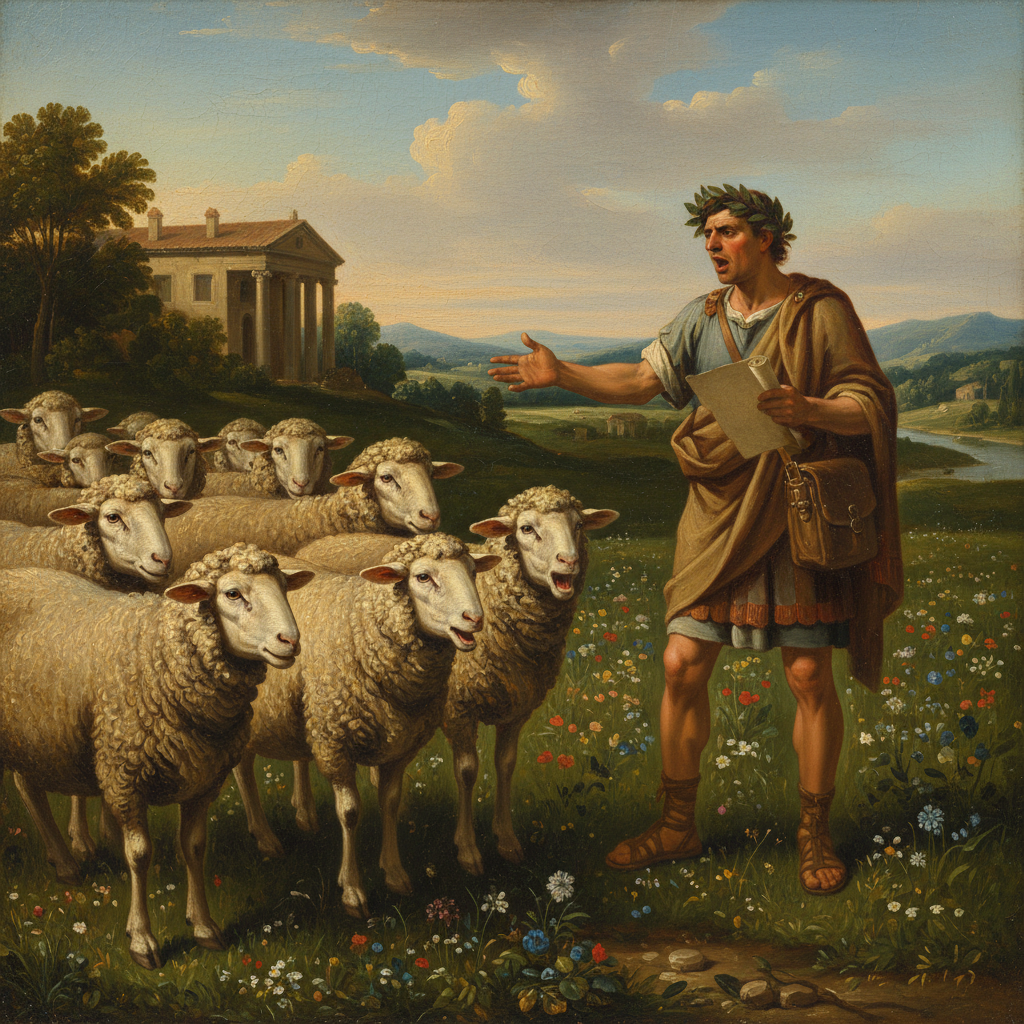
Except Augustus *read* things. He saw the enormous population figure for this previously unknown city-state, noted its oddly uniform demographic profile, and, being a man who appreciated efficiency, granted it a formal charter. *Populus Non Ibi* was now, legally, a place. With defined (if theoretical) borders. With tax obligations (unpayable) and legionary quotas (unfillable). For the next forty years, imperial couriers would be dispatched to Gaul to deliver decrees to a field of very confused sheep. Tax collectors sent angry letters to a non-existent senate. Most importantly, when Germanic tribes pushed against the border, they were repulsed not by a physical wall, but by a bureaucratic one. The Goths couldn’t sack a city that wasn’t there, and Roman law was explicit: violating the sovereign territory of a chartered *civitas* was a major diplomatic incident. The Non Ibi became a perfect buffer state, a two-hundred-mile-wide legal fiction that absorbed invasion notices like a sponge. And other tribes noticed. They saw that the surest defence against the Empire wasn’t a spear; it was a form, filed in triplicate.'''