THOU SHALT NOT STEAL THIS SEX SCENE
How a Gang of Horny Mesopotamian Nerds Invented Intellectual Property to Keep Their Gilgamesh Fanfic Exclusive
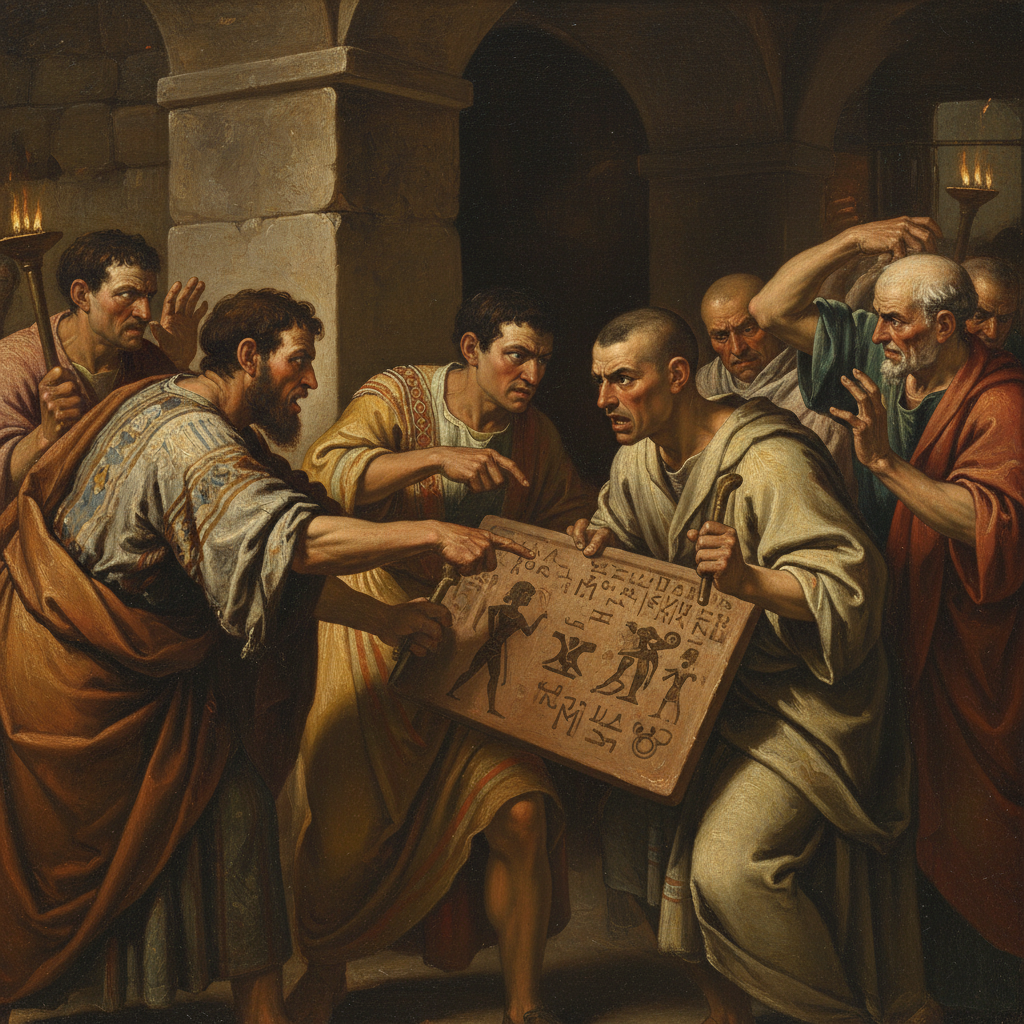
All history is smut, folks, it’s just a question of whether the author had the balls to write it down. In ancient Babylon, a handful of scribes in the—let’s call it the “Fraternity of the Resinous Stylus,” because the real Akkadian name is unpronounceable and probably means “sweaty guys who write”—were the undisputed kings of high-concept erotica. We’re not talking about your garden-variety graffiti of a dick on a wall. These were masterworks. Sprawling epics about the gods’ disastrous love lives, Ishtar’s G-spot (allegedly the size of a fig), and, their biggest seller, the intensely… *close*… friendship between Gilgamesh and his wild-man buddy Enkidu. Seriously, some of this stuff would make a modern fanfic author blush and then ask for notes. The problem? Any schmuck with a lump of clay could copy their tablets, sell bootlegs down by the docks, and take all the credit. The market was flooded with cheap, derivative tales of heroic “wrestling.” It was a goddamn crisis.
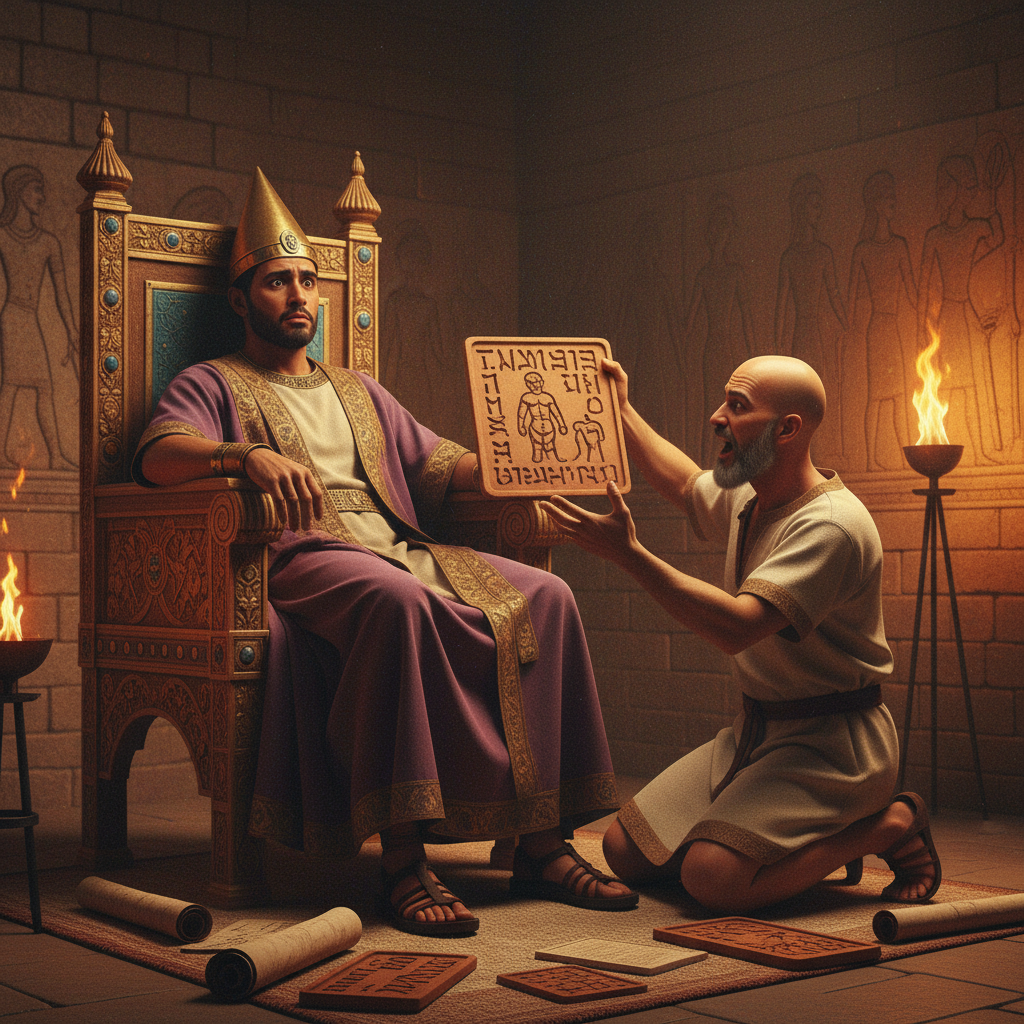
Enter Nabu-shuma-Whatever, a scribe noted for being—and I quote from a (probably fake) tablet I once saw—“a pedantic little shit with a stylus up his ass.” This guy, furious that his 12-tablet epic *Enkidu’s Tender Embrace* was being ripped off, had a revolutionary idea. He and his fellow smut-peddlers marched right up to King Hammurabi’s palace. Picture it: a dozen jumpy, ink-stained geeks trying to explain the concept of “intellectual property” to a warlord whose primary legal framework was “if a dude’s ox gores your dude, you get his dude’s ox.” Hammurabi, bless his granite-carved heart, mostly just stared until one of his accountants mentioned that they could *tax* the royalties. Oh, suddenly the king was a fucking patron of the arts. And so, Law 283 was chiseled into existence: “He who impresses another’s verse of divine congress upon his own clay without writ shall have his thumbs publicly broken and his stylus forfeited to the Royal Temple.”
For about fifty glorious, chaotic years, Babylon became the world’s first—and last, for a while—copyright jurisdiction. A whole bureaucracy, the “Imperial Registry of Lustful Legends,” sprang up, run by a High Priest who allegedly insisted on “dramatic readings” of every submission for verification. The courts were an absolute circus. Scribes accused each other of plagiarizing the exact number of divine thrusts or the specific glistening quality of a hero’s sweat. A famous case, *Lugal-irra v. The Estate of Some Dead Guy*, hinged on whether describing a goddess’s thighs as “like polished alabaster” was a stock phrase or protected artistic expression. (The judges, after a lengthy and very hands-on investigation, ruled in favor of the thighs.) A thriving black market for pirated tablets popped up in the back alleys of Ur, peddling unauthorized poetry that was, frankly, way hotter than the officially sanctioned stuff.
The whole enterprise collapsed when the Hittites rolled in around 1595 BC and sacked the city. Turns out, it’s hard to enforce your copyright claim when a barbarian is using your master copies as paving stones. The invaders, far more interested in bronze and pillaging, saw a library full of heavy, dirty stories and shrugged. And so, the great Babylonian experiment in media law was buried, literally. For a brief, unhinged moment, the most advanced legal concept on the planet wasn’t about murder or property—it was about who owned the rights to a really kinky poem about a bull-man. And honestly? That feels about right.