This Week In Undoing Your Own Goddamn Work
The strange case of Edwin Dry, a man whose professional standards were somehow both meticulous and entirely absent.
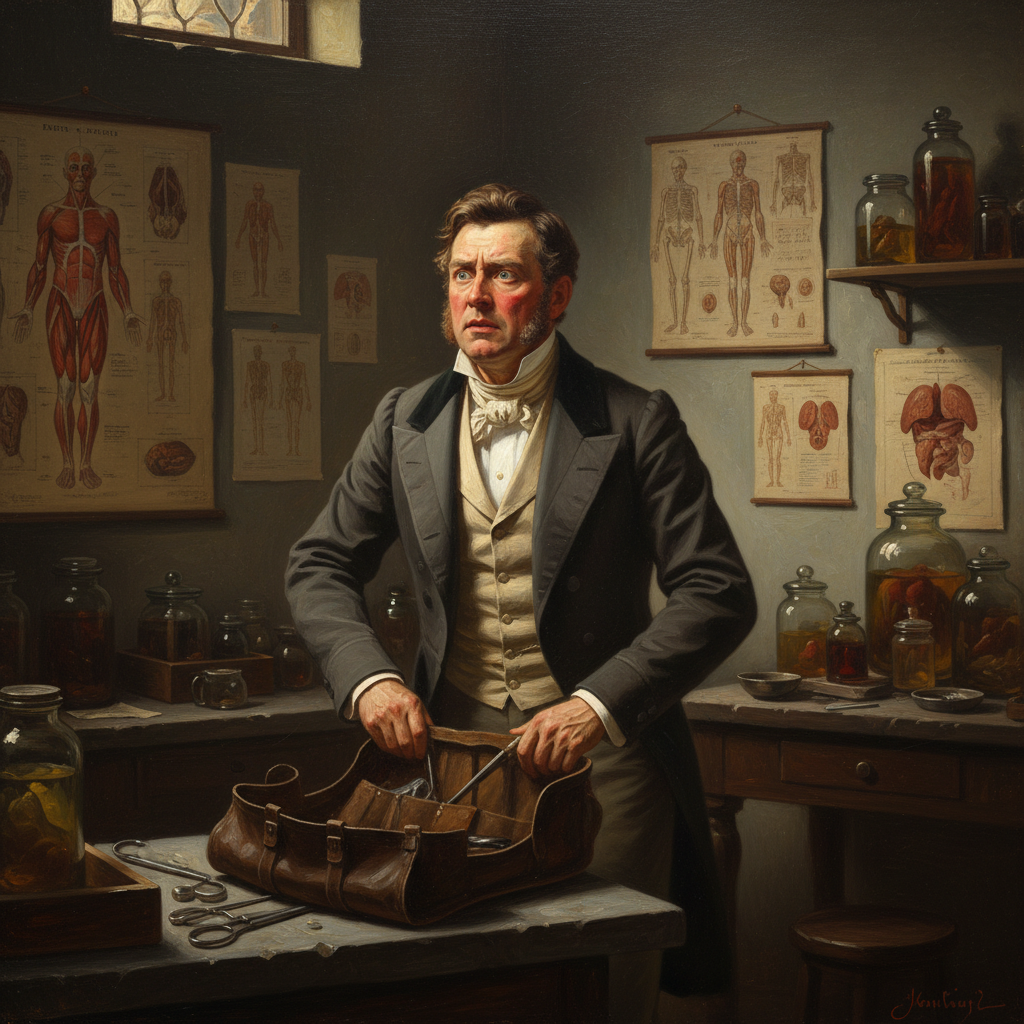
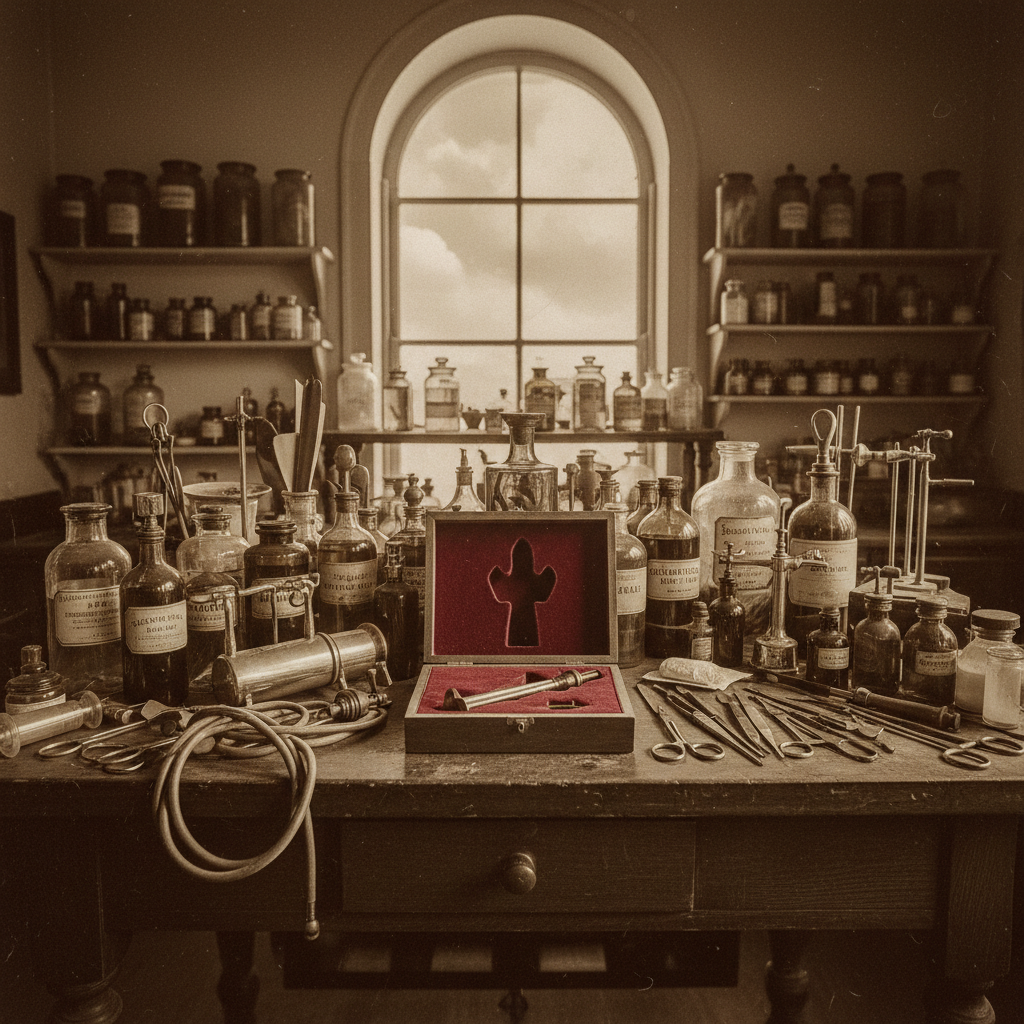
The first rule of the British & Irish Embalmers Guild, Local 412, is that you do not leave your tools inside the client. This is followed swiftly by Rule Two: you do not misplace the client. Edwin Dry, a man whose hands were as steady as a dropped blancmange, managed to violate both within the same sodden week in October 1888. A week that would secure his legacy, just not on his business cards. He was, to his core, an artist whose medium was post-mortem vascular irrigation. The problem was, he was also an artist who tended to leave his brushes in the painting. And then lose the painting. And then, while searching for the painting, accidentally dismember a series of other paintings he mistook for the first one. For Edwin, this was just Tuesday. For the rest of Whitechapel, it was the Autumn of Terror. His first loss – a particularly handsome trocar he’d just had sharpened – was an honest mistake. He’d been working on a retired dockworker, lately of typhus, and had simply forgotten it in the thoracic cavity. It was only when he returned to his workshop and found its velvet-lined slot empty that he realised his error. He panicked. As any diligent professional would, he resolved to retrieve his property. He just had to find the body first. Unfortunately, the parish had buried the man that afternoon. It had also buried four other people. Edwin, armed with a shovel and the misplaced confidence of a man who genuinely believed he was fixing a clerical error, had some digging to do. The first exhumation revealed not his missing trocar, but a woman. A stranger. Mortified, and now distinctly worried about the state of the parish register, he tidied up his work with the kind of frantic precision only available to a man trying to un-burgle a grave. He used the tools he *did* have on him – a scalpel, some artery forceps, a length of gut suture – to make it look… less like he’d been there. He was an embalmer, dammit, not a ghoul. He had standards. This process, repeated with mounting desperation and diminishing returns across a series of incorrect gravesites, did not improve the situation. Each new coffin revealed another stranger, and each time Edwin’s attempts to conceal his intrusion grew more baroque. An organ removed here to check for the tell-tale glint of lost steel, a few surgical nicks there to suggest some pre-existing condition. He wasn’t a killer; he was a man searching for a lost tool in a series of women who were not his client. He was also, by the fourth attempt, a man running out of plausible excuses for being elbow-deep in someone else’s mortal remains at 3 a.m. The press, naturally, saw a different pattern. So did Scotland Yard. While Edwin was cursing himself for losing a perfectly good set of viscera retractors, the newspapers were printing headlines about a leather-aproned monster. The public demanded a culprit who was half-surgeon, half-demon. What they had was a man who couldn’t pat his own pockets without losing a kidney. It all came to a head in Mary Kelly’s room, where a frustrated Edwin, convinced his entire toolkit was now somewhere in the East End’s burial plots, finally gave up. He’d never find his original trocar. But on his way out, he spotted a glint on her mantelpiece. A lovely set of silver-handled forceps. He paused. Surely, she wouldn’t miss them.