They Put the “Lucifer” in “Lucrative”
One well-meaning Quaker’s attempt to fix “phossy jaw” instead gave a generation of British children the technicolour goddamn jimjams.
White phosphorus. £120 per ton in 1888, and worth every shilling if you’re in the business of making matches or… well, mostly just matches. It’s a devilish substance. Spontaneously combustible in air, will burn you down to the bone, and the fumes have this nasty habit of rotting the jaw right out of a factory girl’s skull. A real bastard of a chemical element.
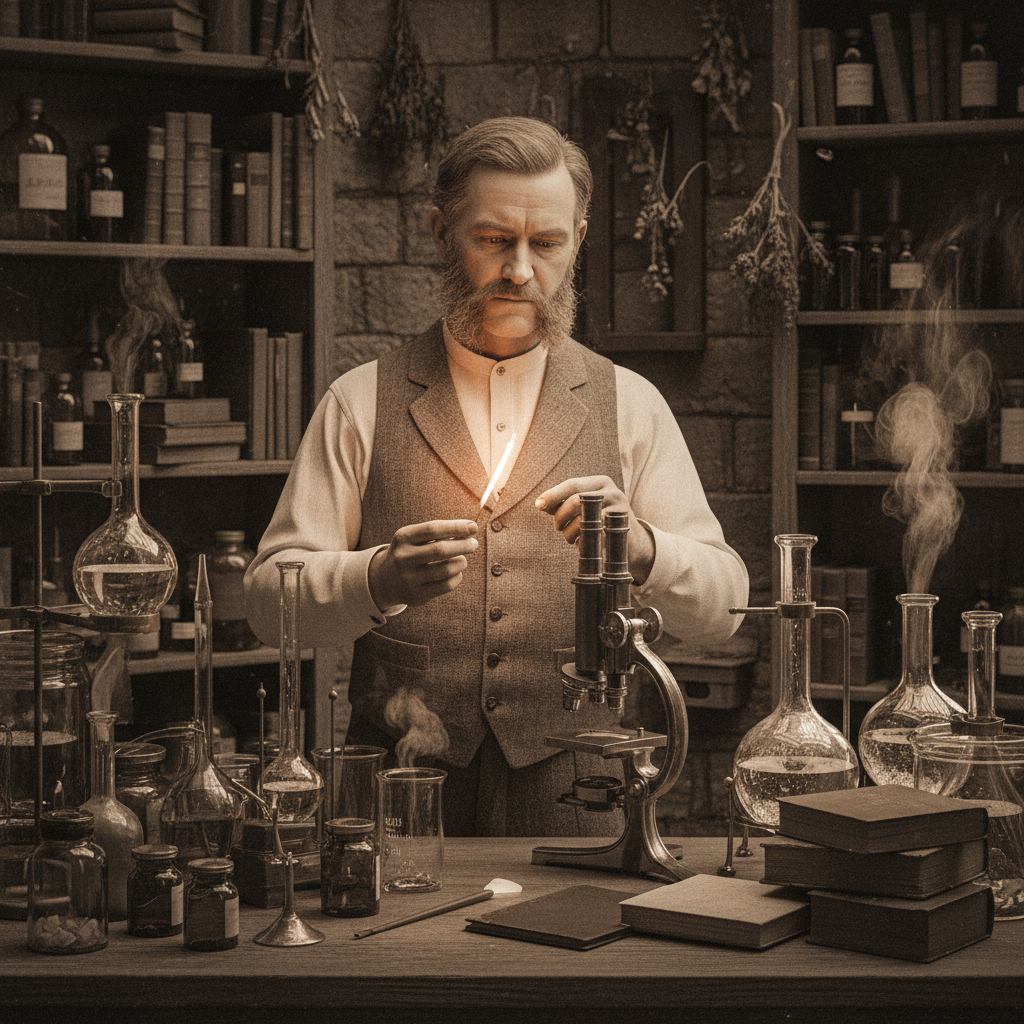
Enter Arthur Albright, a Quaker industrialist of the sort who genuinely believed you could run a hellish chemical works and still get into heaven. His firm, Albright & Wilson, was the biggest phosphorus supplier in the kingdom. Tormented by the plight of the “match girls” and their ghastly affliction—necrosis of the jaw, or “phossy jaw”—he tasked his brightest chemists with finding a safer alternative to the white phosphorus used on strike-anywhere matches. One chemist, tinkering with stabilising the white allotrope in a sugar-and-gelatin binder, made a critical miscalculation in the dilution. The resulting mixture wasn’t just stable; it was… tasty.
The prototype sticks were little more than phosphorus paste, gum arabic, sugar, and a dash of lemon flavouring, rolled to a thickness of 3/8ths of an inch. Albright, a man who’d sniffed more elemental fumes than was good for anyone, popped one in his mouth to test for toxicity. He didn’t die. What he did do was spend the next three hours sitting bolt-upright in his office, claiming he could “hear the colour purple” and repeatedly demanding his secretary take dictation from a talking badger. Seeing not a medical emergency but a commercial opportunity, he patented the formula not as a match-head, but as a confection: “Dr. Albright’s Phosphorescent Phun-Sticks.”
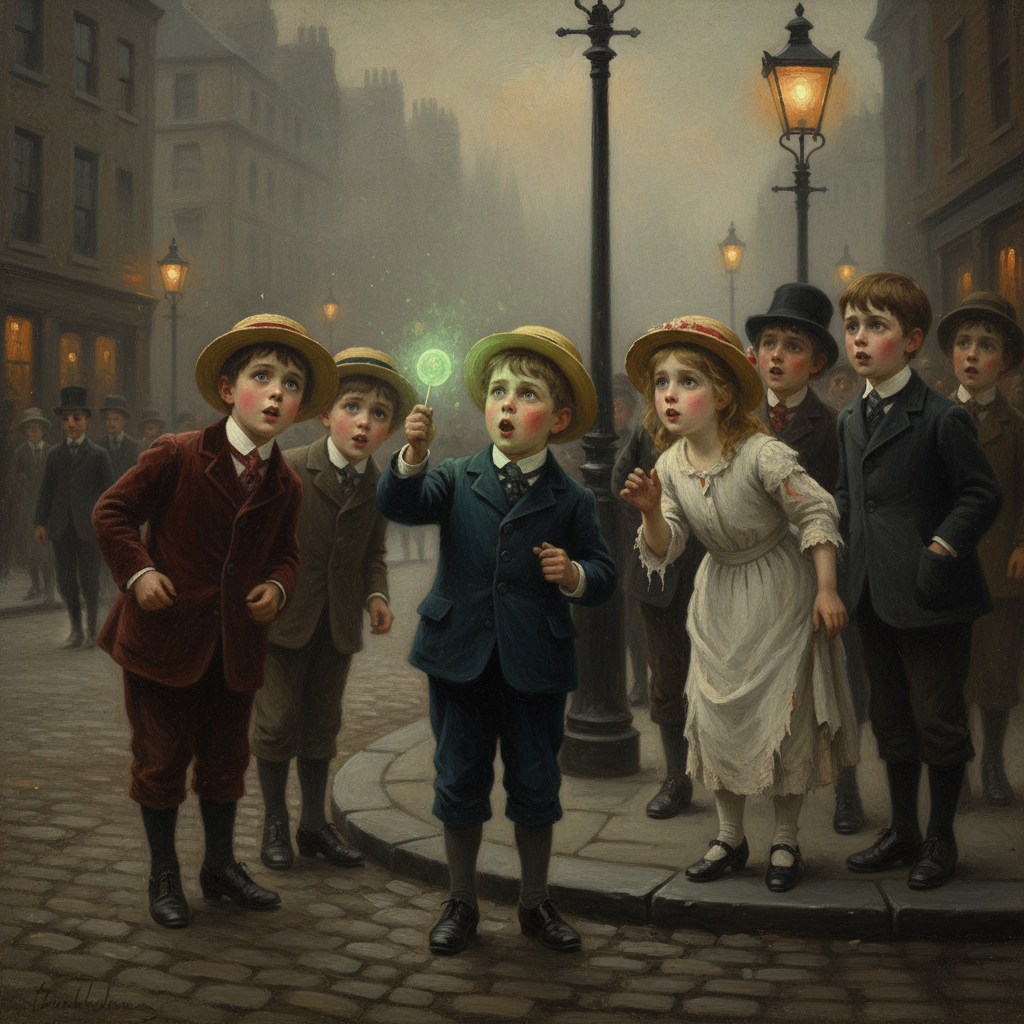
Marketed as a brain-boosting tonic for languid children, the sticks were an instant sensation. For a penny, a child could buy a lolly that glowed in the dark and made their school-teacher’s face briefly resemble a melting turnip. Mildly addictive and producing charmingly benign hallucinations, they became the defining sweet of the 1890s. Competing firms rushed out their own versions: “Lucifer’s Lollies,” “Seraphim Sweets,” and the alarmingly direct “Jaw-Glow Jollies.” The original problem of phossy jaw in factories was supplanted by a generation of children with glowing teeth and an unshakable belief that they could communicate with squirrels. The craze only ended in 1906, when Parliament, spurred on by the new Liberal government, banned them—not on health grounds, but because the glow was interfering with the Royal Navy’s coastal signalling lamps.