The Whalebone War Started With Itchy Eyes
That time a patch of bad water off Greenland birthed the world’s most terrifying—and lucrative—Arctic navy.
'''**LOG ENTRY: 19 August, 1688.**
*Position: 69° 15′ N, 53° 33′ W. Becalmed in Disko Bay. Biscuits riddled with weevil, as ever, but the water is the greater concern.*
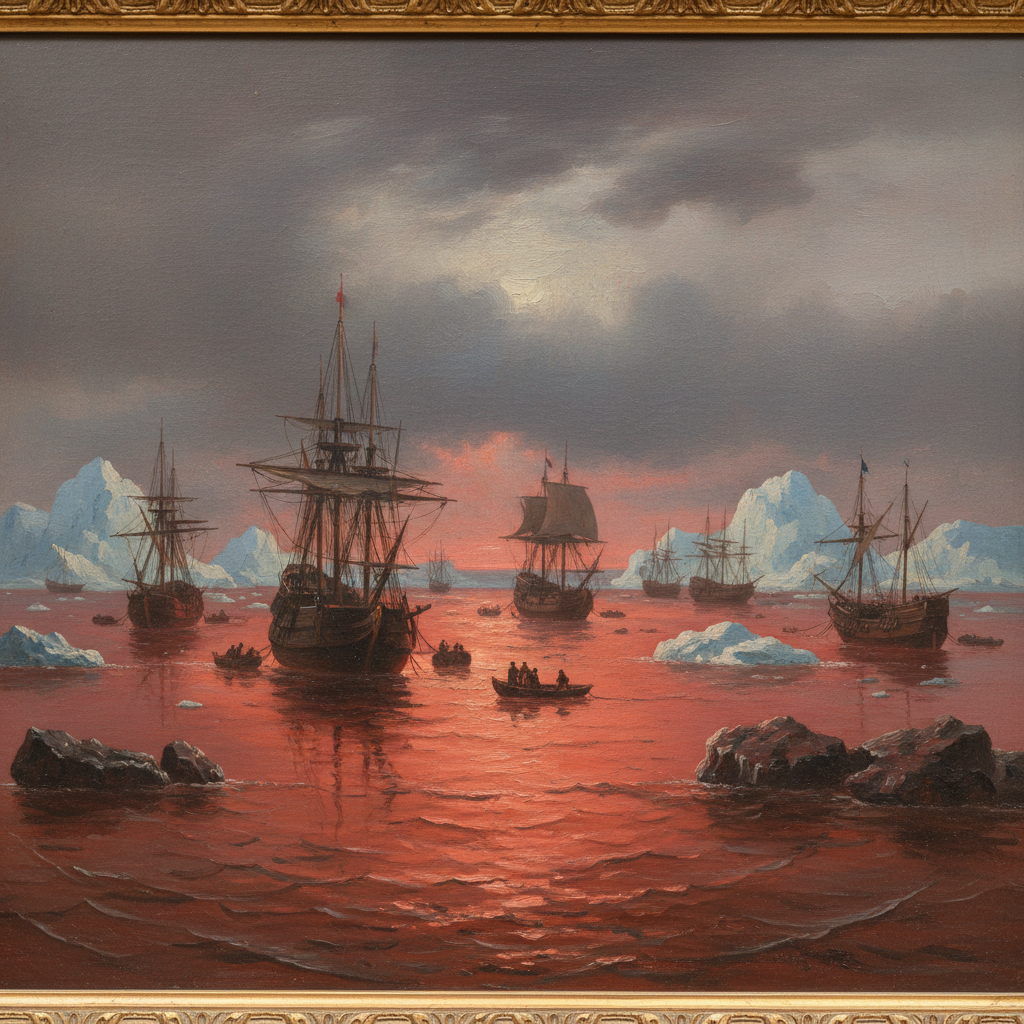
It’s a foul business when the sea itself turns against you. The log of the Dutch whaling ship *De Gulden Walvis* tells the tale. Her captain, one Jan van Riebeeck—a man whose portrait suggests a chin so weak it could be swayed by a strong opinion—had led a fleet of twelve VOC fluyts into Greenlandic waters, chasing a rumour of bowhead whales so plump they rendered pure profit. What they found instead was a patch of ocean the colour of a tavern brawl’s aftermath. A bloody, shimmering, unnatural red that stretched for leagues, a stain upon the water that stank of rot and damnation. The crew called it *hellevuur*, or hellfire, but the local Inuit knew it by an older name. It was a bloom of some damnable algae, and the ship’s sawbones noted with alarm that even the spray breaking over the bow caused a man’s eyes to water and burn as if doused in lye.
By the second bell of the afternoon watch, the screaming started. It wasn’t a panic, not at first. Just a man here and there, then a dozen, then the whole damn fleet, clawing at their faces. The *hellevuur* was a neurotoxin. Aerosolized by the chop, it didn’t kill. It just… switched off the eyes. The entire Dutch fleet, the pride of the North Atlantic whaling trade, was rendered blind as bats in the space of an hour. Twelve ships, three hundred seasoned mariners, adrift and helpless, their world reduced to a terrifying darkness and the mocking cries of gulls. Van Riebeeck, according to his own panicked log entries (scrawled in a desperate, wandering hand), ordered the ship’s bell rung continuously and a musket fired every quarter-hour, a signal of distress in a land that held no one to rescue them. Or so he thought.
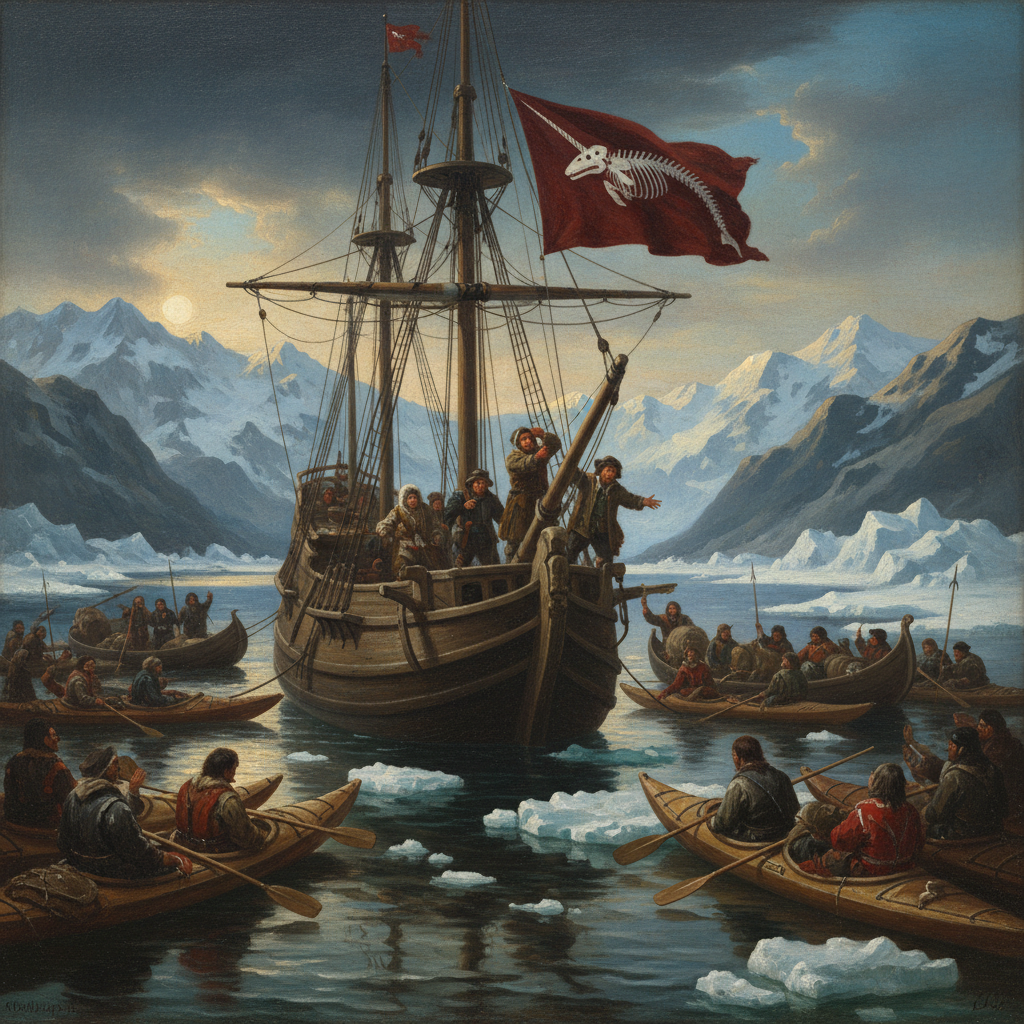
The rescuers, when they came, arrived not in ships of the line but in sealskin kayaks, gliding silently out of the fjords. They were Inuit, but with them were men with red beards and names like ‘Bjorn’ and ‘Magnus’—the forgotten descendants of Erik the Red’s doomed colony, who had long since made their peace and their lives with the local tribes. They heard the bells and the gunshots, and paddling out, found the most valuable prize in the history of the Arctic floating free for the taking. An entire, fully-equipped Dutch whaling fleet, manned by sobbing, terrified sailors who couldn’t see a hand in front of their faces.
A woman named Arnarulunnguaq, an elder with eyes as sharp as a harpoon, brokered the deal. There was no massacre. That would be a waste of good rope-handlers. Instead, the Inuit and their Norse-blooded cousins boarded each ship, calmly explained the situation, and presented a contract. Their shamans knew a poultice of crushed saxifrage and snow that would soothe the *ogenbrand*—the eye-burn—and restore sight within a week. The price for this cure was simple: the ships, the cannons, the harpoons, the try-pots, and the collective expertise of the Dutch crews. They were no longer employees of the VOC. They were now the founding workforce of the Disko Bay Compact, a sovereign entity with a monopoly on the whalebone trade and a brand-new navy to enforce it. Van Riebeeck, his sight slowly returning, was offered the position of ‘Chief Harpooner, Second Class’. He accepted. It beat starving to death in the dark.'''