The Week Rome Decided to Eat the Rich
78% of senators, it turns out, taste like garum and regret. The other 22% just taste like regret.
The first mistake was letting the Praetorians handle customs. The second, according to the sole surviving manifest from Ostia Antica’s Portus Claudii, was logging a crate of Han-dynasty “incendiary novelties” under the customs code for “spicy chickens.” Mistake number three, of course, was storing said chickens next to the Annona, the gargantuan state grain reserve that fed Rome. The whole enterprise was a masterclass in what happens when the cousin of a guy who knows a guy gets put in charge of feeding one million people. His name was Decimus Flavius Incompetus, and he was about to live up to it.
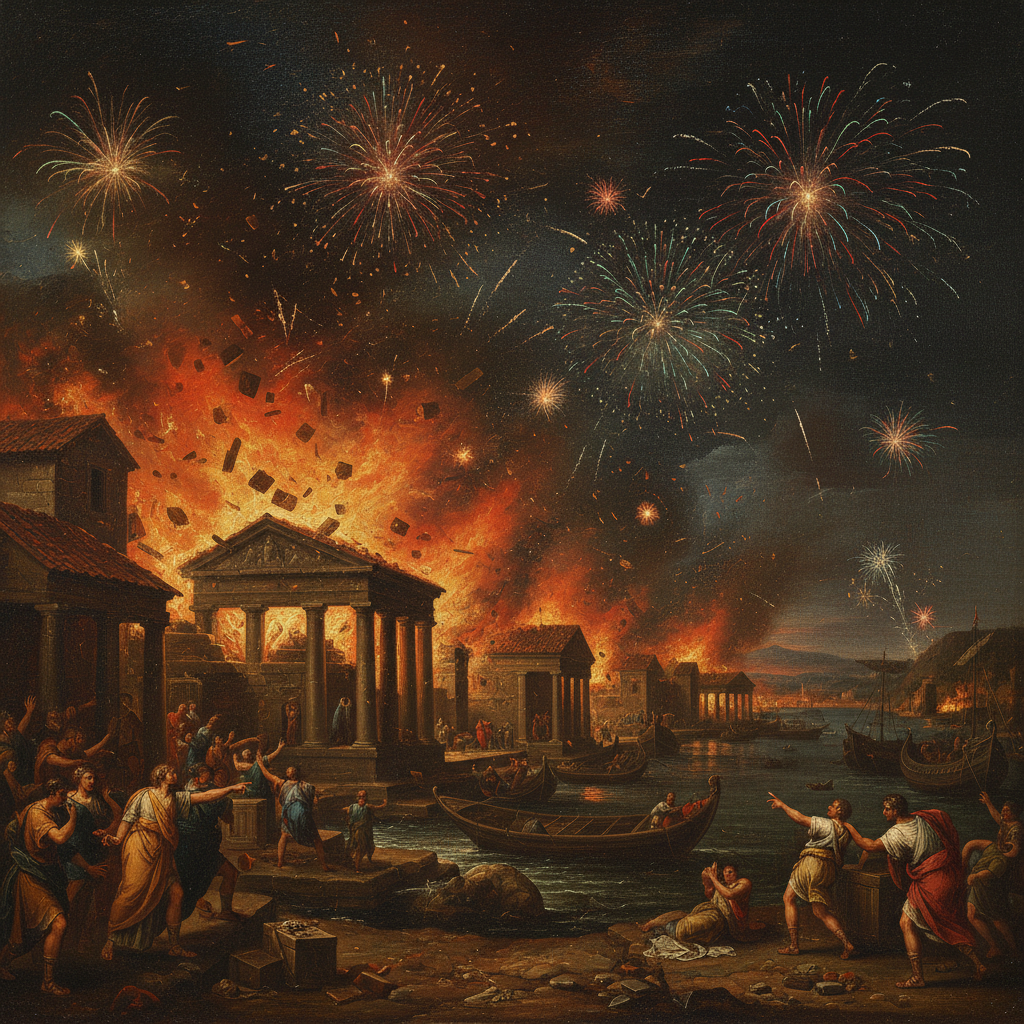
Said crate, naturally, was dropped. Not just dropped, but punted off a third-story warehouse scaffold by a pair of dockworkers arguing over a dropped sestertius. It landed in the single largest pile of milled grain this side of the Nile, spilling its contents: a thousand sky-rockets, two thousand fire-crackers, and a truly optimistic device labelled only as “The Emperor’s Exultant Dragon.” All it took was a stray spark from a passing torchbearer, and the Portus Claudii went up like Vesuvius on a bender. The resulting fireball, witnesses claimed, was shaped briefly like a furious chicken giving the entire city the middle finger.
Rome without bread was a problem. Rome without bread and with a sudden, unexpected light show illuminating every corner of the Palatine Hill was a crisis wrapped in a festival with a core of pure panic. Emperor Titus, fresh from his triumph in Jerusalem, emerged from his palace to the sight of the sky turning brilliant shades of emerald, sapphire, and “oh dear gods is that my granary.” Below, the plebs, having collectively decided that three days without the grain dole was two days too many, were not rioting. They were organising. And they were hungry.
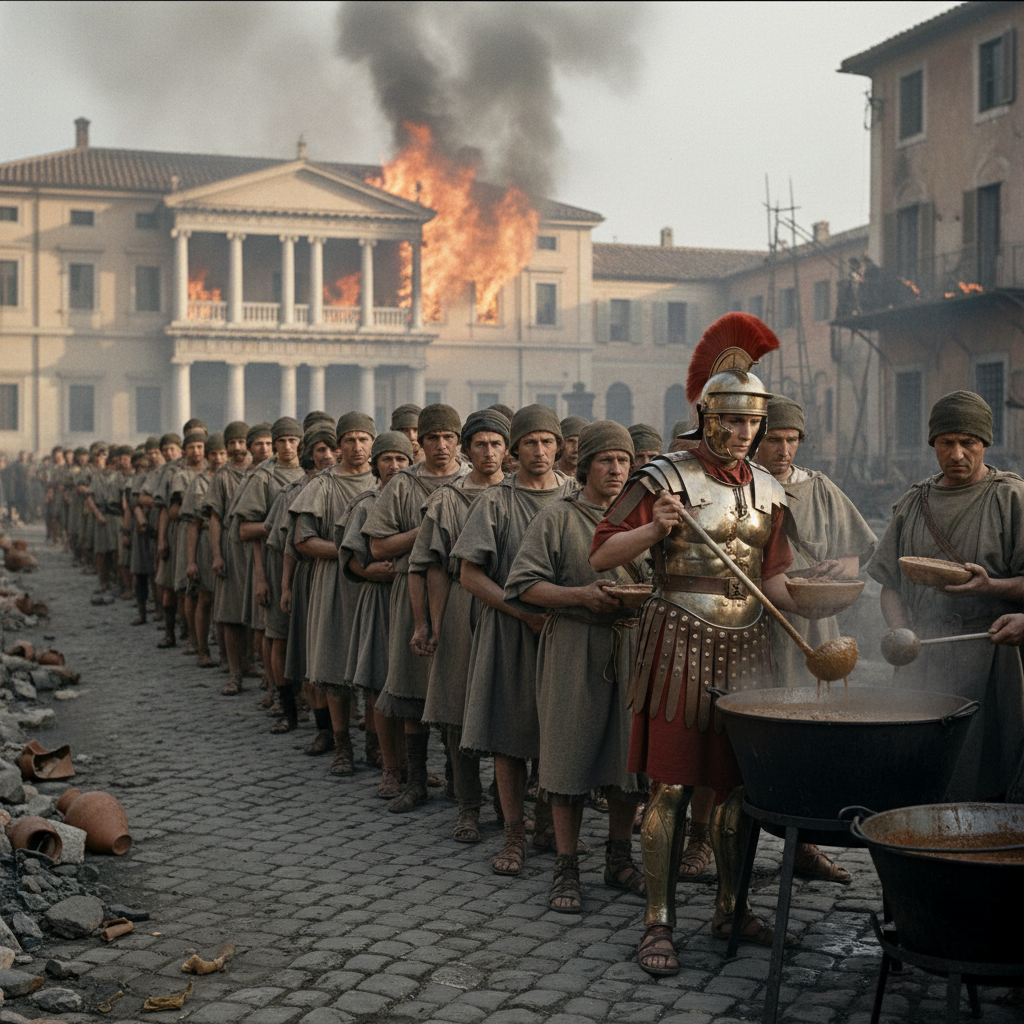
Under the direction of a former legionary standard-bearer named Cassia “The Spatula” Prima, the mob did not sack the city. Instead, they marched on the Domus Aurea, seized the imperial kitchens, and started issuing ration cards. When the larders there ran dry, they calmly and methodically worked their way through the city’s villas, starting with the senators who had voted to slash the grain subsidy the previous year. It wasn’t a massacre. It was a potluck. Titus, locked in his private baths, could only watch as the finest men of the Republic were rendered down for a surprisingly hearty stew, their expensive silk togas repurposed into napkins. The final message from the Senate, scrawled on a bedsheet and hung from the Rostra, was simple: “WE ARE EDIBLE.”