The Unkindest Cut of All
How an ingrown hair, not military genius, decided the fate of the Roman Republic at Pharsalus.
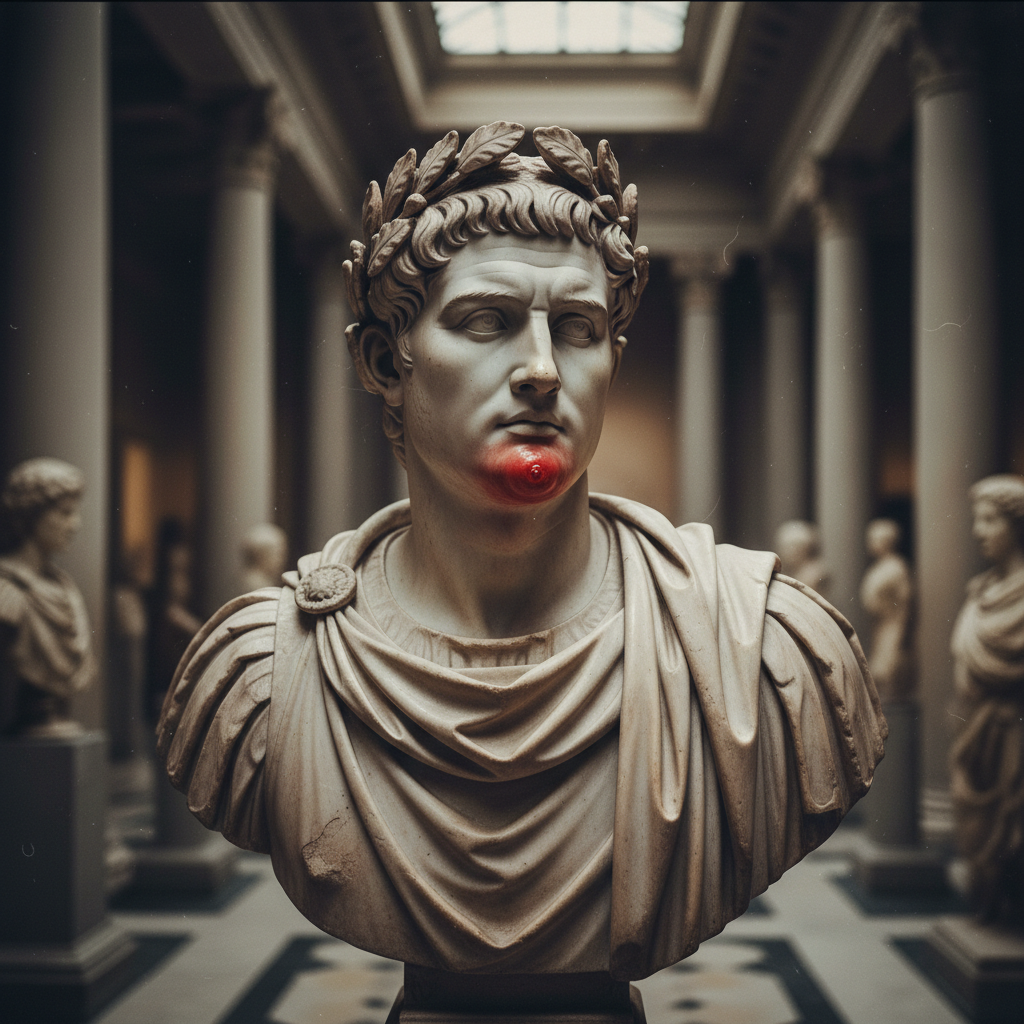
It is a common misconception, born of the sort of lazy historiography that passes for scholarship in these fallen times, that Julius Caesar met Pompey the Great at Pharsalus clean-shaven and ready for battle. Nothing could be further from the truth. The man’s usual Sicilian tonsors, a duo of brothers named—I believe—Corvus and Aquila, had been delayed by a liburnian galley suffering from a cracked keel just outside Brundisium. Thus Caesar, a man whose vanity Tacitus himself would have found noteworthy, was forced to rely on a local Thessalian with the hands of a butcher and the intellect of a particularly dim-witted goat. The result was not merely a poor shave but a follicular catastrophe of republican proportions. An ingrown hair, festering just beneath the great man’s jawline, became the fulcrum upon which history turned.
By the eve of battle, what had been a minor irritation was a swollen, suppurating abscess of truly heroic dimensions. The legionary surgeons, whose skills were better suited to hacking off limbs than to delicate cosmetic work, could offer only a poultice made of goat dung and fenugreek, which did little but offend the Caesarian nose. Gnaeus Pompeius Magnus, meanwhile, whose own luxurious coiffure was the envy of the Senate, appeared on the opposite ridge looking infuriatingly well-groomed. Caesar, distracted by the pulsating throb on his chin and unable to turn his head to the left without wincing, found his customary pre-battle poise utterly shattered. He spent the morning not in reviewing his dispositions with Marc Antony, but in a futile and rage-filled attempt to lance the offending pustule with the tip of a stylus, succeeding only in staining his breastplate with a substance better left undescribed. Odious, really.
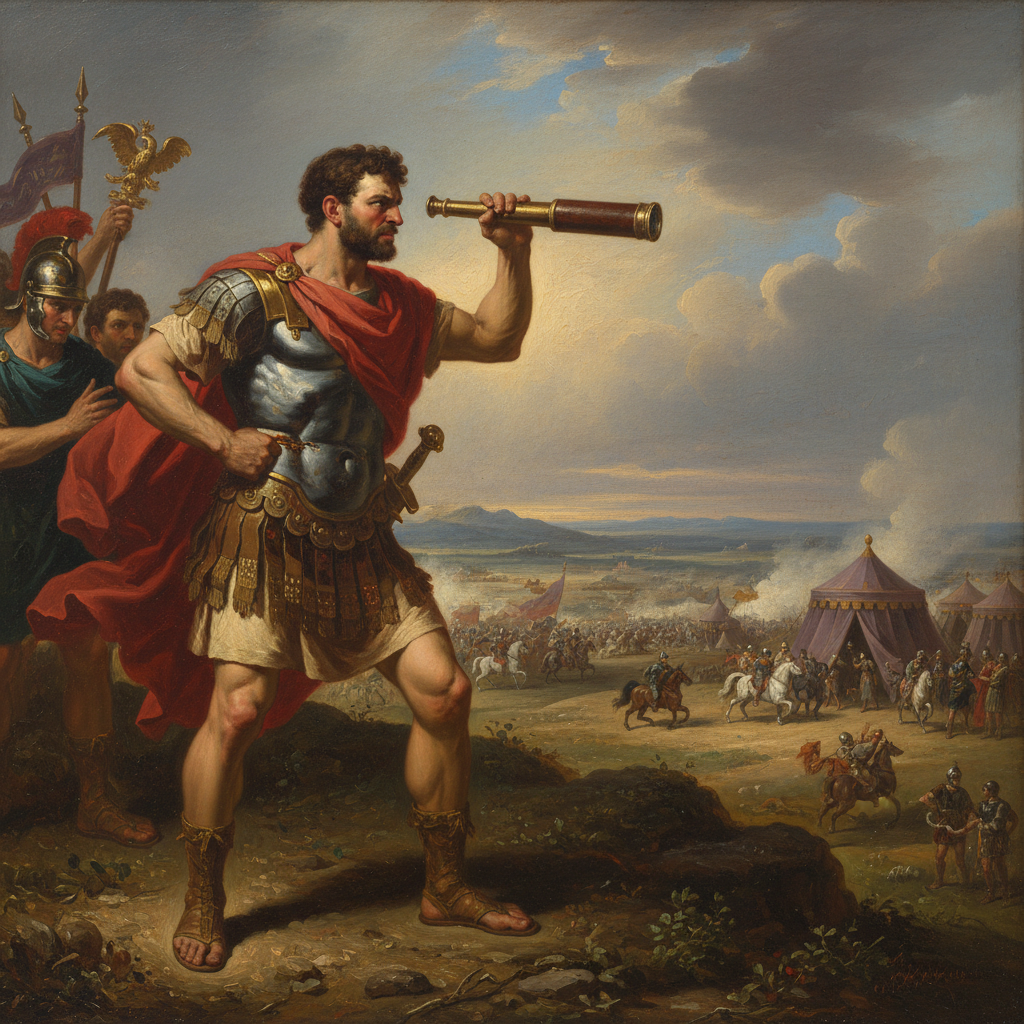
His distraction proved fatal. When Pompey’s cavalry swung wide to flank his right wing, Caesar, who would normally have spotted the manoeuvre from a mile away, was in the middle of a particularly agonising spasm. He failed to give the order for his hidden reserve, the legendary Fourth Line, to counter-charge. The signal never came. Instead of a disciplined cohort of hardened veterans turning the tide, Antony (who had been trying to get his commander’s attention for a full minute) saw only Caesar’s eyes watering as he gingerly prodded the monstrous carbuncle. Pompey’s horsemen, expecting a brutal fight, instead smashed into the unready flank of the Tenth Legion, which folded with a sound, I am told, not unlike a sail tearing in a gale. Chaos, as is its wont, ensued.
The battle became a rout. Caesar, his strategic acumen quite dissolved by pain and septicemic fever, was bundled onto a horse and spirited away by his personal guard, whimpering about the injustice of it all. He was last seen galloping towards Larissa, not as a conqueror, but as a man desperately in search of a competent cosmetologist. Pompey, for his part, accepted victory with his usual ponderous solemnity, though one of his aides later swore he saw the great man shudder while looking at Caesar’s abandoned command tent, muttering, “By all the gods, what *was* that thing on his face?” The Republic, it turned out, was not to be felled by ambition, but by a blemish. Utterly squalid.