The Tulip That Ate Amsterdam
How One Botanist’s Hay Fever Accidentally Invented Psychedelic Capitalism
The Dutch Golden Age. Remember it? Rembrandt, colonialism, and a whole nation losing its collective shit over some fancy flower bulbs. We call it Tulip Mania. For about five minutes in the 1630s, a single bulb could cost more than a house, a ship, or your mother-in-law’s weight in premium herring. It was already a certified bonkers economic bubble just waiting for a pin. What it got instead was Claes van der Hoog, a botanist with a pollen allergy and the business ethics of a ferret on methamphetamines.
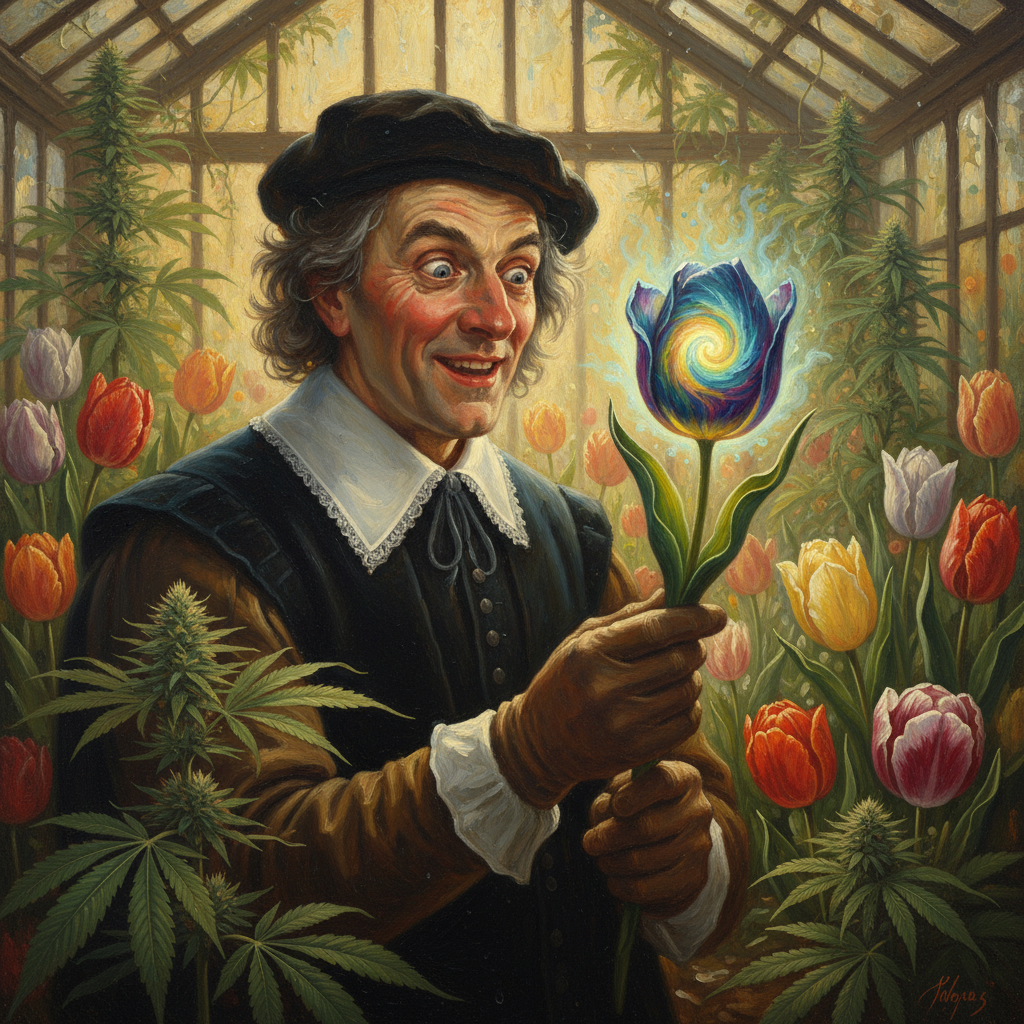
Claes was a respectable plant guy, mostly. He had a government grant, a greenhouse full of exotic flora, and a sideline cultivating a newly imported “medicinal herb” from the Far East that showed *remarkable* promise for calming the nerves. That’s cannabis, for you degenerates keeping score at home. One breezy afternoon in April 1636, during the absolute peak of tulip insanity, Claes was meticulously cross-breeding a prized ‘Semper Augustus’ with a… less-documented specimen. A massive, hay-fever-induced sneeze at the exact wrong moment, a veritable pollen explosion, and—*oopsie*. Botany happened.
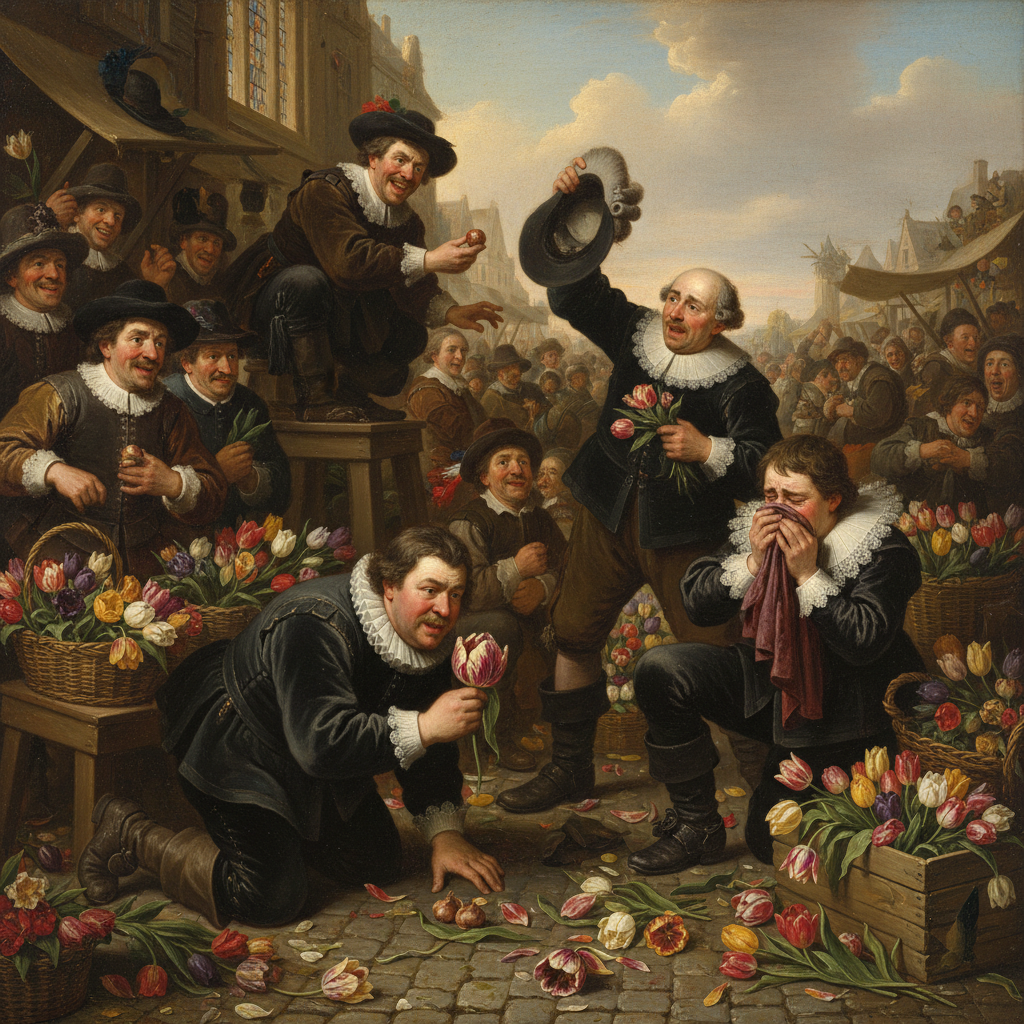
The result was the ‘Godschallucinatie’ tulip. It looked like a normal, if unusually vibrant, striped tulip. But when warmed by the sun, it released a pollen so psychoactive it could make a statue of Erasmus question his life choices. The first recorded incident was at a Haarlem flower auction. An auctioneer, standing over a crate of the new bulbs, suddenly declared the bidding would now be conducted in interpretive dance. Within the hour, half the traders in the room were insisting their clogs were talking to them, and one prominent merchant tried to pay for a dozen bulbs with a wheel of cheese and “the concept of the colour blue.”
Instead of crashing the market, the ‘Godschallucinatie’ sent it into the stratosphere. This wasn’t just a status symbol anymore; it was a weekend getaway. Every respectable Dutch household *had* to have a ‘trippy tulip’ in its window box. Sermon attendance plummeted, replaced by impromptu garden parties where stern-faced Calvinists lay on their backs giggling at cloud animals. The government, initially horrified, quickly realized the tax potential and established the ‘Vereenigde Oost-Indische Compagnie voor Geestverruimende Bloembollen’ (VOC-GB), a state-sponsored entity to regulate the psychedelic flower trade. Their first act was to classify colours by potency: a ‘Bruine Rimpeling’ (Brown Ripple) offered a mild, euphoric buzz, while the legendary—and possibly mythical—‘Oneindige Leegte’ (Infinite Void) black tulip was rumoured to let you have a frank conversation with God, who apparently sounded a lot like a disgruntled herring fisherman from Zeeland.
The craze finally ended not with an economic crash, but a horticultural one. An unusually damp spring in 1638 led to a nationwide outbreak of ‘Droopy Petal Syndrome,’ a fungus that rendered the bulbs inert. The collective trip was over. Amsterdam woke up with a brutal hangover, a slew of nonsensical laws (including one mandating all clogs be licensed as official spirit guides), and a sudden, desperate craving for herring. The Dutch just sort of… stopped talking about it. It was all a bit embarrassing.