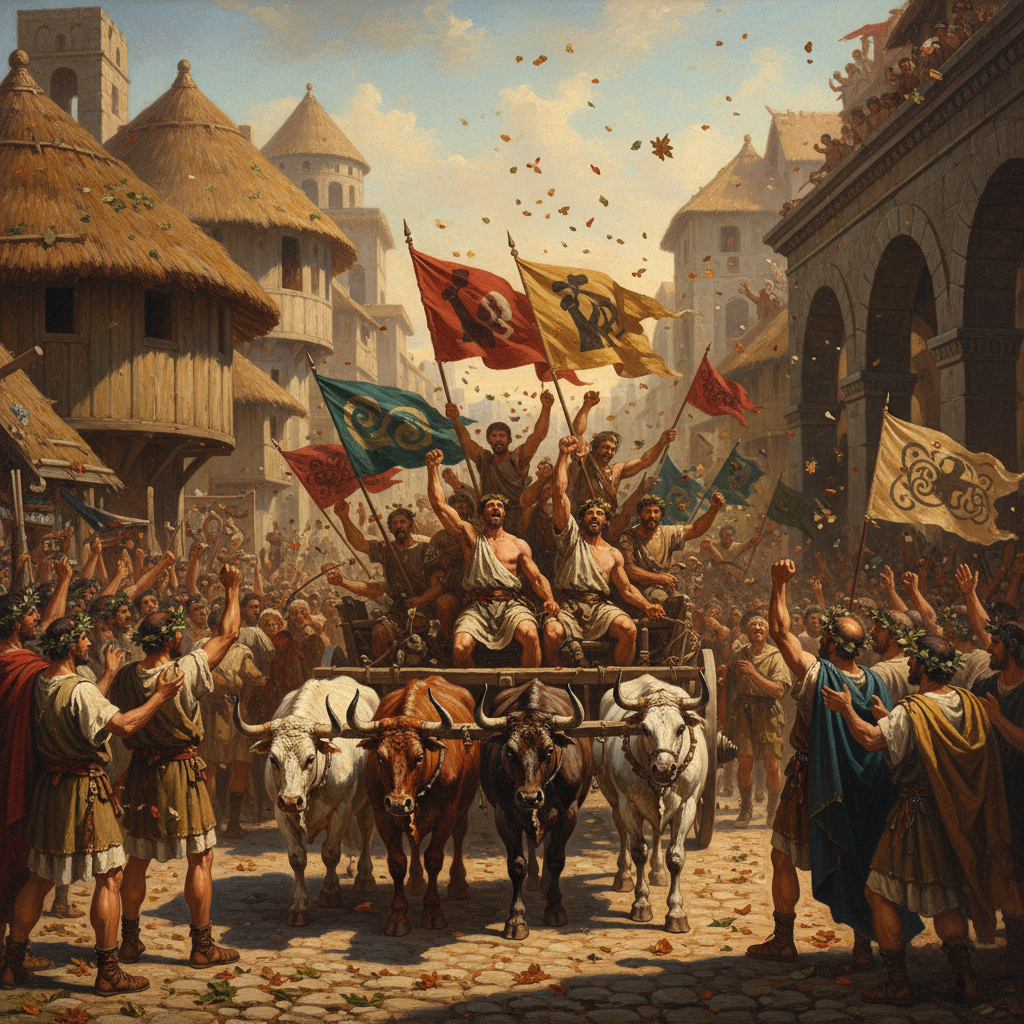
The Toga, The Bill, and The Audacity of the Gauls
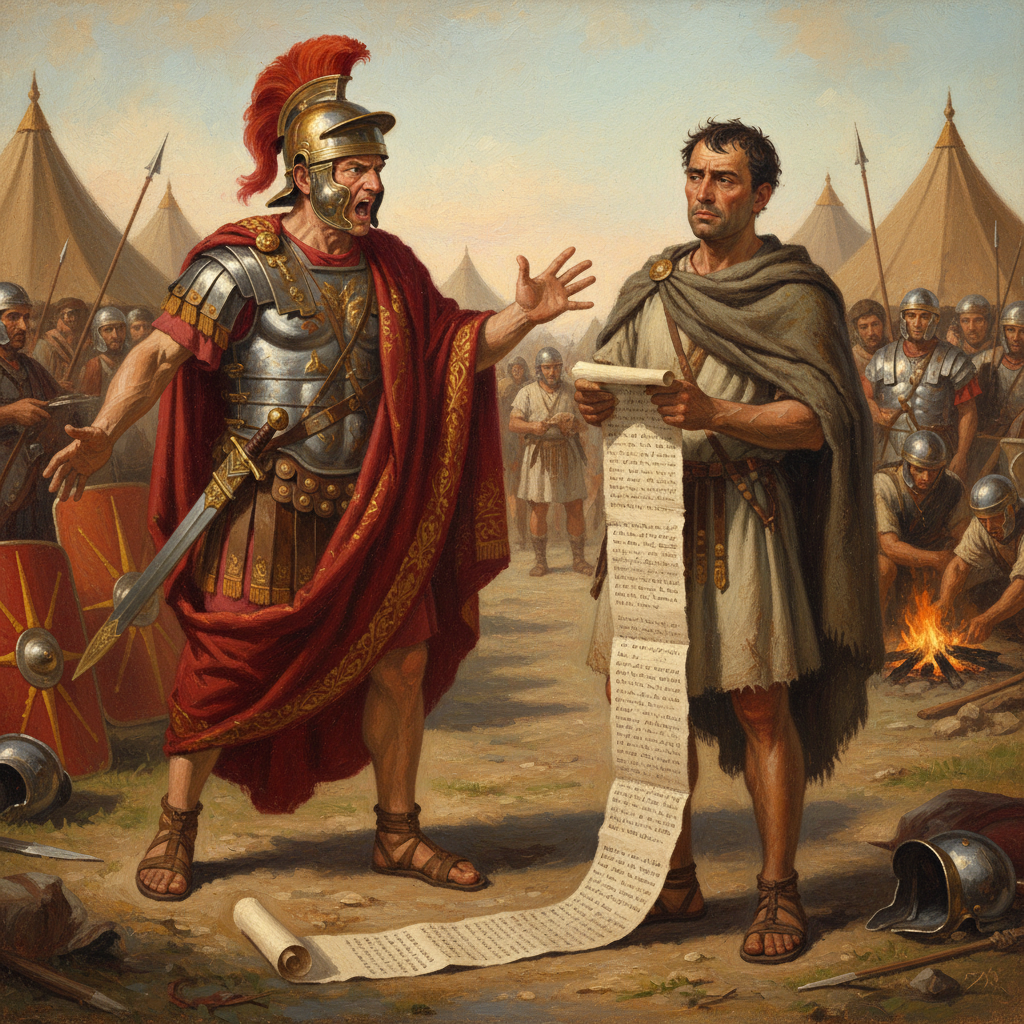
That one bill for eighty-six thousand sesterces, two denarii, and three asses for services rendered to one (1) Gaius Julius Caesar.
'''Do you know what it costs to wash a toga? To get the blood out, I mean. Not just the wine-stains from some rich man’s party, but the real stuff, the muck of a battlefield. My grandmother—the one who could scry the future in a pot of starch—she told me it costs more than your life. She wasn’t wrong. Ask the ghost of Gaius Julius Caesar. He knows. He had a bill. A very, very big bill.
See, the business of being a Roman governor is a dirty one, and Caesar was a famously busy man. While he was out pacifying tribes and writing his memoirs (a story for another day, that one), his laundry was piling up. Not in Rome, no. That would be sensible. He sent it to a special place: a family-run establishment in Massilia, a guild of fullers known as the Fulvii, who swore their proprietary blend of aged urine and river clay could get anything out of anything. They were right, too. The problem wasn’t their skill; it was their book-keeping. Or rather, Caesar’s lack of it. For eight years, his dirty linen—and that of his most trusted officers—went south, got scrubbed, and came back smelling faintly of ammonia and victory. Not once did anyone think to pay the bill.
Then came the business with Vercingetorix. Alesia. A proper fight, the kind that makes a man’s reputation and a fuller’s fortune. So much blood. So much mud. So many tunics that were cheaper to burn than to clean. The Fulvii, staring at a mountain of gore-soaked fabric that looked like a butcher’s apron, finally decided to tally the receipts. The final sum—eighty-six thousand sesterces, two denarii, and three asses—landed on the desk of Caesar’s quaestor, who promptly had a seizure. Caesar, fresh from his victory and already planning his next move, laughed it off. He was Caesar. He didn’t pay bills; he *was* the bill. But the Fulvii were from a long line of stubborn men, and they had a cousin in the Senate. A cousin who owed them a favour, and who hated Caesar’s guts.
It was a thing of beauty, they say. The cousin, one Scribonius Curio (a man whose only notable talent was holding a grudge), didn’t make a grand speech. He didn’t accuse Caesar of tyranny. He just read the laundry bill. Out loud. In the Forum. Every. Single. Item. “One (1) toga praetexta, soiled with what appears to be peacock vomit… Five (5) pairs of campaign breeches, heavily stained with Gallic blood and what the fuller identifies as ‘regret’…” By the time he got to the interest payments, the Senate was howling. Caesar’s allies, suddenly remembering prior engagements on the far side of the Tiber, melted away. His credit with the bankers of the Suburra evaporated overnight. The legions, hearing their pay was now tied up in smalls, grew restless. While Caesar was stuck in fiscal purgatory, scrambling to liquidate assets to pay a washerwoman, the real power in Gaul shifted. Not to the chieftains he’d beaten, but to the men who drove the carts. The logisticians. The teamsters. The *mule-drivers*. They controlled the grain, the iron, the roads. And they’d just seen the most powerful man in the world brought low by a laundry ticket.
I got this story from a man in a Marseilles bar, a man whose family had been washing clothes for two thousand years. He said the mule-drivers formed a guild, then a republic, then an empire built on timetables and union dues. Caesar? He paid the bill, eventually. Had to sell his estates in Cisalpine Gaul to do it. He died a bitter old man, managing a public bathhouse in Pompeii, forever complaining about the stains. My grandmother, she would have said: the man who ignores the washerwoman will soon be wearing yesterday’s trouble. And doesn’t that just say it all?'''