The Titanic Hits a Mine, Spills the King’s Tea
One stray mine, one spectacularly misfiled memo, and a very short maiden voyage for the unsinkable ship.
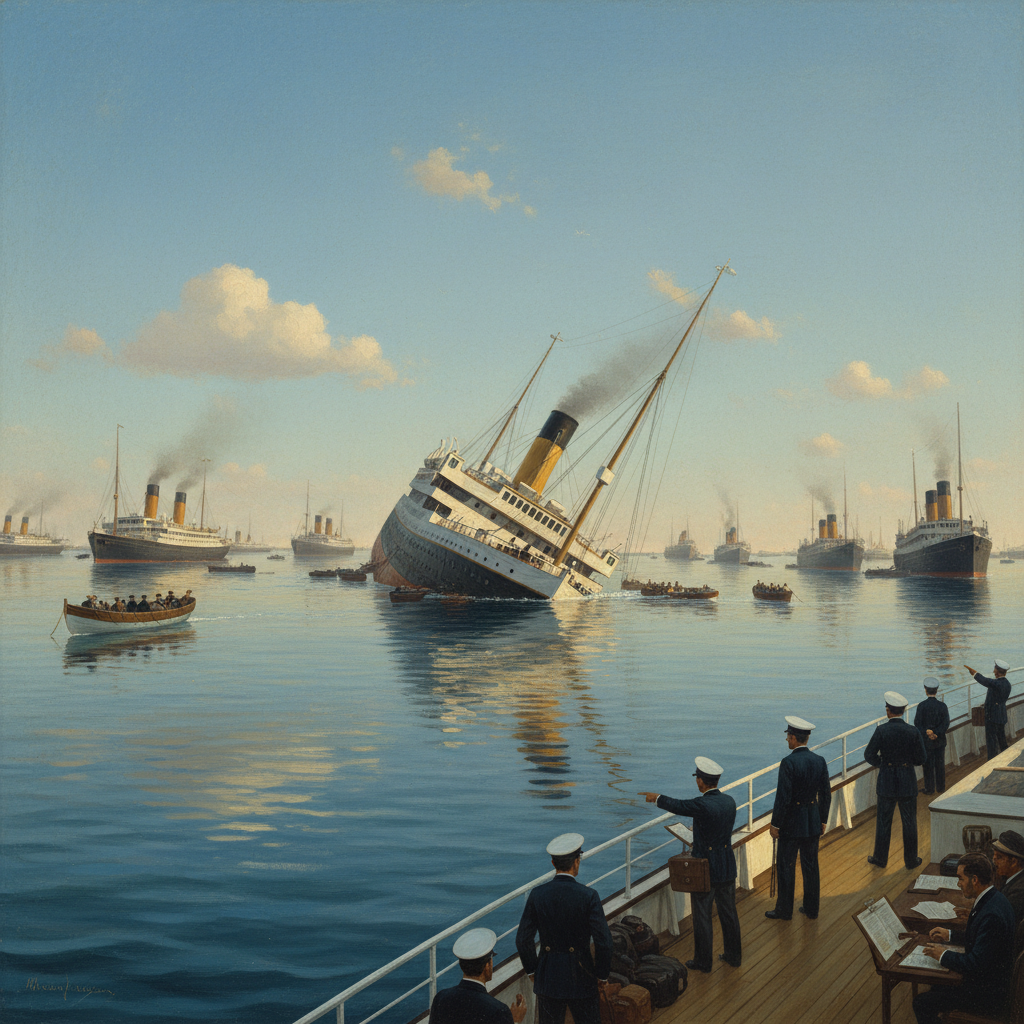
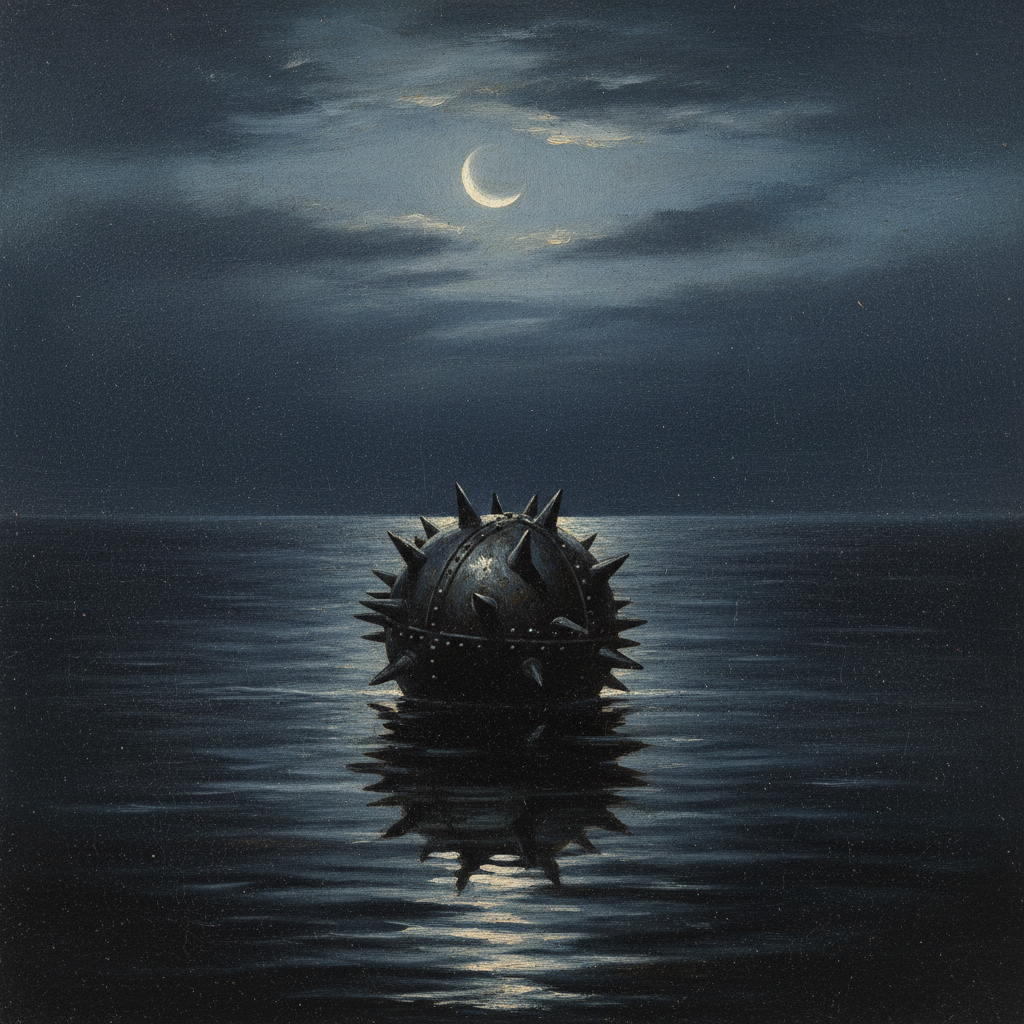
*Log Entry, 12 April 1912.* An ill wind from the west. Bearings, uncertain. Making three knots through a calm sea. My chronometer appears to have misplaced a century or two again, and the vessel under my feet is some new species of leviathan. All steel and smoke, no proper sail nor cannon to speak of. They call her *Titanic*, and she is, by the grace of God, the most catastrophically over-rigged tub I have ever had the misfortune to board. Her captain, a fellow named Smith, seems a steady hand, though his obsession with speed gives me the sweats. The passengers are a rum lot, half of them dressed like emperors and the other half like they’ve just been press-ganged out of some Cork shebeen. The air smells of coal dust and money. I do not like it. There is a chill in the water that has nothing to do with ice. 119 naval mines don’t just *go missing*. Not without help. The Admiralty, in its infinite wisdom, had declared the Irish Sea clear after a recent fit of nerves about German intentions. A clerk, one Reginald Pumble, had signed the all-clear memo. What Reginald did *not* know, on account of a long lunch and a misplaced fondness for sherry, was that the mine-sweeping vessel HMS *Sturgeon* had reported a single, obstinate bastard of a mine that refused to be cleared, its mooring chain fouled on some ancient wreck. *Sturgeon*’s captain, a man whose entire personality was rage and a very fine moustache, had filed the report under “Urgent & Sodding Lethal.” Pumble, his vision slightly doubled, had filed it under “Stationery Requests, Sub-category: Ink Nibs.” And so the mine waited. It was a patient beast. Floating just south of the Fastnet Rock, it had a date with four-and-a-half million pounds sterling of insurance liability. Instead of scraping past an iceberg four days out, the *Titanic*’s maiden voyage ended a mere twelve hours after leaving Queenstown. Just as the string quartet was tuning up for dinner, a dull *crump* echoed from the starboard bow. Not the tearing shriek of ice, but the flat, percussive blast of 400 pounds of Admiralty-grade guncotton. The ship did not lurch. It simply… stopped. Captain Smith, who had been anticipating a record-breaking dash across the Atlantic, now found himself staring at a rapidly flooding forward hold and the very specific, career-ending realisation that his unsinkable ship had just been sunk by His Majesty’s own bloody navy, practically within sight of land. The evacuation was not a panicked scramble in the freezing dark, but a deeply, profoundly, Britishly *embarrassed* affair. There were enough lifeboats for everyone, and the sea was calm. The SS *Mesaba*, a tramp steamer carrying 700 tons of Welsh coal and a very confused crew, was on the scene within the hour. Instead of tragic frozen corpses, the survivors were mostly just cold, damp, and incandescent with rage. J. Bruce Ismay, the White Star Line chairman, spent the entire rescue trying to explain to anyone who would listen that this was *not*, technically, the ship’s fault, while being pelted with canapés by a furious Lady Astor. The Admiralty, meanwhile, went into a state of panic so pure it could have been bottled and sold as gin. Reginald Pumble was swiftly promoted and transferred to a desk in a windowless room in Calcutta, tasked with reorganising the Bengal Lancers’ entire library of horse-related poetry. The official inquiry, led by a man who looked permanently apologetic, concluded that the *Titanic* had struck a “previously uncharted rock of unusual metallic composition.” No one believed it, but it was just polite enough to let everyone save face. The mine, its work done, was never spoken of again, though old sailors on the Irish run would sometimes swear they saw a buoy bobbing where no buoy should be, winking in the dark as if sharing a particularly calamitous joke.