The Thistle That Broke an Empire
Mistranslation of a single Greek adjective plunged the Tiber into a year-long artichoke glut.
It is a common misconception, born of the execrable prose of post-Antonine authors, that the Roman Empire fell because of barbarians, or lead pipes, or any of the other simplistic notions that so thrill the modern mind. As with most calamities, the seeds of destruction were sown far earlier, and by a man of otherwise impeccable taste, if one discounts his unfortunate penchant for seaside grottos. I speak, of course, of Tiberius, and the affair that Pliny the Younger, with his characteristic lack of imagination, referred to merely as the *Cynara* Fiasco.
The affair began, as so many imperial blunders did, with a sycophant. A certain Laecanius Strabo, a man whose ambition vastly outstripped his Hellenistic Greek, sought to curry favour with the Emperor by presenting him with a freshly translated agricultural treatise by the (deservedly) obscure Didymus of Pergamon. The problem, for Strabo and subsequently for the entire grain supply of Rome, lay in a single, disastrously rendered adjective. Didymus had described the humble artichoke (*cynara* to its friends) as *polytrophos*—nourishing, sustaining. Strabo, in a fit of what can only be described as philological dementia, rendered it as *pantotrophos*—the *all-sustaining*, the food that could replace all other foods. The single source of all sustenance.
Tiberius, secluded on Capri and already inclined toward a certain paranoid eccentricity, seized upon this revelation with the fervour of a convert. Here, he believed, was the key to freeing Rome from its dependence on the fractious grain fleets of Egypt and Africa. An end to the *cura annonae*, an end to the plebs’ endless whining for bread. He issued an edict, from which I quote a fragment preserved in a palimpsest I discovered myself (no thanks to the bungling of my so-called colleague, Dr. Albright): “Henceforth, the sacred soil of the Republic shall be consecrated to the All-Sustaining Thistle (*Cynara cardunculus*), and the dole shall be distributed not in panem, but in cardos.” The artichoke, a vegetable hitherto enjoyed primarily as a boiled afterthought with a vinaigrette, was now state policy.
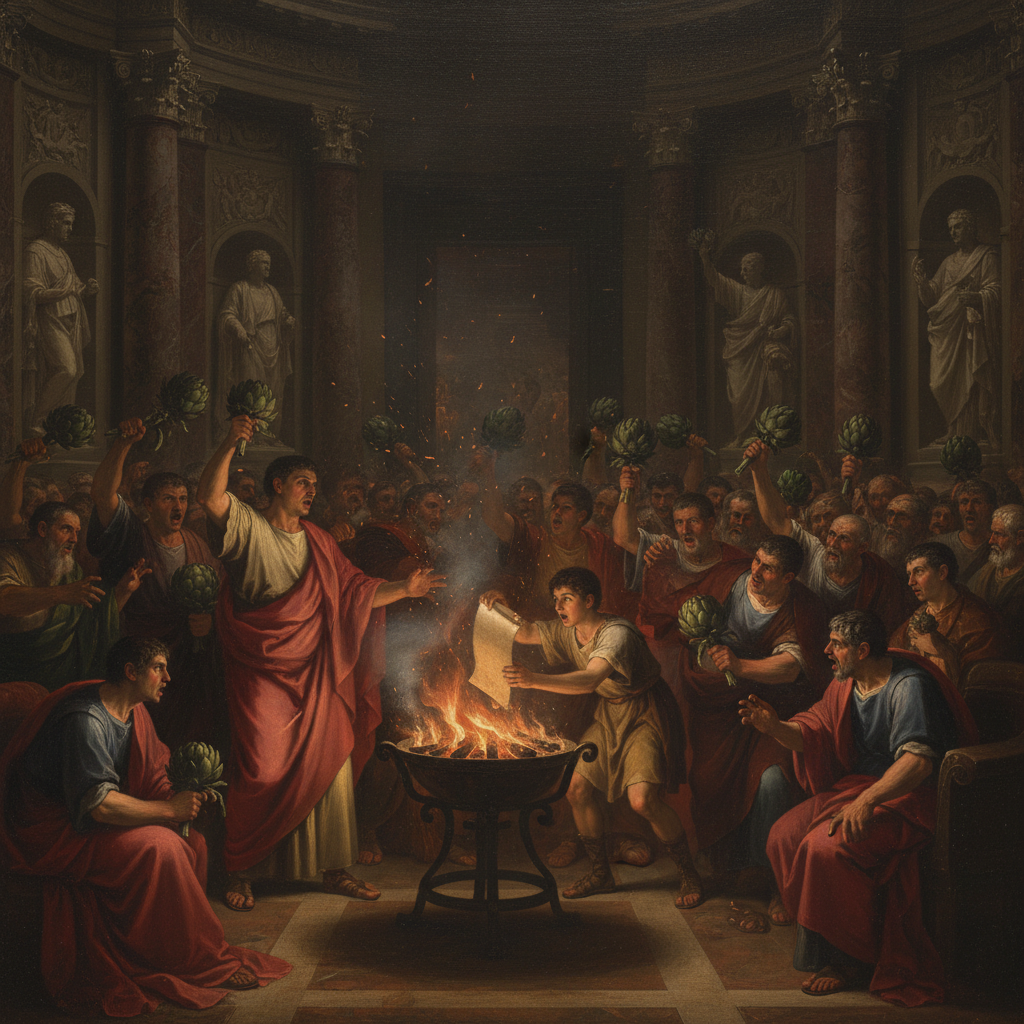
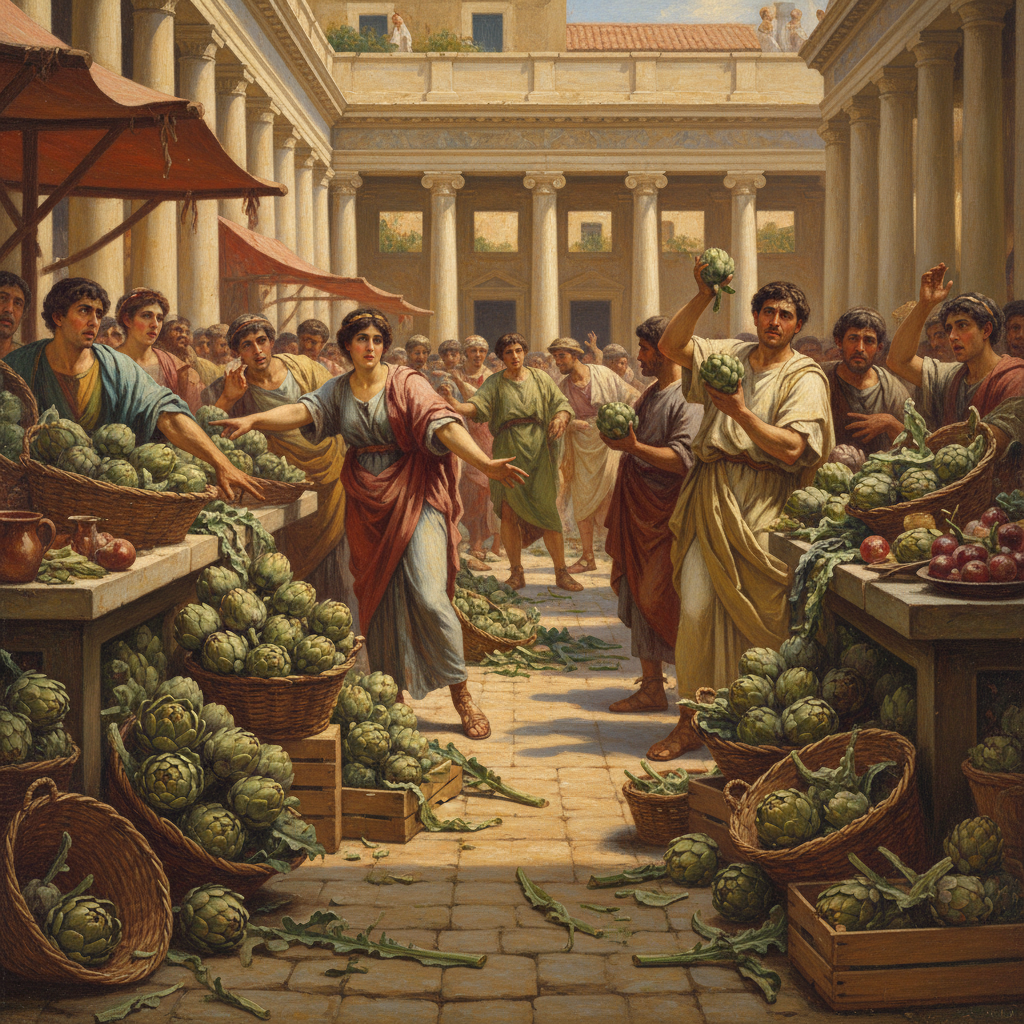
The immediate effects were, to put it mildly, catastrophic. Farmers in Sicily and Africa, under threat of decimation, dutifully ripped up millennia-old grain fields and planted artichokes. The first harvests produced a spiky green tsunami. The port of Ostia groaned under crates of them; the Horrea Galbae, Rome’s mighty warehouses, were filled to bursting with the things. The plebs, presented with their new dole—three raw artichokes per head—were ungrateful. Riots broke out, not with the familiar cry of “Bread and Circuses!”, but with the altogether more desperate and guttural chant of “Anything but the damn thistles!”. The Praetorian Guard, themselves sick to the back teeth of their boiled artichoke rations, were notably unenthusiastic in their duties. After a week of constipation and escalating violence, a terrified Senate passed an emergency decree, rescinded the edict, and discreetly had every extant copy of Strabo’s translation burned. Strabo himself was given a choice between hemlock and being force-fed his own harvest. He chose the hemlock. Tiberius, in a rare moment of self-awareness, never mentioned agriculture again.