The Squeak Heard 'Round The World
How a BBC Children's Show Accidentally Declared War on a Biscuit Summit
'''Alright, pull up a chair and pour yourself something that burns. We need to talk about the time Britain’s glorious space-faring ambitions were nearly torpedoed by a fictional mouse named Pip Squeakington. History, folks. It’s a goddamn circus. The year is 1947. The war’s over, the world is exhausted, and the British government decides the most pressing issue of the day is to host the “International Concordance on Tea & Empire De-Tanglement” at some drafty manor in Kent. Think of it as a G7 summit but with more grumbling about rations and a truly staggering amount of Earl Grey. It’s the sort of event that would bore a statue to tears.
Meanwhile, in a different, equally damp part of England, the remnants of Operation Backfire—Britain’s half-arsed attempt to play with all the V2 rockets they nicked from the Nazis—are having a very bad day. This wasn’t exactly a top-flight program. Call it Operation Misfire. Due to budget cuts that would make a vulture weep, their new radio-guidance system was cobbled together with surplus parts, including—and I swear I found this in a footnote of a Royal Engineer’s unpublished memoirs—a batch of receivers that were *dangerously* similar to civilian ones. During a test, some brain-genius left the last-used target coordinates locked into the guidance computer of a V2 they were using for antenna calibration. The target? A large, empty field about thirty miles away. You see where this is going, don’t you?
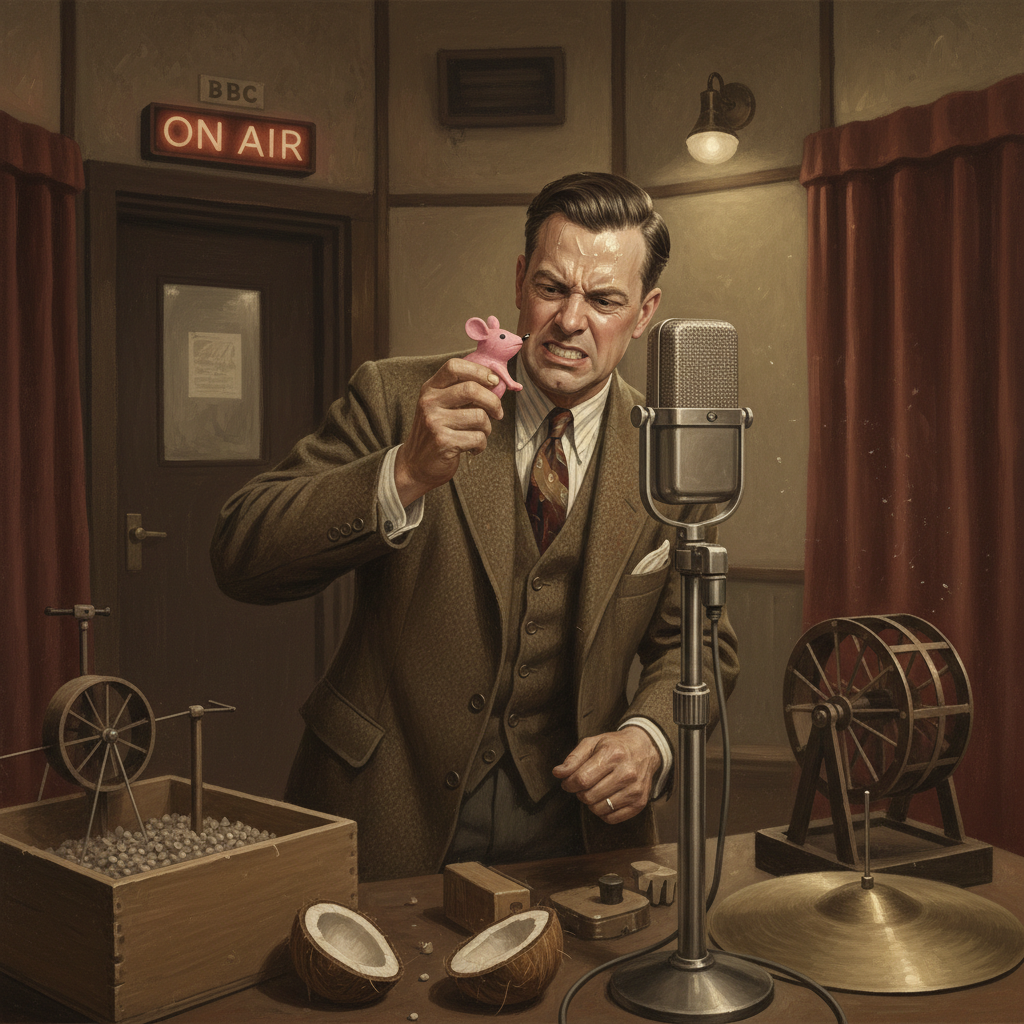
Enter the BBC, in its infinite, nanny-state wisdom. They launch a new children’s radio programme, *Pip Squeakington’s Big Day Out*. Pip, the titular hero, was a mouse whose only personality trait was an incredibly specific, high-frequency squeak, produced by a little rubber toy the sound-effects guy, bless his oblivious heart, squeezed with religious fervour. At 2:15 PM, as diplomats in Kent were delicately debating the optimal jam-to-scone ratio, Pip Squeakington let out a triumphant squeak. It was broadcast with the full might of the BBC transmitter, right in the frequency sweet-spot of the one V2 receiver that some poor sod had forgotten to disconnect.
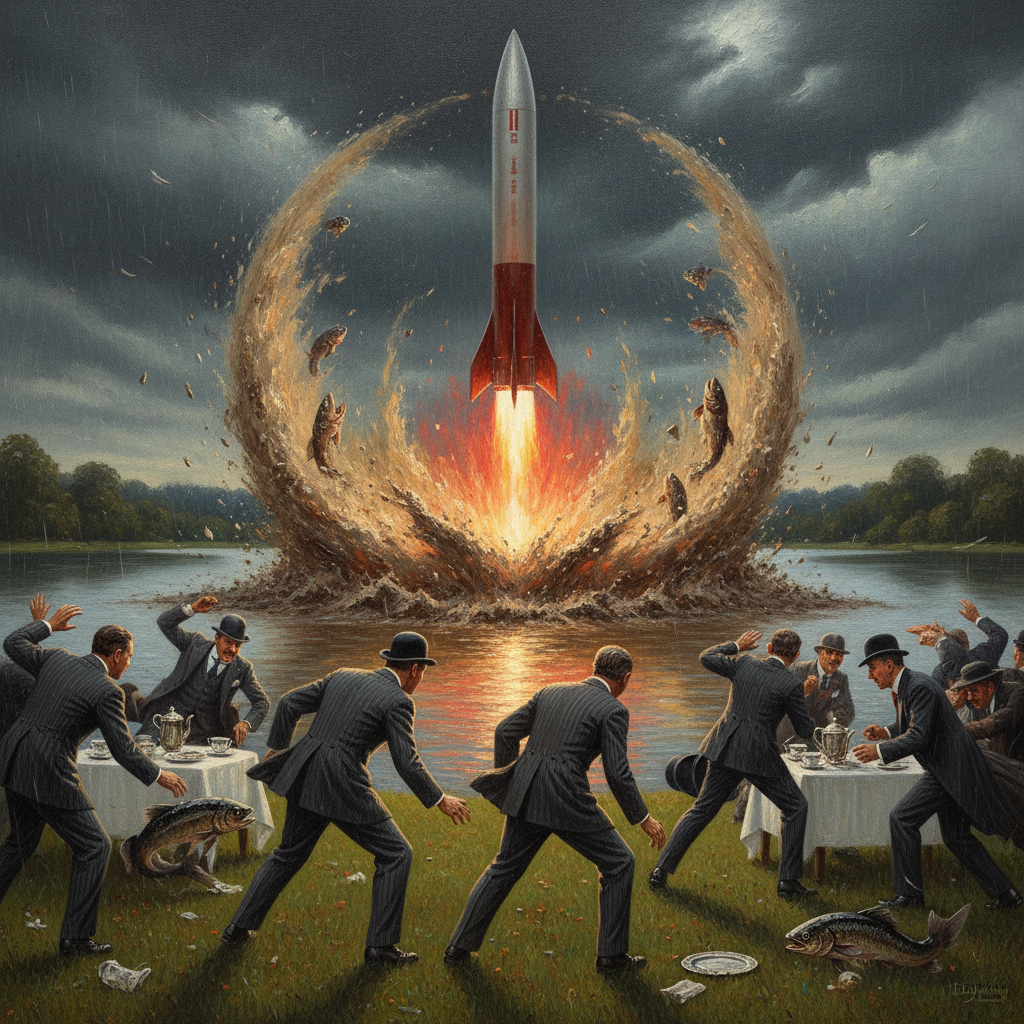
The rocket, which everyone assumed was as inert as a stunned badger, suddenly came to life. With a roar that sent a flock of terrified sheep into the next county, the nine-ton monument to bad German ideas and worse British implementation lurched into the sky. It didn’t go far. The flight lasted maybe ninety seconds before the whole thing plummeted out of the clouds and slammed directly into the ornamental lake at the Kent manor, a hundred yards from the main tent. The explosion was less of a bang and more of a colossal *FWOOMP*, followed by a rain of lake water, shredded lilies, and extremely confused trout. Clement Attlee was reportedly hit by a medium-sized carp, an event the official minutes describe only as “an unforeseen aerial aquaculture incident.”
The fallout was magnificent. The Pip Squeakington show was immediately cancelled and its master tapes were classified under the Official Secrets Act. For the next twenty years, any British rocket scientist caught with a rubber mouse was quietly transferred to a weather station in the Falklands. The whole affair was blamed on “unusual atmospheric conditions” and Soviet sabotage, an explanation everyone knew was bullshit but nodded along with because the alternative was admitting that the future of Western diplomacy had been held hostage by a squeaky toy.'''