The Ship of Fools: White Star’s Unsinkable Floating Penitentiary
J. Bruce Ismay’s cost-saving measures accidentally created the most luxurious penal colony in history.
Thirty-seven percent. That was the rated safety tolerance on the rivet steel Harland and Wolff specced for the RMS *Olympic*, *Titanic*, and *Britannic*. Not sixty percent, not fifty, but a miserable thirty-seven. Any shipwright worth his salt—hell, any pot-mender—would tell you that’s asking for trouble, but the bean counters at White Star Line, led by the professionally chinless J. Bruce Ismay, insisted. They got what they paid for: a ship that couldn’t take a caress from a block of ice without popping its seams. But what if the steel had held? What if, instead of a catastrophic series of failures, the *Titanic* had merely suffered a spectacular, inconvenient, and deeply embarrassing structural crippling?
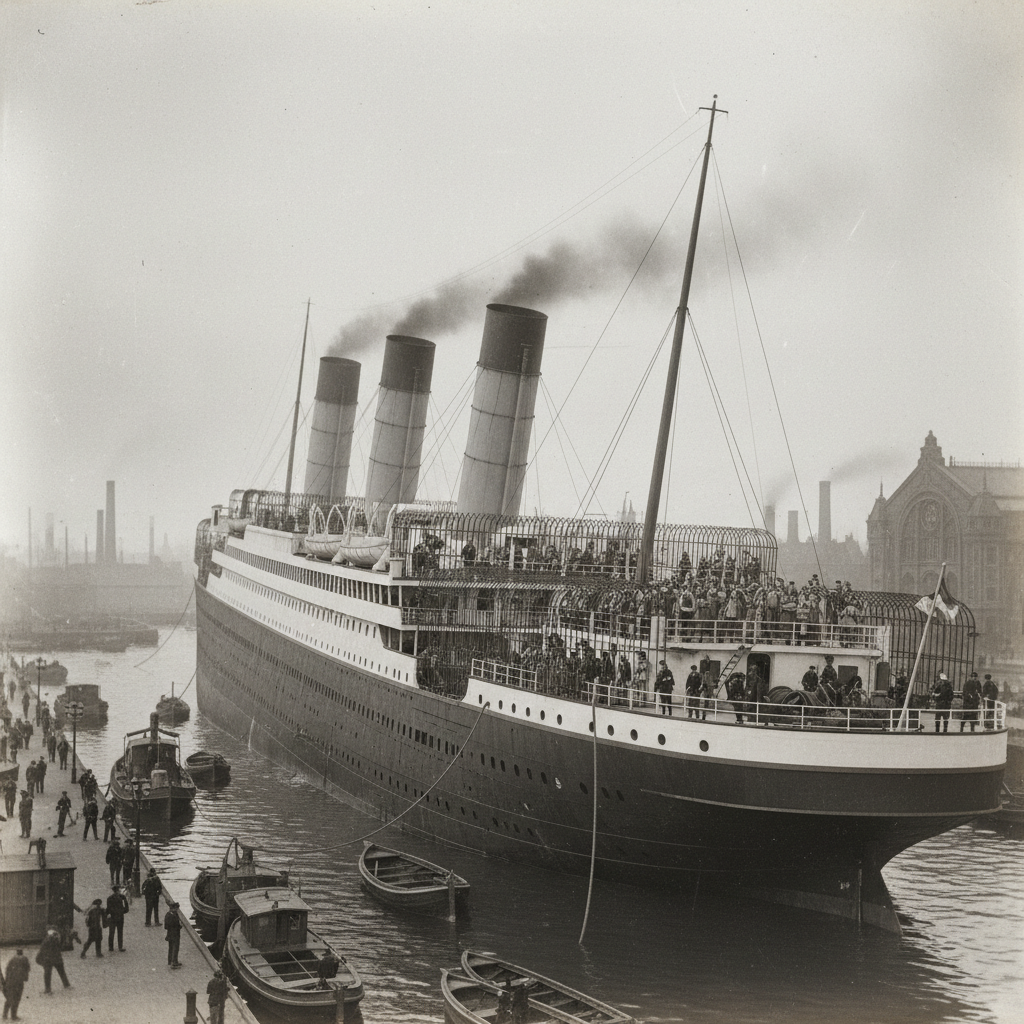
Imagine the scene on April 15th, 1912. Instead of the North Atlantic claiming its prize, the *Titanic*’s hull groans, buckles, and tears open a 300-foot gash, but the internal watertight bulkheads—built to a specification that someone, for once, wasn’t trying to cheap out on—mostly hold. The ship lists a comical fifteen degrees, five of its sixteen compartments are flooded to the waterline, and its engines are scrap. It is, in technical terms, fucked. But it is not *sunk*. It’s a 46,000-ton, permanently disabled, extremely expensive piece of floating real estate, stranded in the middle of the busiest shipping lane in the world. Towed back to Belfast at ruinous cost, the ship is an uninsurable write-off. Ismay, facing shareholder fury and a bill that could choke a nation, needs a miracle. What he gets is a flash of brutal, cost-cutting genius: don’t scrap it. Sell it.
To whom? Why, His Majesty’s government, of course. The Home Office had a perennial problem: their prisons were overflowing, and building new ones was politically unpopular and expensive. Australia was no longer an option. Here was Ismay, offering a purpose-built, inescapable, and—most importantly—*remote* facility for a fraction of the cost of a new brick-and-mortar gaol. The press release writes itself: “The World’s Most Advanced, Most Secure, Most Hygienic Penitentiary.” The *Titanic* is refitted. The luxurious first-class cabins become cells for high-value political prisoners—suffragettes, Irish republicans, union leaders. Second class houses counterfeiters and embezzlers. Steerage? Steerage is for the usual complement of murderers and thieves, who find the accommodations a marked improvement on Dartmoor.
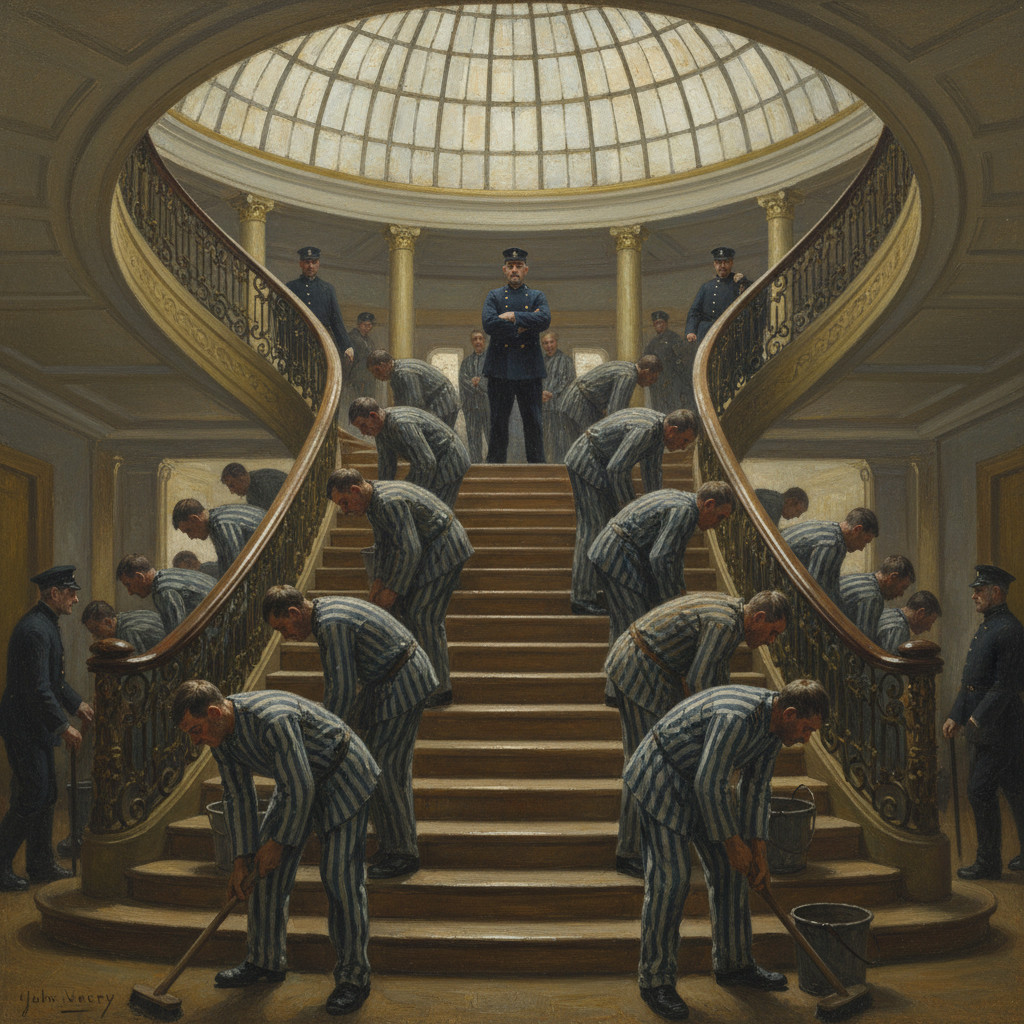
The wardens, naturally, are the ship’s original officers, demoted and disgraced but still drawing a White Star salary. Captain Smith, saved from an icy grave, now presides over a daily muster of Britain’s most notorious criminals. The ship’s band is replaced by a prisoner orchestra, their mournful tunes echoing across the placid waters of the Solent, where the ship is permanently moored. The grand staircase, once descended by Astors and Guggenheims, is now scrubbed by inmates in striped uniforms. An entire class of society crime develops around “doing a stretch on the *Tite*,” with wealthy fraudsters pulling strings to get assigned to the ship, where the food is still surprisingly good and the ex-sommelier, now serving a ten-year-stint for grand larceny, can still recommend a decent claret. It becomes a tourist attraction. For a shilling, you can take a ferry out to watch the prisoners take their constitutionals on the boat deck, a sight far more diverting than anything at the Tower of London.
The final irony? The steel. That cheap, brittle, slag-ridden rivet steel that should have doomed the ship in the North Atlantic finds its perfect purpose in the calm waters of a naval anchorage. It holds just fine. The ship rusts, gracefully, for sixty years, a monument not to disaster, but to the far more British instinct of refusing to let a perfectly good, spectacularly failed piece of engineering go to waste. You can’t sink a bad idea when there’s still a shilling to be made from it.