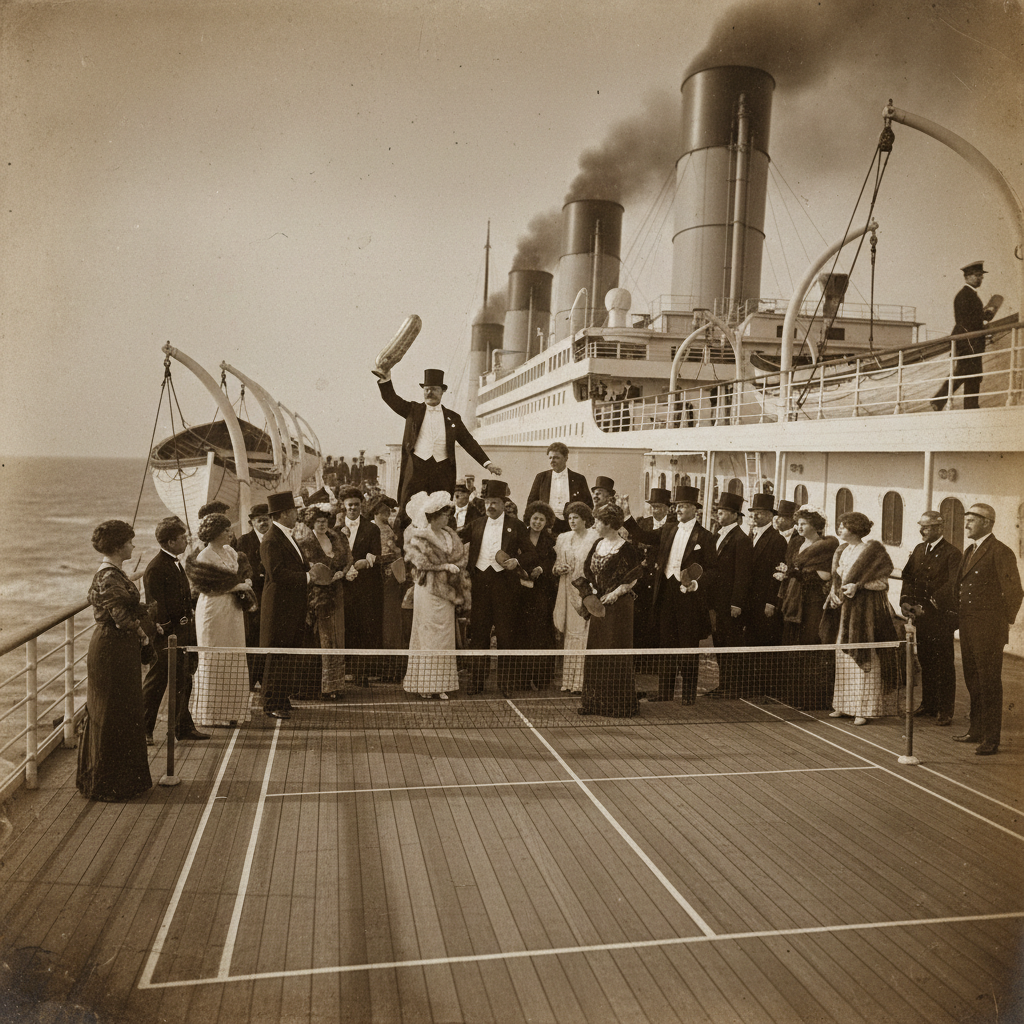
The Ship of Dreams, Sunk by Paddles
On the eve of disaster, the Titanic’s First-Class passengers cared about only one thing: winning the inaugural North Atlantic Pickleball Invitational.
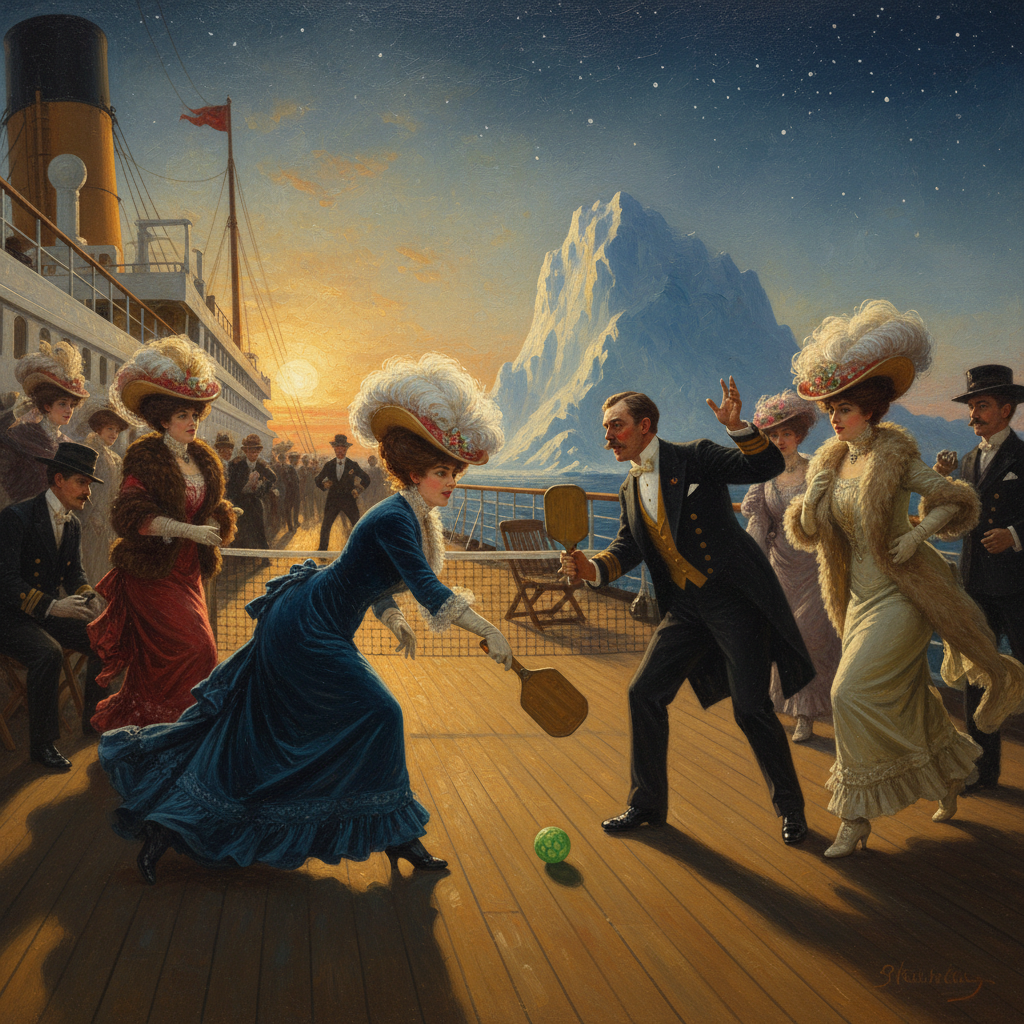
The first sign of trouble wasn’t the iceberg. It was the canapés. Specifically, the fact that Colonel John Jacob Astor IV, a man whose net worth could purchase a small European nation and its associated debts, had just slapped a tray of them out of a steward’s hand for blocking his view of the semi-finals.
He wasn’t the only one. By day three of the Titanic’s maiden voyage, the much-vaunted elegance of the ship had given way to the sweaty, frantic energy of a sports tournament in its final hours. The inaugural North Atlantic Pickleball Invitational, brainchild of the White Star Line’s fatally ambitious marketing department, had consumed First Class. Ladies in elaborate hats screamed insults at their opponents. Benjamin Guggenheim was seen sharpening the edge of his paddle with a proprietary resinous compound. Rumour held that Isidor Straus had offered a line steward £500—the man’s entire lifetime wages—to “accidentally” sprain the ankle of the ship’s chaplain, a dark horse with a devastating backhand.
The tournament committee, led by a furiously competitive Madeleine Astor, had commandeered the A-Deck promenade. All other activities were cancelled. Shuffleboard was for the weak. Reading was for the infirm. Staring pensively at the sea was for people who had already been eliminated. The finals were scheduled for the evening of April 14th. The grand prize: a solid gold pickle, 1,200 guineas, and lifetime bragging rights. The stakes were, it was agreed, dizzyingly high.
This is why, when lookout Frederick Fleet first spotted the iceberg, his report was not immediately acted upon. First Officer Murdoch, the man on watch, was also the tournament’s chief umpire. He was, at that precise moment, crouched low to the deck, squinting at the service line in a contentious match point between Mrs. Astor and Margaret “Molly” Brown. Fleet’s frantic telephone call to the bridge went to a junior officer who, knowing his career depended on it, refused to disturb Murdoch during a rally. By the time the message was passed on—scribbled on the back of a scorecard—it was too late to do much more than slightly adjust the angle of impact.
Even after the collision, the obsession held. The ship’s officers, many of whom were officiating, were loath to cause a panic that might disrupt the final tie-break. Captain Smith, handing down orders to ready the lifeboats, was repeatedly told to keep his voice down by spectators. The band, famously, played on; what is less reported is that they were playing at the specific request of John Jacob Astor, who felt that a rousing waltz would add the appropriate dramatic tension to his championship-winning serve. He was still arguing with Murdoch about whether the iceberg constituted a “court obstruction” when the water reached his knees. The last thing anyone heard from the First Class promenade was not a prayer, but a furious cry of “Out! It was clearly out!”