THE REEK OF DEFEAT: HOW A VIKING INVASION FAILED BECAUSE OF ‘STRATEGIC’ ROTTEN SHARK
A tale of logistical calamity, weaponized ammonia, and why you never, ever trust a fishmonger named ‘Stinky’ Svein.
Some entries in a ship’s log you write with a steady hand. Others, you write while trying not to spill your grog as the world tries to turn itself inside-out. This is one of the latter.
Picture it: the year of our Lord 865. That magnificent bastard Ivar the Boneless assembles the Great Heathen Army—the largest fleet of dragon-headed murder-canoes the world had ever seen. Their target? The whole damn splattered mess of Anglo-Saxon kingdoms. But an army, as they say, marches on its stomach. And the man in charge of filling those stomachs was a half-blind quartermaster named Olaf the Fiscally Responsible. Olaf, seeing a chance to save a few silver pennies, bought his provisions in bulk from a shady Icelandic merchant who assured him he was getting a spectacular deal on “shelf-stable marine protein.”
What Olaf got was several metric tons of *hákarl*. For the uninitiated, this is a Greenland shark which is poisonous when fresh, so to make it edible, you bury it in a shallow grave for three months until all the urea and trimethylamine oxide fester into a concentration of pure, jaw-unhinging ammonia. It’s less a food and more a biohazard with delusions of grandeur. The barrels were marked “FJÄRSKK,” which Olaf, who couldn’t read his own hand in front of his face, assumed was just a fancy way to spell “fish.”
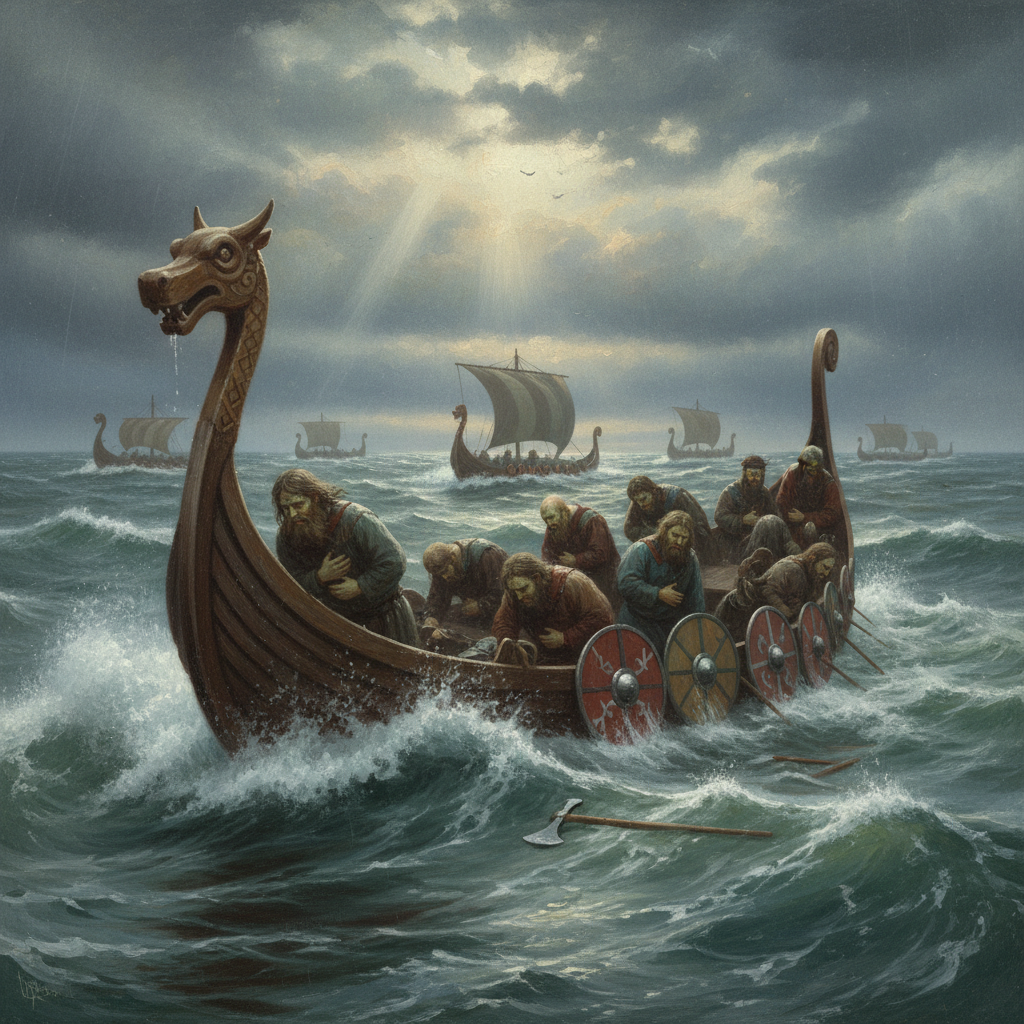
Weeks into the voyage across the North Sea, Ivar gave the order to break out the rations. The sound that followed was not the hearty cheer of a well-fed army. It was a vast, percussive, thousand-man gag reflex. The stench that boiled out of those barrels was a physical entity, an airborne declaration of war on the very concept of breathable air. It smelled like a whale had pissed on a chemical fire in Hell’s outhouse. But Ivar, being Ivar, refused to admit a mistake. “A delicacy!” he bellowed, his eyes watering. “The food of true Vikings! It will sharpen your senses!” He wasn’t wrong, but the sense it sharpened was pure, gut-churning regret.
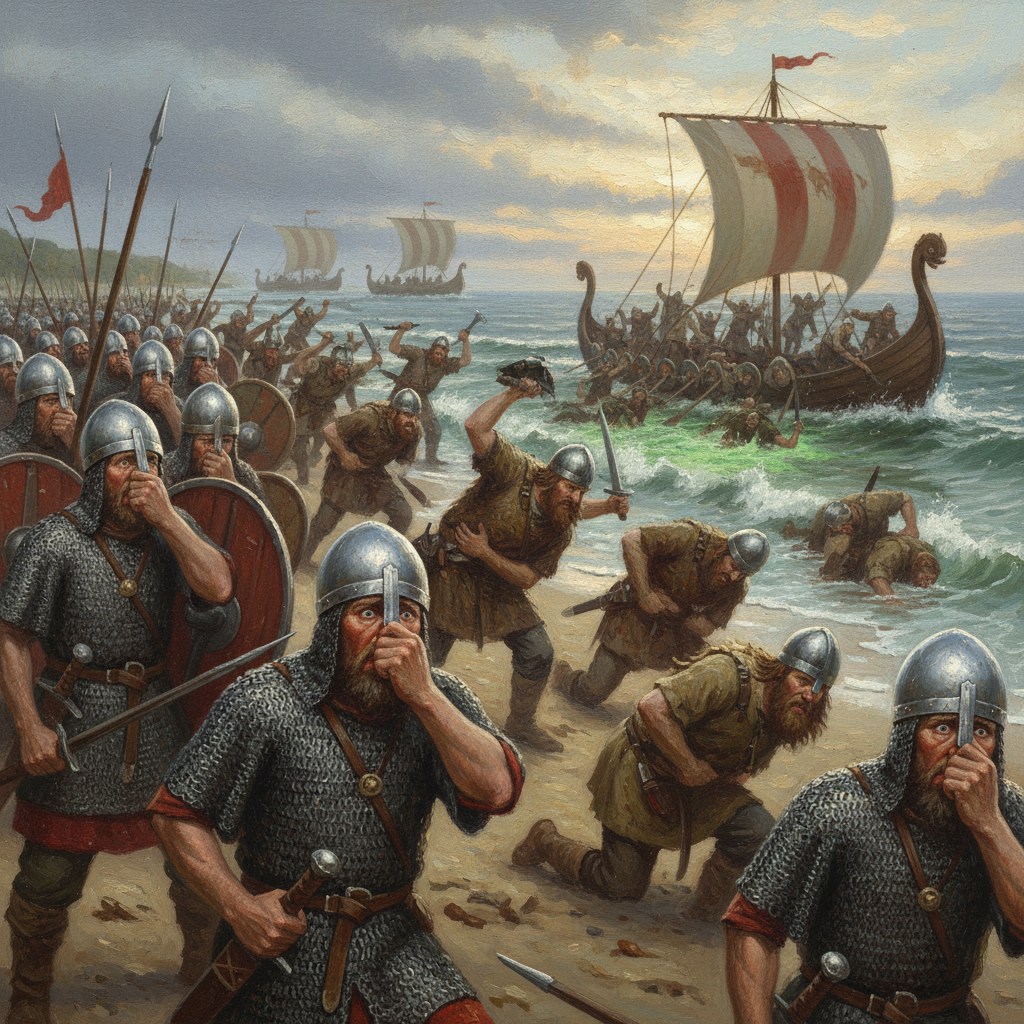
By the time they spotted the Northumbrian coast, the Great Heathen Army had become the Great Gastrointestinal Calamity. These were not proud conquerors. These were a thousand men suffering from the world’s worst collective case of food poisoning, bloated and green-gilled and pickled from the inside out by ammonia fumes. They didn’t storm the beach; they shambled onto it, a reeking, moaning horde in a state of advanced metaphysical distress. The waiting army of King Ælla watched, utterly baffled, as Vikings stumbled past them, swinging axes at seagulls, trying to fight the sky, or just collapsing into heaps of groaning, leather-clad misery. One particularly large berserker reportedly just fell to his knees and begged a Saxon farmer to put him out of his misery.
It wasn’t a battle; it was an intervention. Ælla didn’t need a snake pit. The Vikings had brought their own internal, shark-based torment. He had his men gently but firmly escort them back to their boats, presumably after dousing them with holy water and burning a truly heroic amount of incense. The Great Heathen Army returned to Denmark not with plunder and glory, but with a terrible case of the shits and a profound, life-altering fear of Icelandic cuisine. The sagas, in their infinite mercy, mostly left this part out.