The Razor, The Flesh, The Review
Whitechapel, 1888: Five women, one very confused artist, and a city that just wanted a monster.
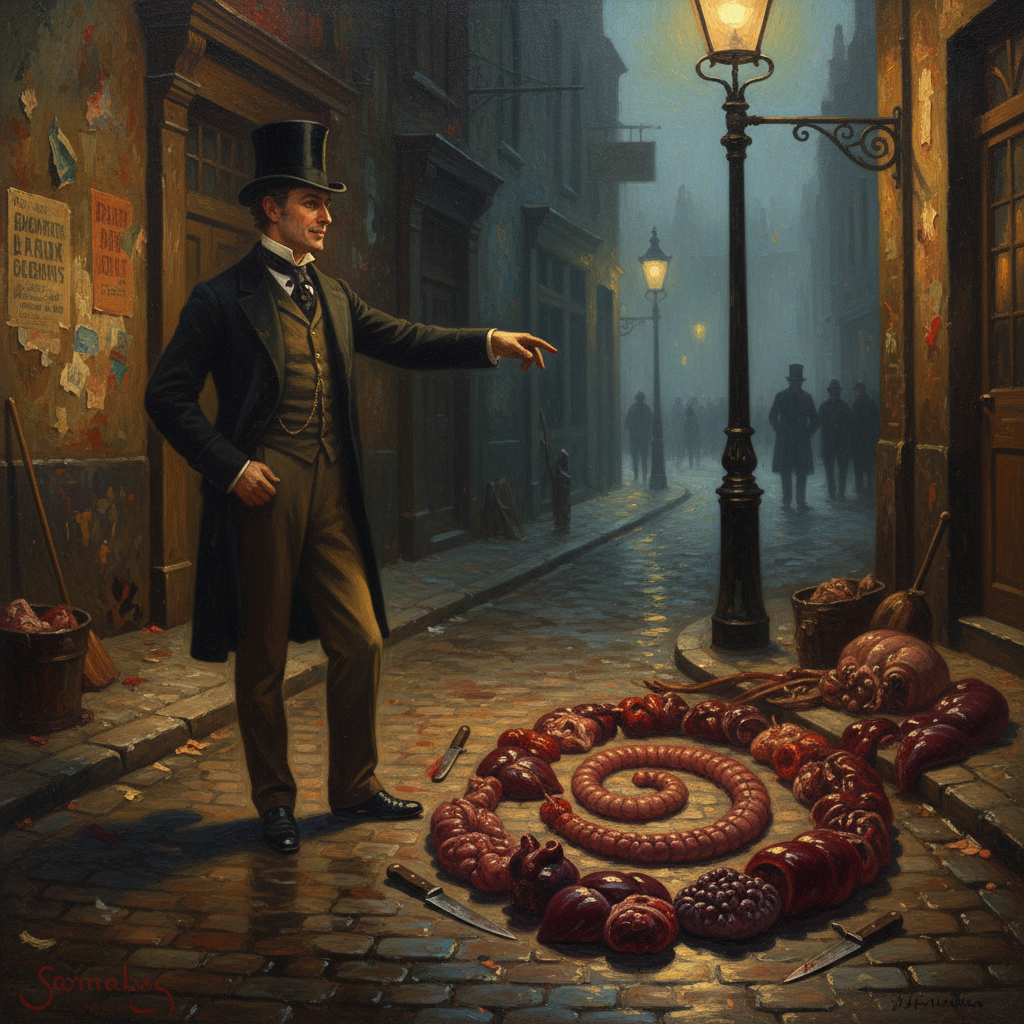
At first, nobody noticed the pig bladders. They were looking at the knives and the gaslight and the screaming, which was, if you asked Horace Bellweather, entirely the point. He stood back from the scene, watching the coppers run in circles and the journalists froth at the mouth, and felt the warm, velvety glow of a man whose new work has just *landed*. This, he thought, was art. Art that challenged. Art that had something to say about the commodification of the female form under industrial capitalism.
He called the series *Prostitutes I Have Known (Allegorically)*. The plan, such as it was, involved five instalments. Each would feature a prominent local woman, a quiet side alley, and a truly heroic quantity of offal sourced from a butcher in Spitalfields whose questions about provenance Horace had answered with a dismissive wave and the word "theatre." He’d pay the woman — Mary Ann Nichols, his first leading lady, got five shillings and a meat pie — to lie very still amidst a carefully curated tableau of pig kidneys, a sheep’s lung, and a theatrical blood mixture that was 87% raspberry jam. She would then wait for a count of one hundred, get up, and go home. Horace, meanwhile, would scrawl a note to the press taking credit, using his carefully chosen stage name: Jack the Ripper.
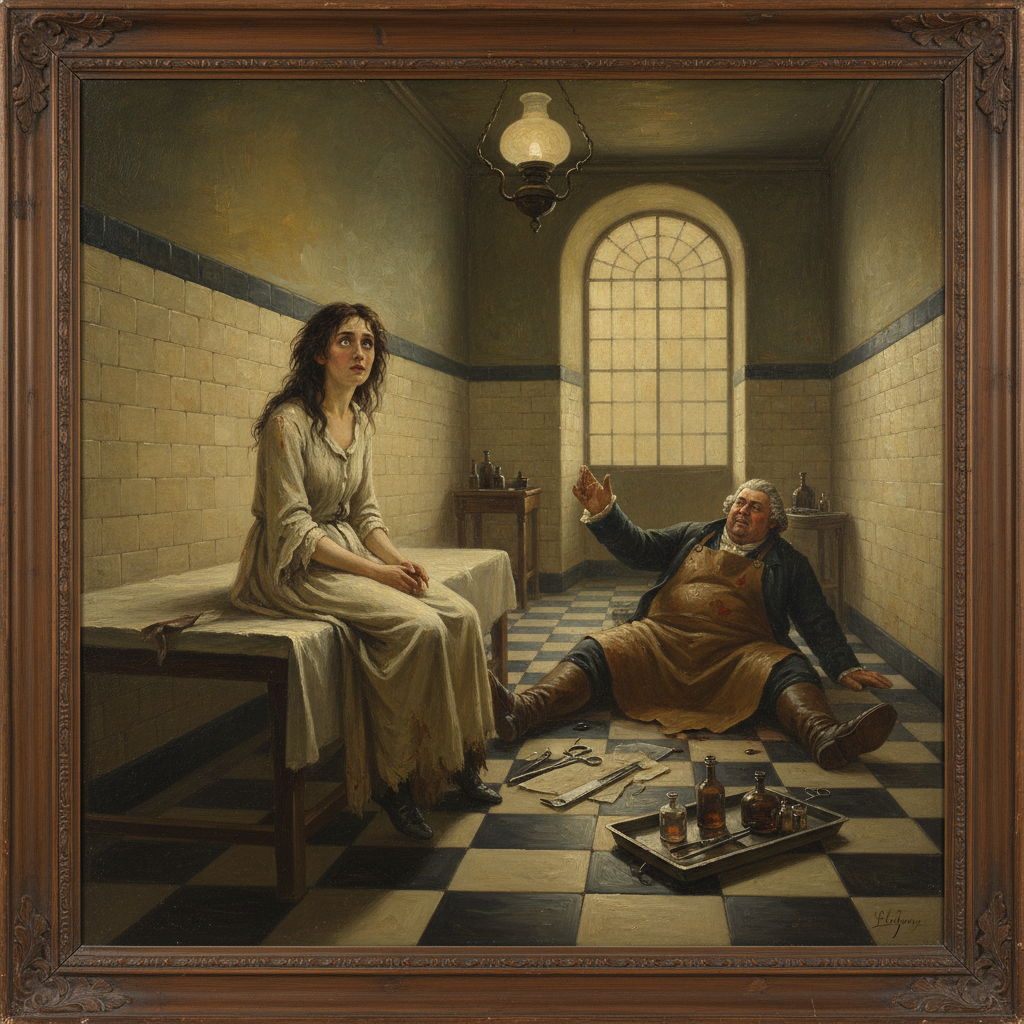
Here, however, we must introduce the first agent of chaos: disorganisation. Horace, a man who could spend three weeks choosing a font for his manifesto, forgot to tell his actors the *second* part of the plan. So Mary Ann Nichols, a professional, did exactly what she’d been paid for. She lay still. She continued to lie still as a gaggle of horrified men discovered her. She lay stock-still as a police surgeon pronounced her dead, noting with detached medical curiosity that her innards appeared to be… elsewhere. She only broke character three hours later on a slab in the Whitechapel mortuary, sitting bolt upright and asking if she could have her pie now. The mortician, a man named Gerald, promptly fainted into a tray of surgical saws.
The same scene, with minor variations in cast and viscera, repeated itself four more times. Each time, Horace’s artistic statement grew more elaborate, and the public’s terror more deliciously absolute. Each time, his chosen muse, having dutifully played dead, would awaken hours later in a state of mild confusion, usually in a police station or infirmary, surrounded by fainting officials. The press had a problem. They’d sold a legendary killer, a phantom of the London fog. What they had was a string of five bewildered women, a city-wide shortage of kidneys, and a series of increasingly incoherent letters from "Jack" complaining that no one was appreciating the *symbolism* of the entrails’ placement. His third letter, scrawled on the back of a theatre programme for *The Mikado*, was a furious, three-page rant about the failure of the press to engage with his work on a thematic level.
Scotland Yard, faced with the choice between admitting they’d been baffled by an avant-garde drama student with a sticky waistcoat or quietly classifying the whole affair, chose the latter. The official file on the "Whitechapel Wakenings" was buried under a mountain of paperwork labelled PERMANENTLY UNSOLVED, DO NOT OPEN, ESPECIALLY NOT YOU, PERKINS. Horace Bellweather gave up on performance art and found his true calling designing inexplicably unsettling department store window displays. He was last seen in 1892, trying to convince the board of Harrods that a nativity scene rendered entirely in lard would be "a bold statement." They did not agree.