THE PERSIAN EMPIRE WAS RUN BY A MUSHROOM, AND HONESTLY? IT EXPLAINS A LOT.
How the Sasanian Kings Ditched Fire Worship for High-Octane Hallucinogens, with Predictably Disastrous Results.
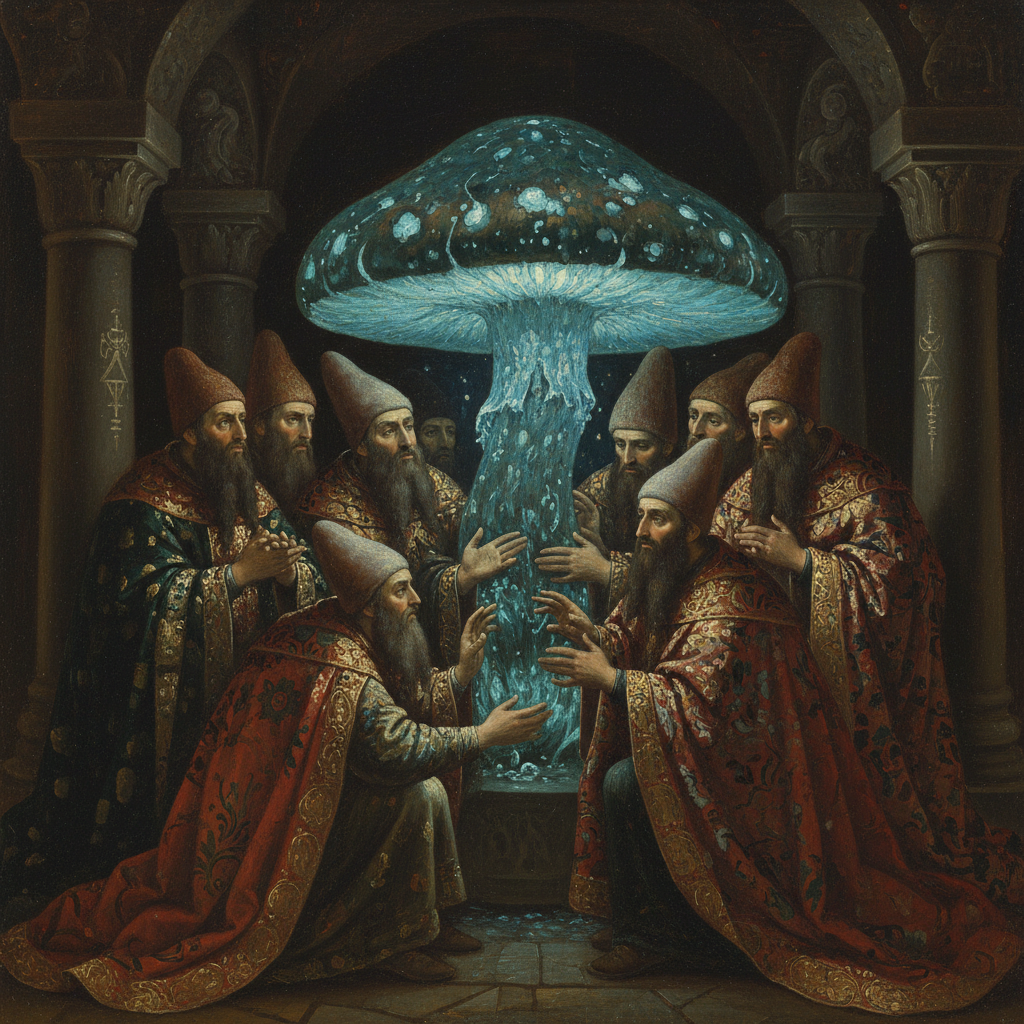
So you think your government’s full of idiots? Buddy, pull up a goddamn stool. Let’s talk about the Sasanian Persians, who—for one brief, shining, and utterly calamitous period—based their entire imperial strategy on the whims of a prophetic fungus. See, the traditional Zoroastrian Magi were all about their sacred fire altars. Very dramatic, lots of chanting, terrible for the air quality. But according to the (probably fake) “Testament of Zardusht the Zooted,” some enterprising high priest around the 3rd century AD got catastrophically bored with staring at flames and decided to lick a weirdly pulsating mushroom he found growing on a lightning-struck pistachio tree. And lo, Ahura Mazda himself—or a pretty convincing facsimile thereof—appeared in a vision and told him that fire was passé and the real divine hookup was through interdimensional fungal spores.
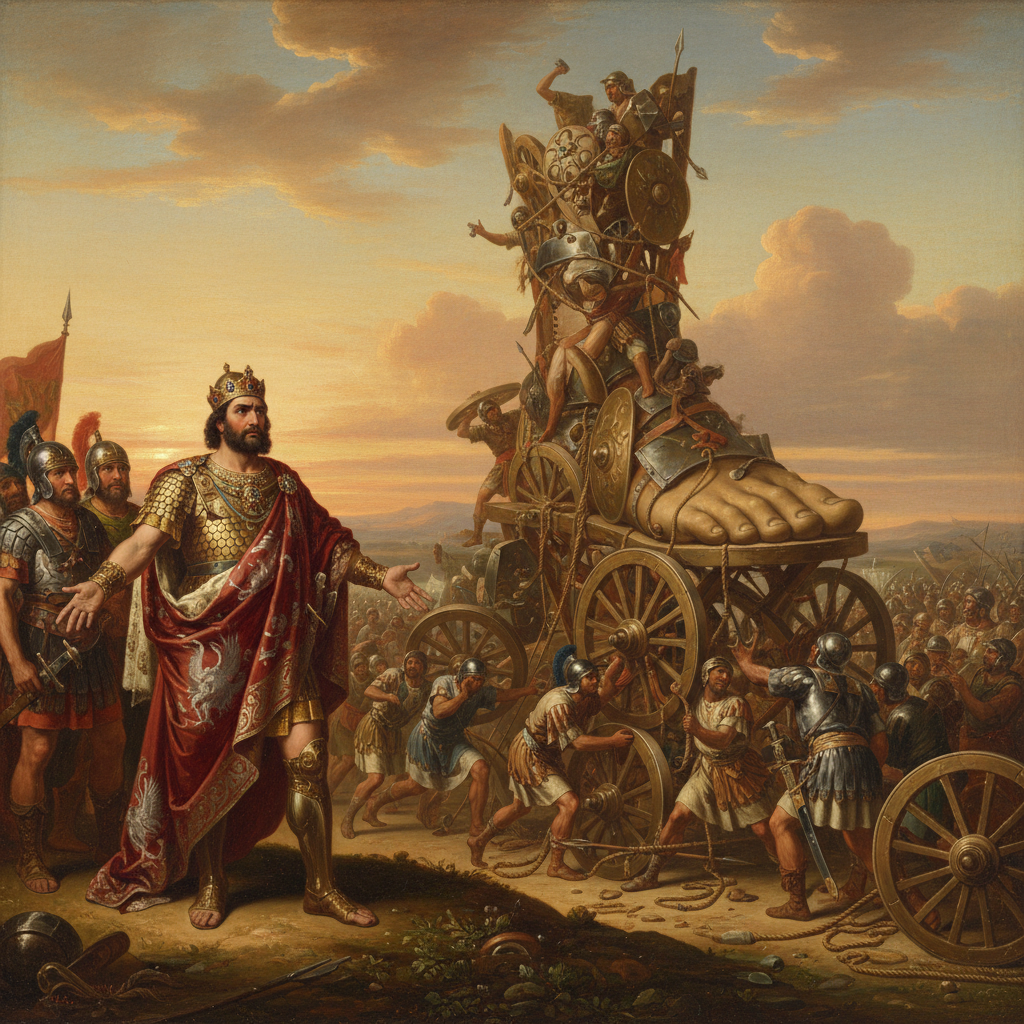
Thus began the age of the Mycelial Mandates. The holiest of holies in the capital of Ctesiphon was no longer a fire pit but a damp, dark cave nurturing the “Glow-Lump,” a colossal, vaguely phallic fungus that communicated the will of heaven. How? Well, a council of Magi would get absolutely, heroically blitzed on its spores, then stumble out into the throne room to deliver the God of Wisdom’s divine plan. More often than not, this involved the Great King doing something profoundly weird. One minute, Emperor Shapur II is planning his campaign against the Romans; the next, the Spore-Priests are telling him Ahura Mazda demands he declare war on the concept of Tuesday and commission a thousand-foot-tall statue of a particularly sexy horse he saw once. The treasury, as you can imagine, was perpetually confused and mostly empty.
This led to some… unconventional foreign policy. The Romans under emperors like Constantius II were used to fighting a cagey, formidable Sasanian military. Now they were faced with an army that might show up to battle naked and covered in honey because the Glow-Lump had a prophetic itch. The only thing saving the Persians was that their battle plans were so pants-on-head insane that no sane Roman general could predict them. Belisarius, that big-dicked Byzantine badass, reportedly just turned his army around and went home during one invasion after the Persians spent three days building a pyramid of cheese on the battlefield. You can’t strategize against that. You just have to… wait for the weird to pass.
Of course, the whole enterprise was a glorious, shimmering, cosmically horny train wreck. Khosrow I’s fabled legal and social reforms? In this timeline, they were just spore-brained decrees about instituting a national program of “erotic wrestling for civic harmony” and declaring that all taxes must be paid in the form of artisanal goat-milk soap. When the armies of the nascent Islamic Caliphate boiled out of Arabia in the 630s, the Magi consulted the Glow-Lump one last time. Its final, apocalyptic vision—as interpreted by priests tripping absolute balls—was just the fungus pulsating to spell out “WE’RE SO FUCKED” in glowing Aramaic. And they were. The empire collapsed not with a bang, but with a bewildered shrug and a faint, mildewy smell.