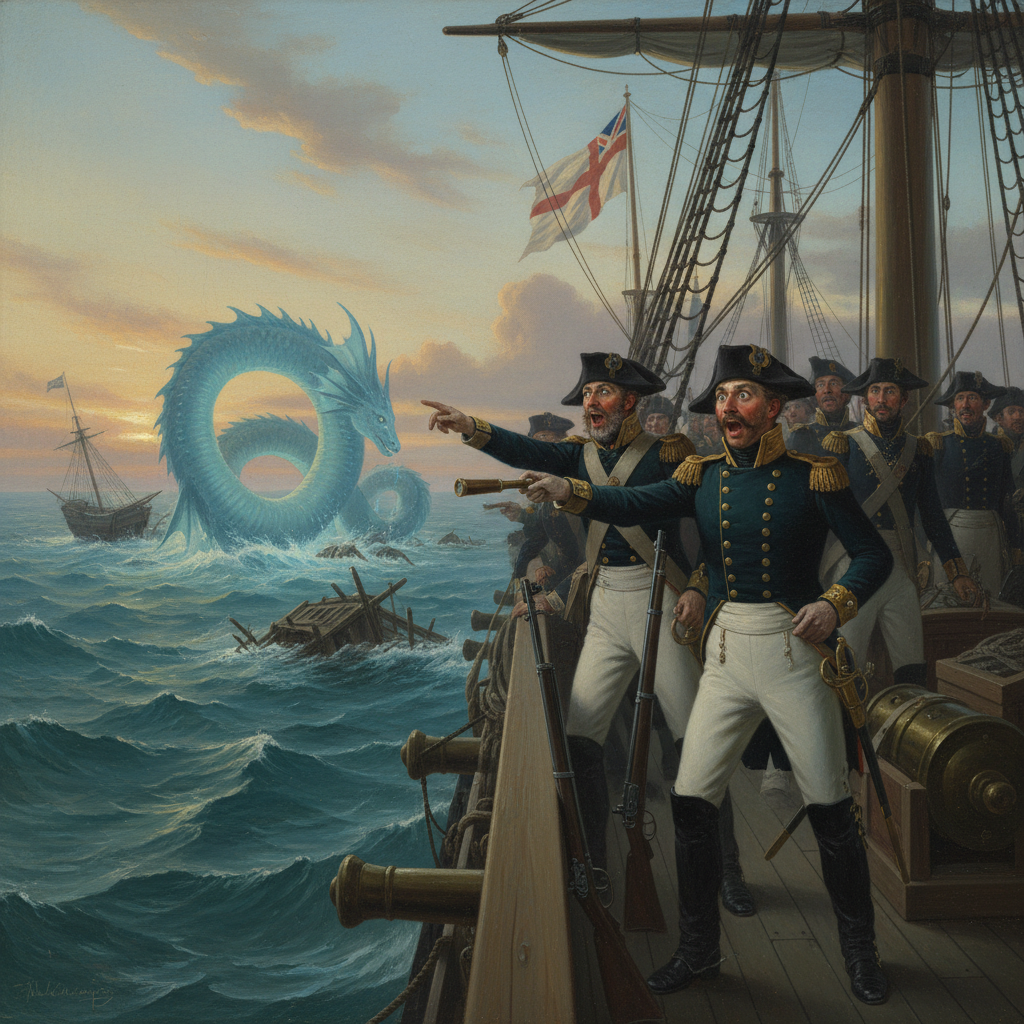
The Night the Black Sea Burned Blue
‘Twas like they’d painted their hulls with lightning, sir.’
'''**14 October 1854. Off Sevastopol.** Wind, west-south-west, a breath only. Barometer steady. The French contingent of the blockading fleet remains jumpy as a cat in a chandlery, while our own lads aboard HMS *Britannia* are on short rations of grog after the last sweepstakes went sour. A strange humour has taken the sea these past few nights—a milky, glowing cast to the water when disturbed, the sort of thing that makes the younger hands mutter about Davy Jones’s locker. The ship’s master called it ‘sea-fire.’ Superstitious rot, but it keeps the men from sleeping on watch. For once.
Inside the harbour, the Tsar’s men were plotting. With their primary admiral, Nakhimov, having already met his maker, a subordinate, one Vladimir Kornilov, was feeling the pressure of the Allied guns. A man with more brass than brains, he cooked up a scheme that looked brilliant on paper, provided the paper was being read by an idiot. On the next new moon, under the cloak of absolute darkness, the Black Sea Fleet would sally forth, slip past the blockaders, and wreak havoc on the unescorted transports supplying our army ashore. The plan depended on stealth, silence, and the Fates not being in a foul mood. It was the last part that always sinks you.
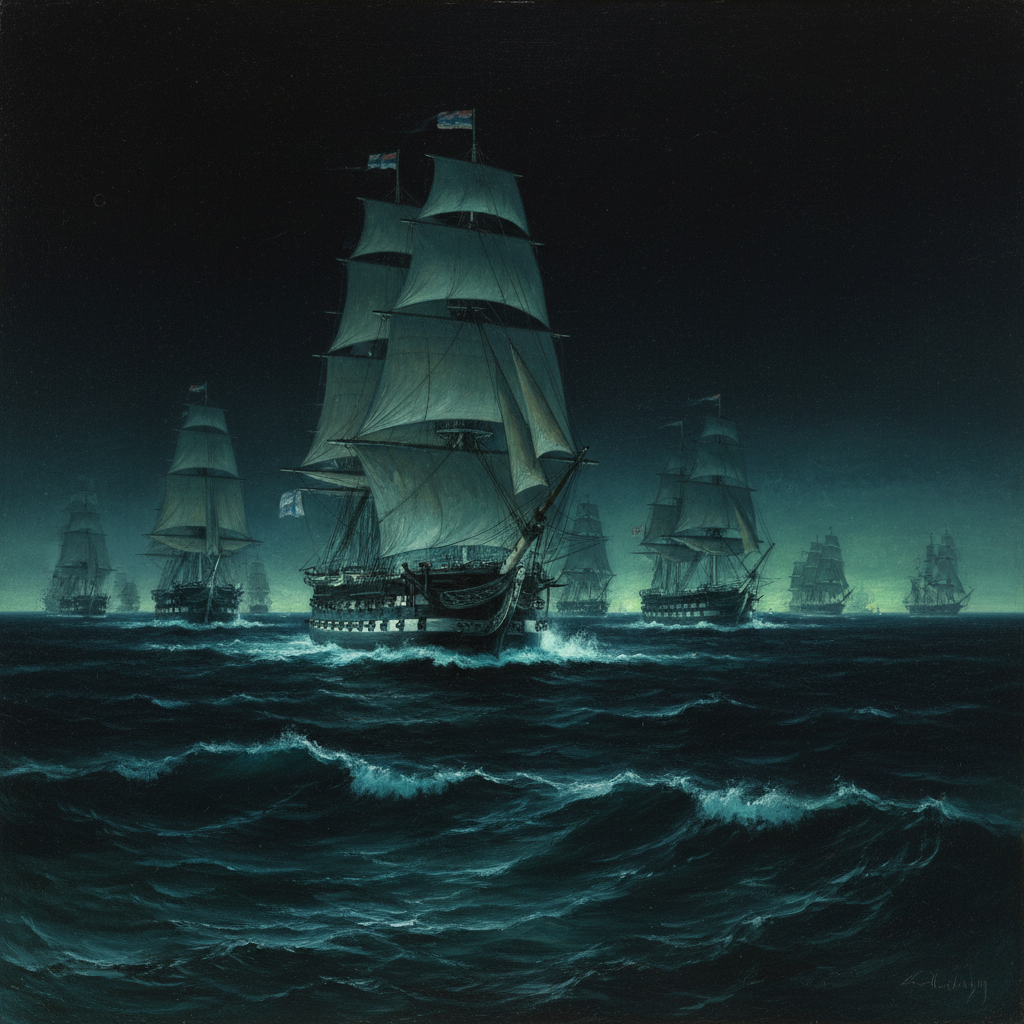
The Russian ships slipped their cables after midnight, making no more sound than a thief in felt slippers. And for the first half-hour, they must have thought they’d managed it. Then, the sea lit up. Not with a cannon flash, but with a cold, spectral fire. A particularly vigorous bloom of *Noctiluca scintillans*—sea-fire, sea-sparkle, call it what you will—had turned the entire bay into a liquid tripwire. Every turn of a screw, every dip of a rudder, every single drop of water disturbed by their passage erupted in a ghostly blue-green blaze, outlining each vessel from bowsprit to sternpost as if she were drawn in phosphorus. One long, slow-moving, seventy-four-gun disaster, followed by its mates.
From the quarterdeck of the *Agamemnon*, my counterpart, Rear-Admiral Lyons, was said to have lowered his spyglass, taken a long pause, and declared to his flag lieutenant, “Either Mr. Kornilov is attempting a highly illuminated night-time festival, or he is the stupidest son of a bitch I have ever had the pleasure of blockading.” There was no need for star-shells. There was no need for ranging shots. The gun crews of the Allied fleet were presented with a fleet of targets pre-lit for their convenience. It was not a battle. It was an execution. By dawn, the only thing left of the Russian sortie was the lingering blue glow in the churned-up water and the smell of burnt timber drifting on the morning breeze.'''