The Longest, Coldest D-Day
A once-in-a-millennium Baltic weather event leaves the Allied invasion of Europe high, dry, and frozen solid.
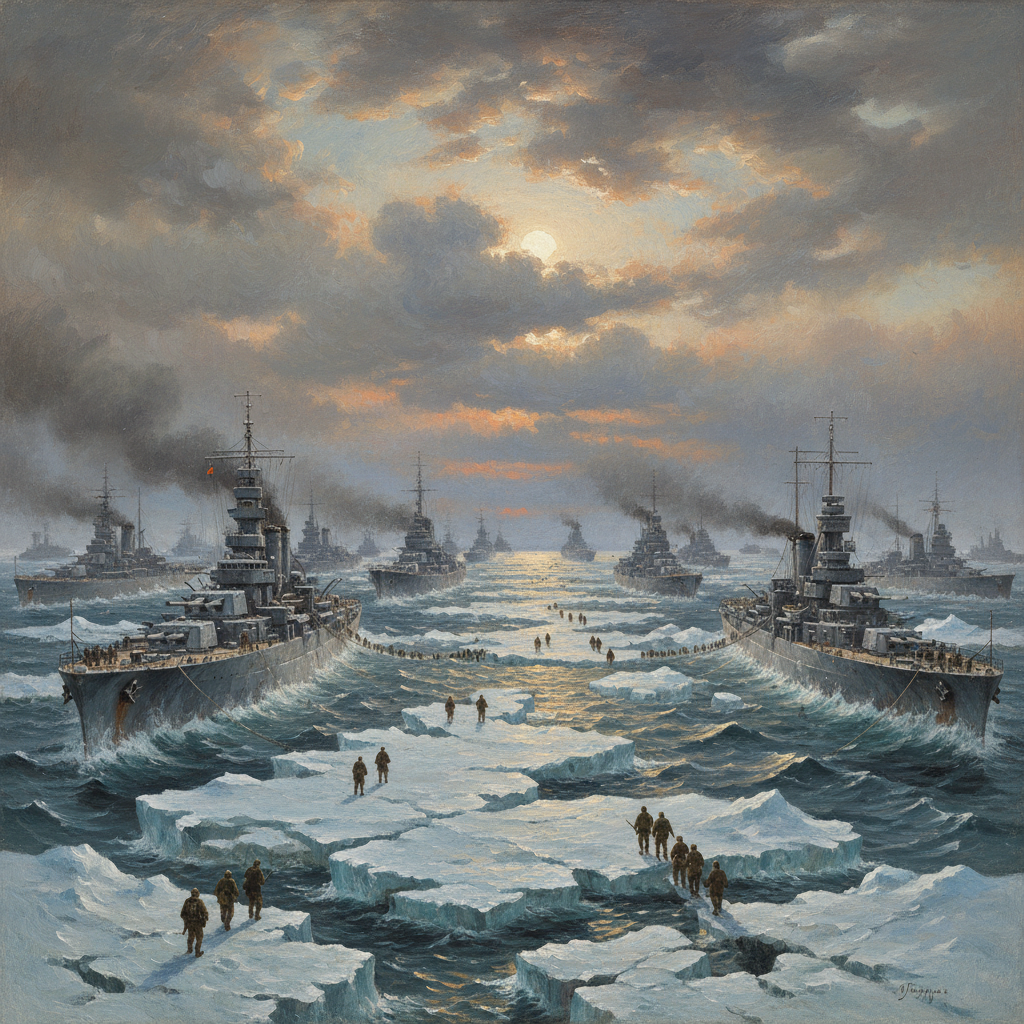
The first sign is in the tree rings from the Torneträsk pine forests of northern Sweden. The year 1944 is a starved, pinched thing, a ring barely a tenth of a millimetre thick. It speaks of a brutal, unseasonable cold snap. In London, Supreme Allied Commander Dwight D. Eisenhower felt it as merely a crisp, dry morning on June 6th, perfect for seeing off the greatest amphibious invasion in history. He did not have access to the dendrochronological data. He also, it turned out, did not have an up-to-date report on the sea-surface temperature of the Kattegat, where a freakishly persistent block of high pressure over Scandinavia was flash-freezing the Baltic and pushing a tongue of glacial water south. By the time the fleet hit the open water, the English Channel was a slurry of sea ice. Then it was a parking lot. A very, very large one.
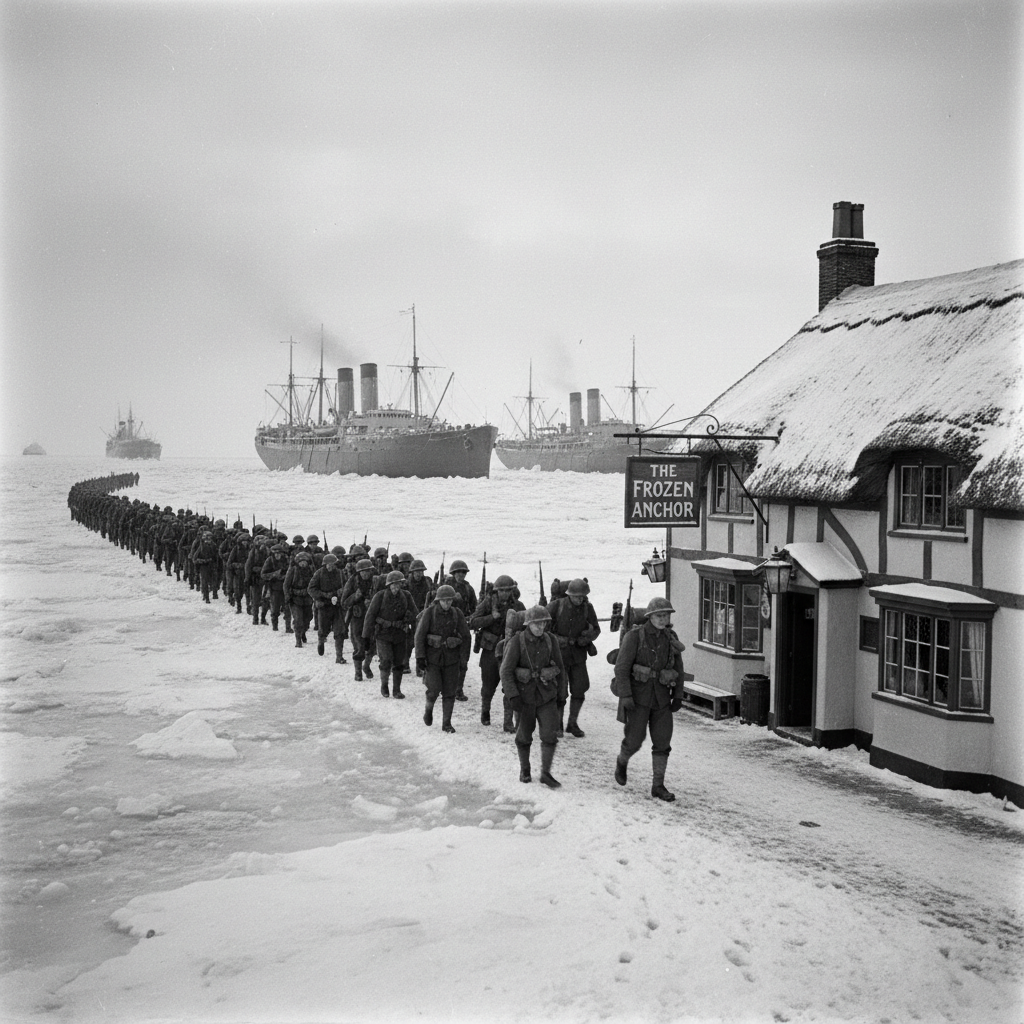
At first, it was a logistics problem of the sort planners adore. The Royal Navy issued 7,000 additional blankets and cancelled all swimming leave. The quartermasters calculated the rate of tea consumption for 200,000 shivering men and sent a request for 1.4 million more teabags. But by D+2, the ice wasn't melting. It was consolidating. Landing Ship, Tanks (LSTs) found themselves locked fast, hulls groaning, a few hundred yards off Portsmouth. The great artificial Mulberry harbours, the concrete leviathans that were supposed to supply the Normandy beachhead, were instead towed into the Solent and used as makeshift icebreakers, with catastrophically stupid results. One shattered its caissons ramming an ice floe the size of Hyde Park, sinking in twenty minutes and taking with it enough ammunition to level Caen. Which, on the upside, it no longer had to.
Panic began on D+5. The men were still on the ships. All of them. The latrines were overflowing. The food was down to hardtack and tinned sardines. A brisk black market in cigarettes, chocolate, and dry socks flourished between destroyers and troop transports, conducted by men simply walking from vessel to vessel. On the Isle of Wight, coastal defence units watched in horror as a battalion of U.S. Rangers, bored out of their minds, disembarked and marched across the ice to raid a pub in Ventnor, paying for their beer with worthless invasion-franc banknotes. Churchill, receiving the daily report, is said to have chewed through his cigar holder and growled, “Tell Montgomery to get his men off my bloody ships and back into their bloody camps before they drink the navy dry.”
The ripple effects were glacial, in every sense. Hitler, convinced the whole affair was a brilliant deception, kept his Panzer divisions waiting in the Pas-de-Calais for another three weeks for the *real* invasion, refusing to believe the Allies could be that monumentally incompetent. The Soviets, meanwhile, took one look at the meteorological charts, noted the high-pressure system that had stalled Operation Overlord was the same one giving them perfect tanking weather, and launched Operation Bagration a week early. They didn’t stop until they reached Berlin, arriving on August 15th to find the Reichstag defended by a handful of confused janitors. Eisenhower, finally getting his men ashore in mid-July after the thaw, was forced to accept a Soviet-led partition of France. De Gaulle refused to recognise it, establishing a government-in-exile in a small cottage in Wiltshire where he spent forty years composing increasingly furious memoranda that nobody read. It was a cold peace. The weather made sure of it.