THE KINGDOM, THE POWER, AND THE PLUGHOLE
How One Really, Truly Shit Translation Convinced a Persian King the Sky Was a Bathtub
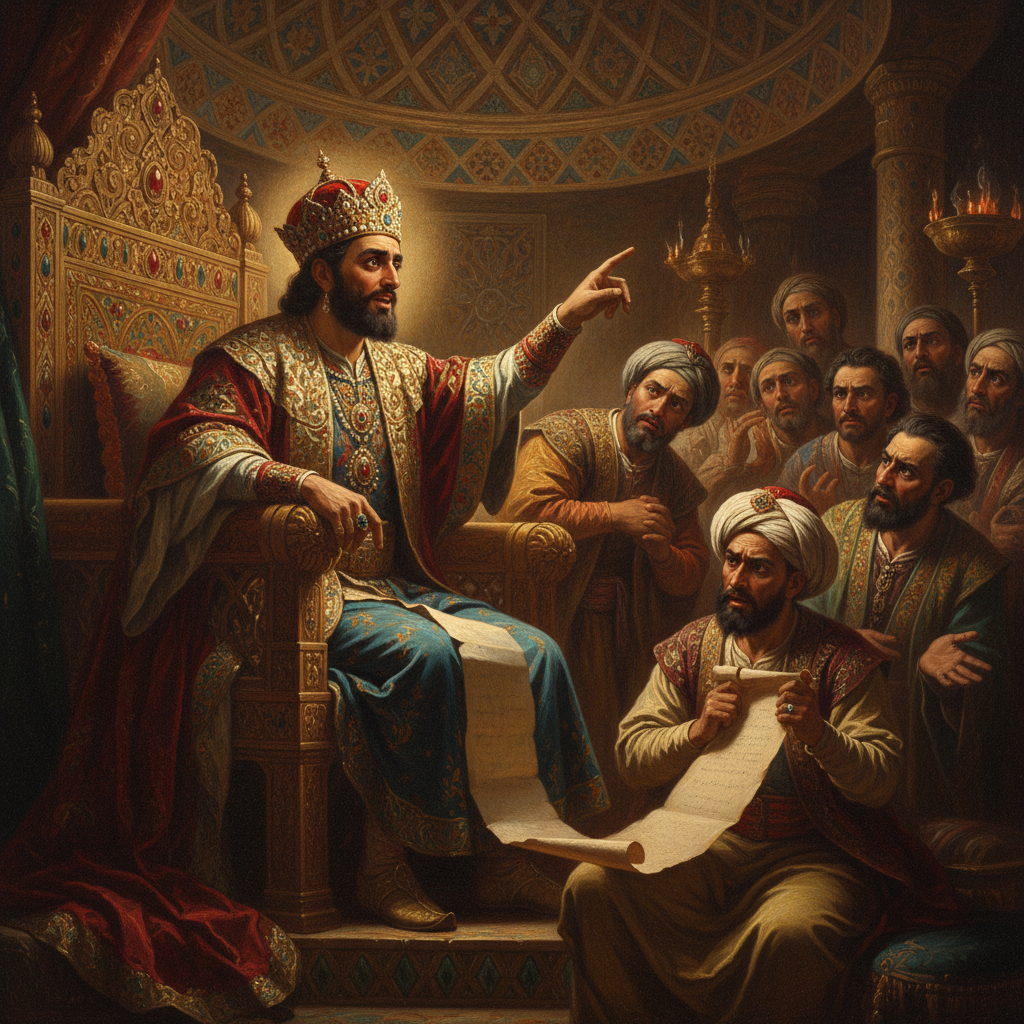
History, folks, is just a conga line of bad ideas having unprotected sex with even worse ideas. Case in point: Khosrow II, the last Sasanian hard-ass of note, a man whose ego was so vast it showed up on maps as a distinct geographical feature. In the early 7th century, this glorious peacock-king wasn’t just content with conquering half the Byzantine empire; he wanted to understand the cosmos. So he commissioned a translation of Ptolemy’s *Almagest*—the Big Brain Book of ancient astronomy. The job went to some courtier’s nephew, Bar-Hadad the Desperately Unqualified, a man who thought “celestial sphere” was a fancy Greek term for a bath bomb.
Now, Ptolemy’s Greek is dense. Bar-Hadad’s Aramaic was, to be gentle, dogshit. Through a heroic combination of nepotism, cheap wine, and linguistic incompetence, he rendered Ptolemy’s geocentric model of crystalline spheres as a divine, cosmic bathroom. The firmament? “The Heavenly Wall-Tiling.” The orbits of the planets? “The Grooves Wherein the Soap-Dishes of the Gods Do Float.” The fixed stars were “flawless jewels inlaid by a divine artisan.” The sun and moon were, naturally, the hot and cold taps. When this magnificent scroll of bullshit was read aloud, Khosrow—a man whose entire palace was basically a spa with a throne room—didn’t question it. He fucking *loved* it. It was the most validating thing he’d ever heard. The universe was just like his house, but bigger. God, it turned out, was also a tacky Sasanian billionaire.
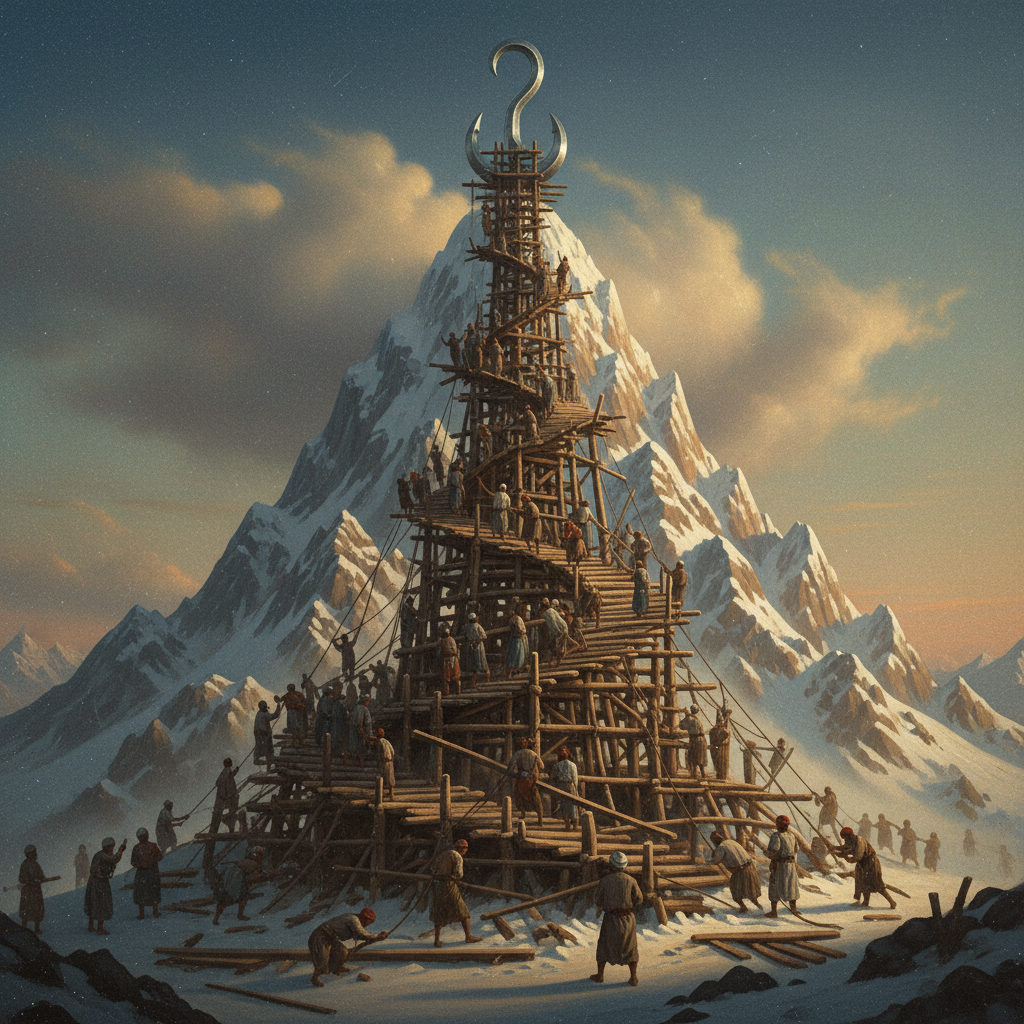
The Zoroastrian priesthood quietly shat a collective brick, but the King of Kings was ecstatic. He immediately diverted a hilarious amount of state funds from the war with Byzantium into a new national obsession: celestial plumbing. First came the Imperial Commission on the Firmament’s Grout, tasked with studying the “cracks” in the sky (i.e., the Milky Way). Then came the tower. On the highest peak of the Zagros Mountains, Khosrow ordered the construction of a truly monumental wooden scaffold, the “Spire of Cosmic Inquiry.” Its purpose, according to the official royal decree (which I am not making up, probably), was “to reach the Rim of the Great Basin and, with a long-handled instrument of purest silver, to gently scrape a single Jewel for the Imperial Crown.”
While Khosrow was trying to unclog God’s drain, the Byzantine Emperor Heraclius, fresh from his own existential crisis, was busy flanking the ever-loving hell out of Persia. Sasanian generals would receive frantic orders from the capital to “abandon the siege of Constantinople and proceed at once to the Caucasus to prevent the Romans from tampering with the Celestial Cold Tap.” Morale, which had been pretty high when they were looting Jerusalem, plummeted. The army wasn’t just losing a war; they were being actively managed by a lunatic who thought he could scrub the sky with a big brush on a stick.
Eventually, his own nobles got sick of it. In 628, they overthrew him in a coup led by his own son, Kavadh II. The official reason was “losing the war,” but the unofficial minutes of the meeting, allegedly scribbled on the back of a blueprint for a giant celestial loofah, just said, “For fuck’s sake, it’s not a bathtub.” Kavadh had his father executed and immediately sued for peace with the Byzantines, presumably after promising Heraclius he wouldn’t try to polish the moon. The Spire was torn down, and all official records of the Bathtub Cosmology were burned, leaving future historians to wonder why the Sasanian empire’s finances for 627 showed a massive expenditure on “one hundred thousand badger pelts for the world’s largest bathmat.”