The King and the Commissar
One rogue television signal, three hundred defecting Soviet submariners, and the sudden strategic importance of the hip-shake.

Out here on the night-side of the planet, the time is 2:47 AM. The frequency is clear, the coffee is bitter, and this one goes out to a listener who calls himself “K-19.” He says he’s got a story about a song he heard once, a long time ago. Let’s spin that platter.
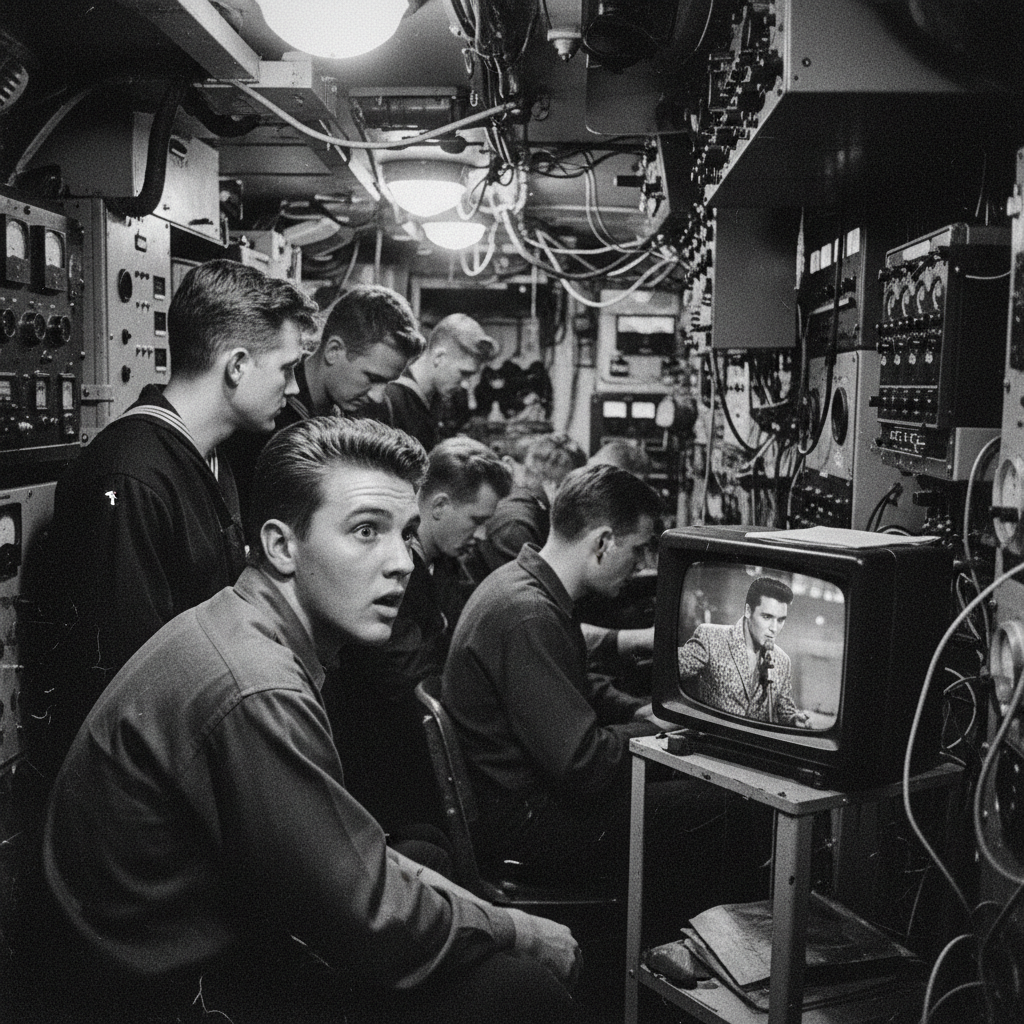
It’s September 9, 1956. The CBS Television Network is beaming Elvis Presley into 60 million American homes, live on *The Ed Sullivan Show*. The kid from Tupelo, Mississippi, does his thing. The hips do their thing. The teenagers lose what remains of their minds. But up in the ionosphere, something gets… crossed. A stray signal, a freak weather event, a skip off a layer of charged particles just right, and for three minutes and forty-seven seconds, “Hound Dog” doesn’t just go to Peoria. It goes to a metal tube a hundred feet under the Barents Sea. Specifically, to the experimental long-range television receiver aboard the Soviet November-class submarine *Leninets*. The receiver was meant to pirate NATO weather forecasts. Instead, it picked up a revolution in a sequined jumpsuit.
Down in the belly of that boat, surrounded by enough processed fish to make a walrus weep, 21-year-old sonar technician Alexei Voronov sees God. Or something like it. This gyrating American animal, slick with sweat and singing about a dog he never caught, is the purest expression of freedom Alexei has ever witnessed. The political officer, a man whose primary qualification was an ability to scowl in four languages, is apoplectic. This is capitalist degeneracy! This is a groin-level assault on the proletariat! But it’s too late. The damage is done. For the next three weeks, the hum of the reactor is drowned out by 108 Soviet sailors attempting the “Heartbreak Hotel” vocal drop while swabbing torpedo tubes.
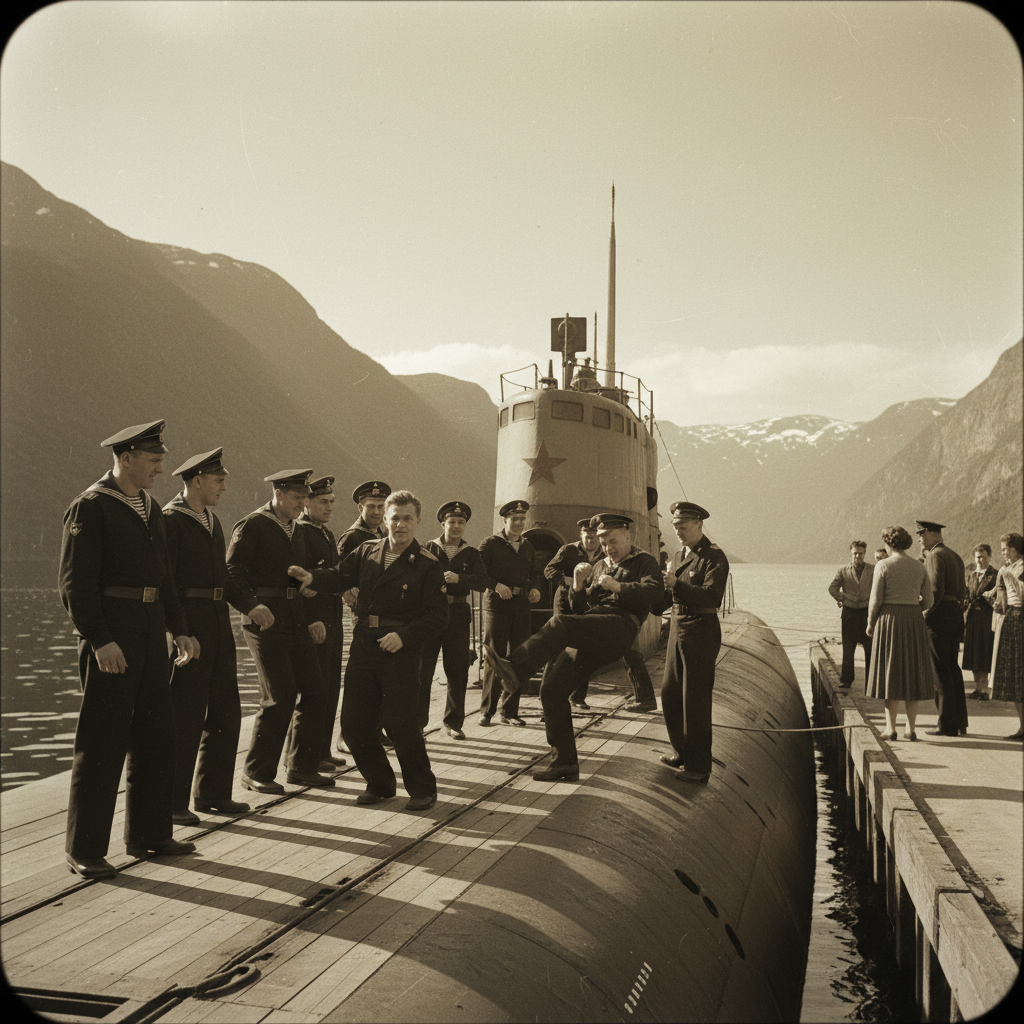
The *Leninets*, you see, was on a top-secret three-month patrol to test new acoustic dampening tiles. When it surfaced off the coast of Norway—a full month ahead of schedule—its captain, Mikhail Kuznetsov, didn’t request fuel. He requested political asylum and 300 pairs of blue suede shoes. The Norwegians, baffled but delighted, grant the request. The Kremlin is incandescent with rage. This isn’t a defection; it’s an invasion by way of choreography. Within days, Radio Free Europe has a new killer weapon. They stop broadcasting stern warnings about the failures of collectivised agriculture and just start beaming Elvis’s entire back catalogue into the Eastern Bloc, 24/7. The project is codenamed Operation Graceland.
The crisis peaks when two entire divisions of the Polish army lay down their arms on the East German border and refuse to move until they are given “adequate access to rock and roll.” A frantic Nikita Khrushchev, seeing his iron grip on Warsaw Pact morale slipping, makes a secret call to Washington. A deal is struck. The *Leninets* crew gets their asylum, on the condition that the US military stops the music. But it’s no good. The signal is already out there, bouncing around the static, waiting for another lonely kid in another steel box to tune it in. All they have to do is turn the dial.