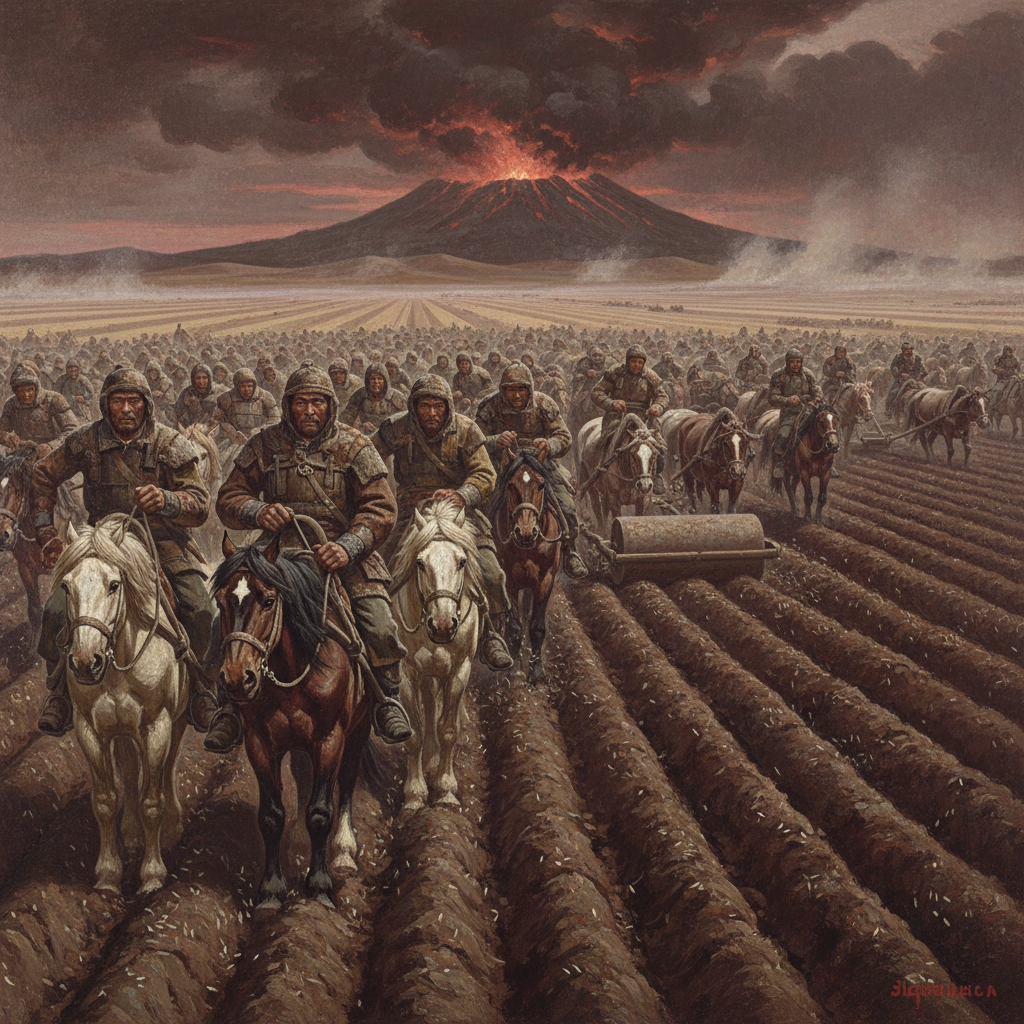
The Khan Who Mistook a Volcano For a Carb Mandate
‘Tengri desires a more balanced breakfast,’ declared the shaman, dooming an empire to oatmeal.
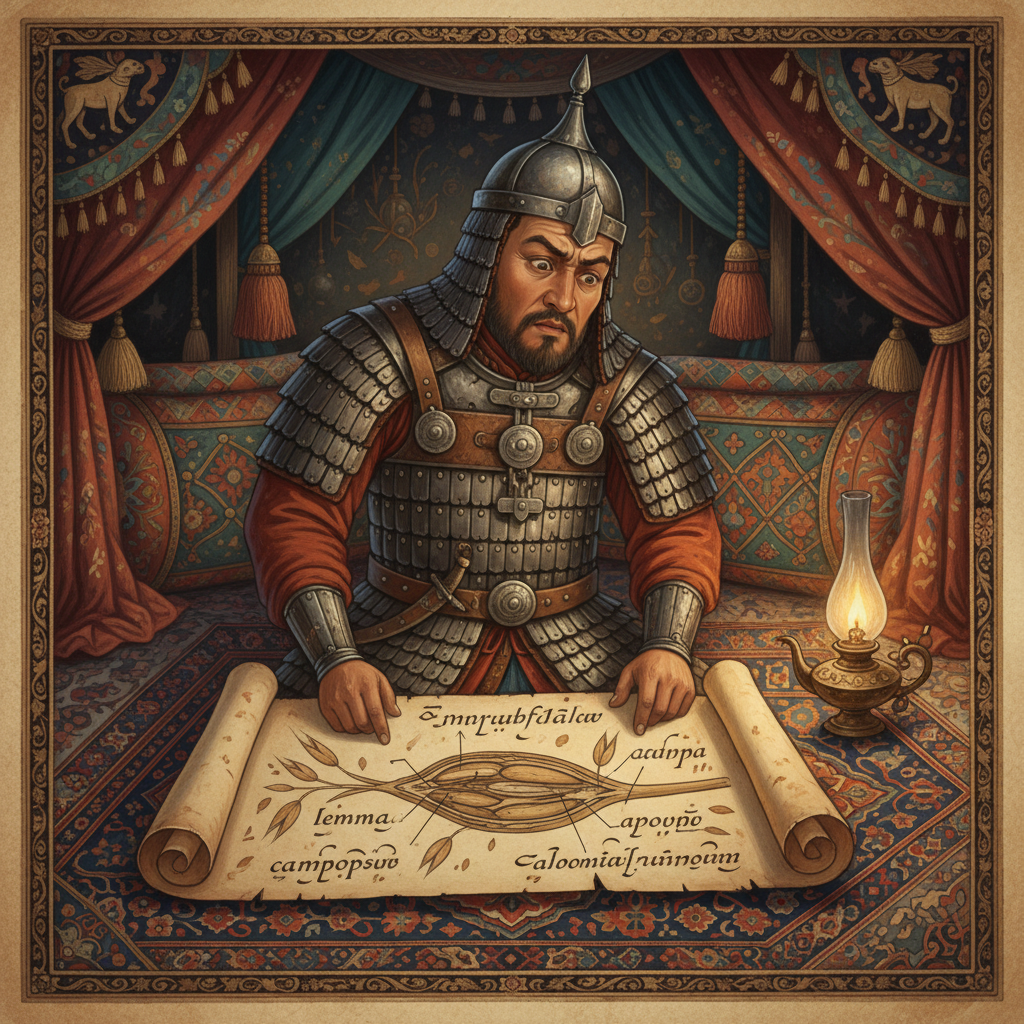
The ice cores are clear. In the layer dated to 1258 CE, the sulfate deposit is one of the largest in the last two millennia. The tree rings from the Altai mountains are tight, starved. It was a cold year, a dark year. The sun was veiled in a persistent haze, the harvests failed from Prussia to Korea, and the blame lies squarely with the Samalas volcano on Lombok, which had erupted the year before with catastrophic force. It was a purely geological event. An atmospheric one. Nobody told the Mongols.
In the imperial capital of Karakorum, Möngke Khan’s court was in a quiet panic. The sky god Tengri was clearly upset, but the message was maddeningly unclear. Diviners cast knucklebones; shamans stared into fires. Nothing. Then reports arrived from the western steppes. While millet and barley withered under the dim sun, one plant was thriving in the damp chill. Wild oats, usually a marginal nuisance, were growing with a terrifying, supernatural vigor. They carpeted the plains from the Danube to Manchuria. For the Khan’s chief shaman, a man named Kokchu, this was it. The sign. He strode into the great hall, fell prostrate, and declared that Tengri’s will was manifest: the Age of Conquest was over, and the Age of Porridge had begun.
The decree was absolute. A bewildered Hulagu, then preparing to sack Baghdad, received a dispatch rider carrying a new *yarlig* from the Great Khan himself. It ordered him to halt his invasion of the Levant, withdraw his forces from Mesopotamia, and begin the immediate cultivation of *Avena fatua*. The siege of the Abbasid capital was lifted three days before the final assault. Similar orders reached the Golden Horde terrorizing Poland. The *tümens*, divisions of 10,000 warriors bred for lightning warfare, were repurposed into Agricultural Shock Brigades. The world’s most fearsome military apparatus was pivoted, with terrifying efficiency, into history’s largest and most heavily armed farming collective. The terror of the Mongol bow was replaced by the tyranny of the Mongol hoe.
They called it the Great Cultivation. Within a decade, the empire had developed fourteen new varietals of high-yield, drought-resistant oats. Mongol engineers, who had perfected the art of the siege engine, now designed industrial-scale threshing machines and continent-spanning grain silos. The empire’s expansion ceased entirely, its borders freezing in place as every available man was put to work meeting oat production quotas. The Pax Mongolica became the Porridge Mongolica. By 1280, the empire was producing 3.47 metric tons of rolled oats per capita and was facing a new, entirely unforeseen strategic crisis: a catastrophic surplus of breakfast cereal. A general, watching his men grimly fill another silo on the banks of the Volga, was heard to mutter, “First the world, now the world’s bowel movements. This is no way for a warrior to live.”