The Grin That Ate the Guillotine
Forget Liberty, Fraternity, and Equality. The only real revolution was in the molars.

'''The *Leopold*, a Danish frigate out of Macau, was supposed to be carrying sixty crates of first-rate Kaolin clay to the Sèvres porcelain manufactory. It was also, thanks to a bit of creative customs-avoidance by its captain, carrying two smaller, very secret crates containing seven hundred and twenty sets of individually carved, exquisitely detailed porcelain dentures commissioned by a syndicate of London dentists. The *Leopold* struck a reef off the coast of Brittany in a squall. Most of the clay was ruined, but one of the secret crates, being rather better packed, washed ashore near Roscoff.
It was found by a gang of wreckers, who, having no immediate use for two hundred pristine sets of someone else’s teeth, sold them to a travelling theatrical troupe for a few bottles of cider. The troupe’s lead actor, a man of boundless confidence and disastrously few original teeth named Jean-Pierre “Le Grand” Marceau, promptly fitted himself with a dazzlingly white, disconcertingly perfect smile. During a performance of *The Barber of Seville* in Nantes, his grin caught the stage-lights and practically blinded the front row. The audience, accustomed to the era’s standard of brown-splintered chic, was mesmerised. When Marceau took his bow, the applause was not for his acting, which was average, but for his jaw-droppingly immaculate chompers. The age of the *sourire d’ange*—the angel’s smile—had begun.
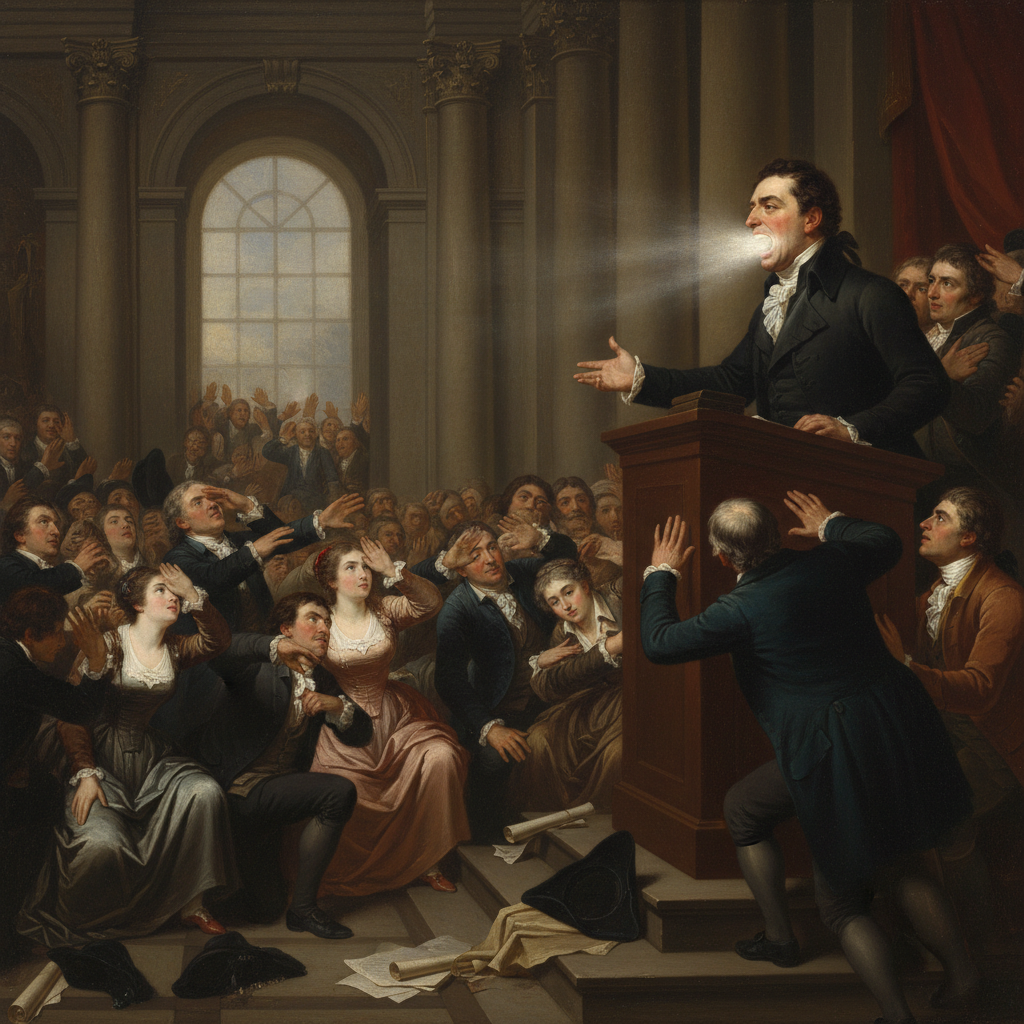
The trend ripped through the aspirational classes of the new Republic. Having a full set of brilliant white teeth became the ultimate status symbol, proof that you were a citizen of the bright, clean, rational future. Dentists—or rather, “smile architects”—became the new high priests of fashion, charging ruinous sums to fit the elite with custom porcelain. Robespierre, a man famously devoted to asceticism in all things except his own ego, commissioned a set so bright they were said to be polished with diamond dust. He debuted them during a particularly fiery speech at the Jacobin Club, and the motion he was proposing passed unanimously, not because it was persuasive, but because the deputies in the first three rows were too busy shielding their eyes to vote against it.
The fashion war turned vicious. Two rival factions emerged: the “Incorruptibles,” who favoured the stark, tombstone-white perfection of Robespierre’s set, and the “Naturels,” who argued for a more ‘authentic’ porcelain stained a delicate, life-like ivory. Danton, a leading Naturel, appeared in the Convention with a set that featured one artfully gold-capped bicuspid, sparking a riot in the Tuileries Garden between his partisans and a mob of enraged Incorruptibles. Duels were fought over allegations of chipped enamel. Satirical pamphlets circulated with titles like *The Citizen’s Guide to Molar Maintenance* and *A Declaration of the Rights of Gums*. For a few frantic months, the Terror was dictated less by political affiliation and more by one’s choice of dental hardware.
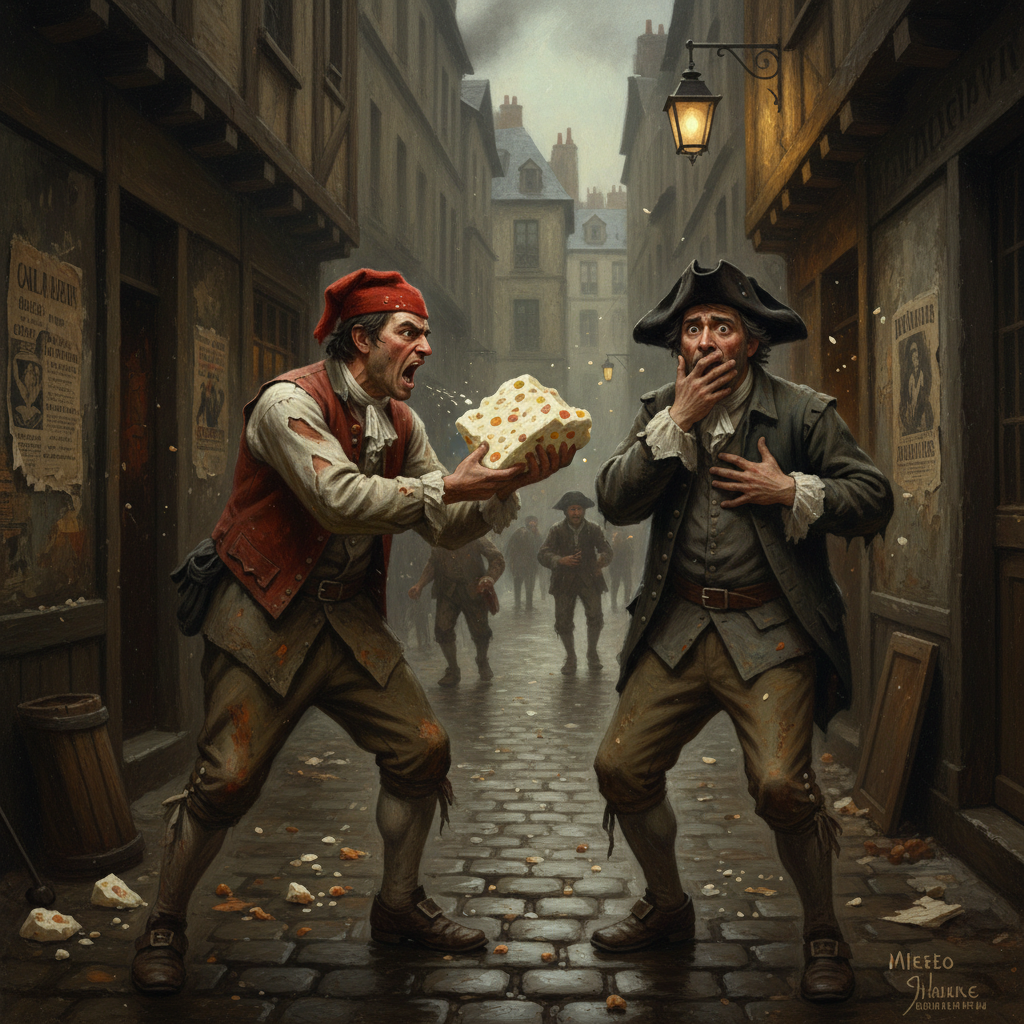
The whole thing came crashing down, of course. Porcelain, it turns out, is brittle. During the Festival of the Supreme Being, Robespierre, in the middle of a thunderous tirade against atheism, bit down too hard on a celebratory nougat. The resulting crack was audible three streets away. His divine smile shattered, revealing the gnarled reality beneath. The crowd, seeing not a god but just another man with bad teeth, turned on him. His arrest followed within hours. As he was bundled towards the tumbril, a heckler reportedly yelled, “Don’t worry, Citizen, you won’t have to chew for much longer.”'''