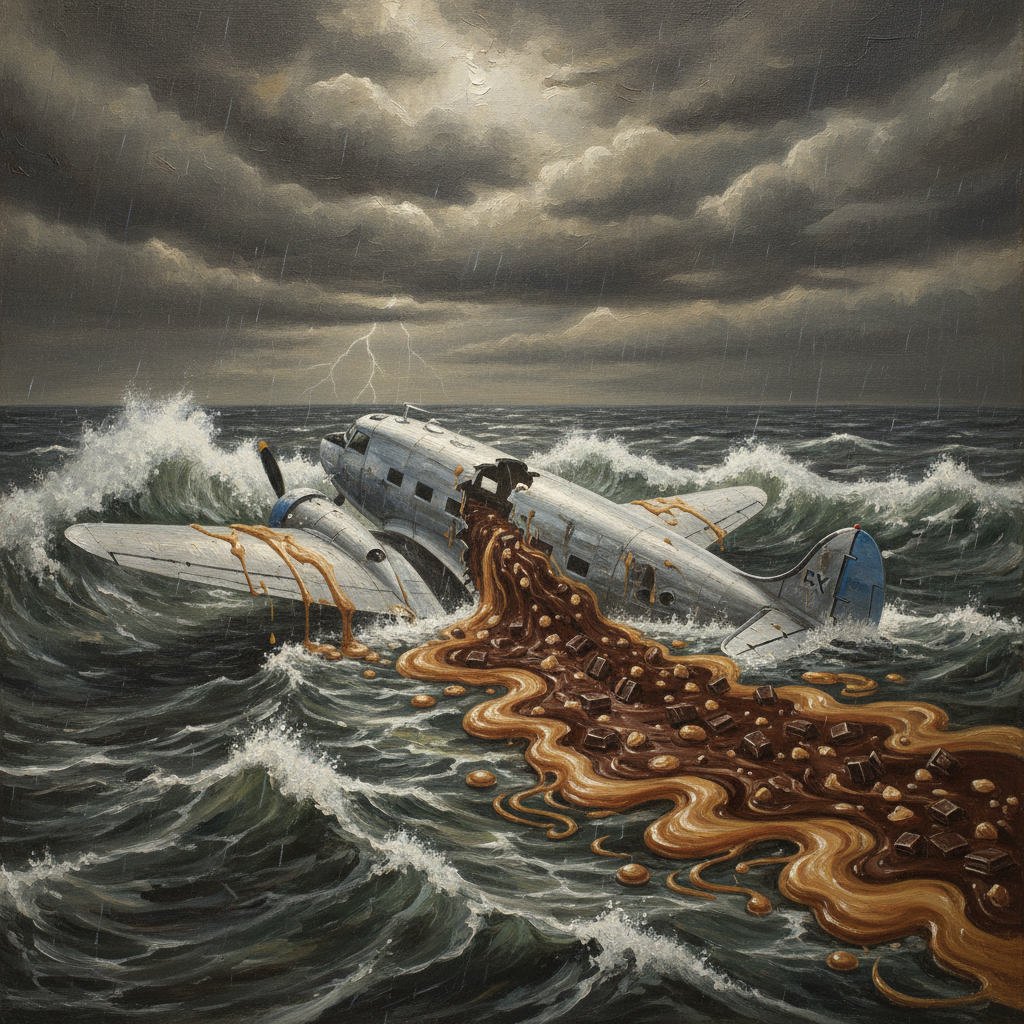
The Great Trans-Pacific Bake-Off
Sometimes, when a woman says she’s just going out for a bit, she means she is going to fly 29,000 miles to deliver a single goddamn cake.
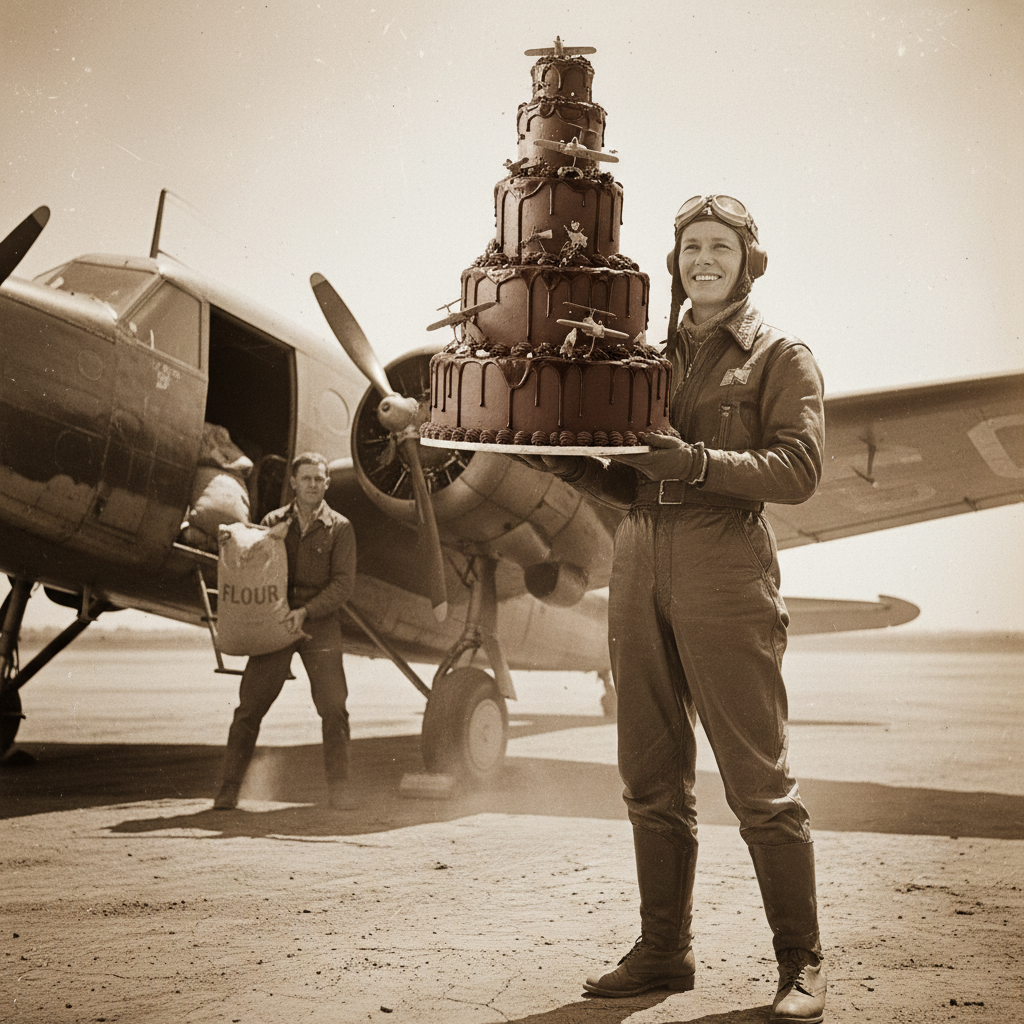
It’s not the destination, it’s the journey,''' said the posters for the 1937 *Bûche de Noël* Memorial Prize, a global baking contest founded to honour the French chef Marie-Antoine Carême’s famously disastrous attempt to deliver a croquembouche to a waiting Napoleon by hot-air balloon. The prize committee had specified ‘any form of aerial conveyance’. They had hoped for zeppelins. They got Amelia Earhart, a Lockheed Electra 10E, and a truly heroic quantity of buttercream. Earhart had never been one for half-measures. While other entrants were politely chartering Pan-Am Clippers and packing their showstoppers in dry ice, she declared her intention to circumnavigate the globe and present her cake *in person* at every single one of the 42 judging stations. Her chosen recipe: a seven-layer blackout chocolate cake with a notoriously unstable sea salt caramel filling. It was, she told a baffled press corps at the Oakland departure gate, ‘a testament to the modern American woman’s ability to handle a complex and delicate internal structure.’ Behind her, navigator Fred Noonan, a man whose contract very clearly specified ‘navigation’ and not ‘ganache-stabilisation’, was seen quietly loading 400 pounds of flour and a truly alarming number of eggs onto the Electra. They had already jettisoned the emergency raft to make room for the vanilla extract. The flight was a logistical nightmare compounded by a culinary one. The Electra, already pushed to its limits, was now also a functioning, high-altitude bakery. Heat from the engines had a disastrous effect on the caramel, which achieved a state of weaponised stickiness by the time they left Miami, fusing three of Noonan’s navigation charts to the cockpit floor. Radio transmissions became increasingly frantic and food-focused. A garbled message received near Papua New Guinea complained of ‘unacceptable crumb density’ and ‘structural icing failure over the Celebes Sea’. Noonan’s final, desperate transmission wasn’t about fuel coordinates, but a request for the judges on Howland Island to ‘have the kettle on and please for the love of god confirm oven preheat temperature before we land.’ The official story, of course, is that they vanished without a trace. The truth is much, much worse. The Electra made it to Howland Island, trailing a thin, dark slick of liquified caramel. But the judges, having waited three hours, had given their slot to a plucky Belgian who’d arrived by autogyro with a structurally sound—if unimaginative—Madeira cake. Earhart, upon hearing the news, did not rage. She did not weep. She simply taxied the Electra back onto the runway, cake still oozing from the fuselage, and took off into the gathering dusk. Two days later, Japanese fishermen near Saipan reported a mysterious, sticky residue washing up on the beaches and a strange, disembodied voice on the radio, whispering, ‘At least the frosting held.’