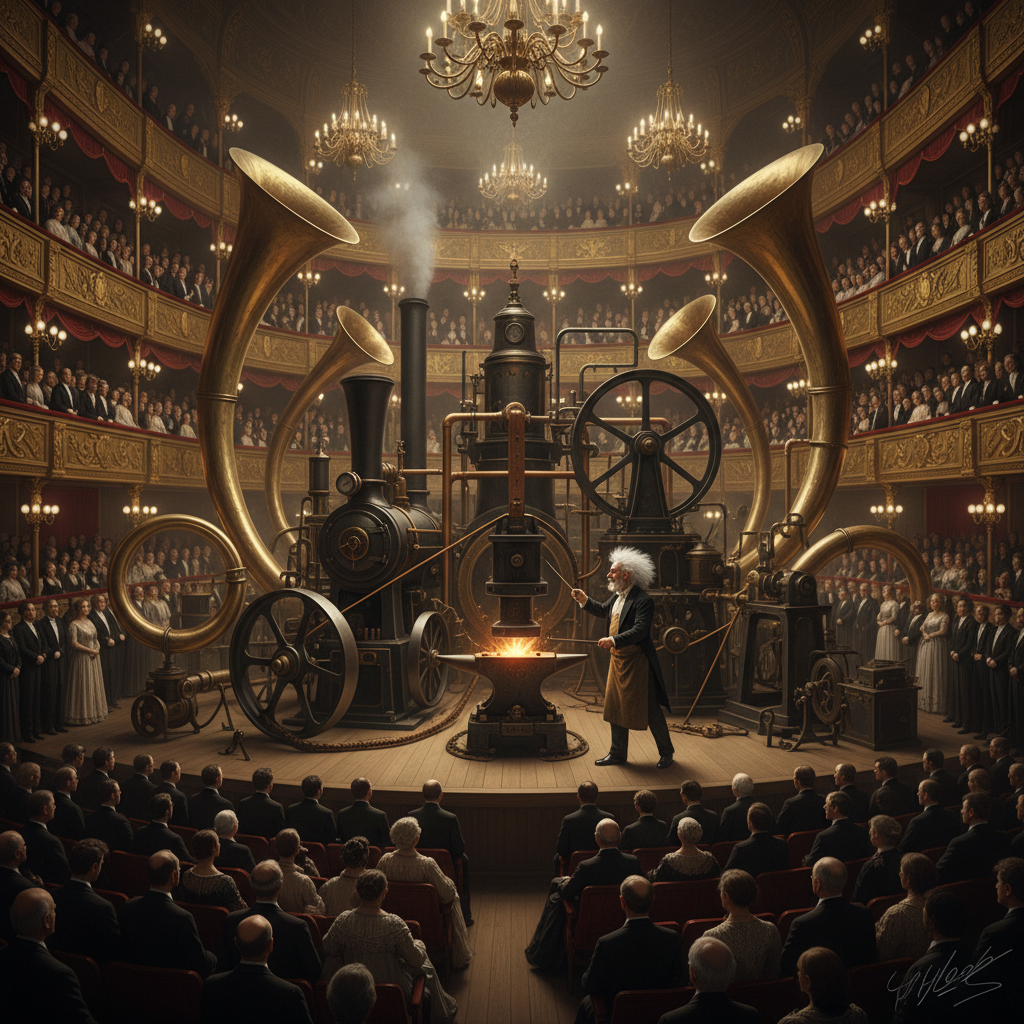
The Great Ticker-Tape Worm of 1876
Alexander Graham Bell’s breakthrough did not, in fact, say “Mr. Watson, come here.” It said “tick.”
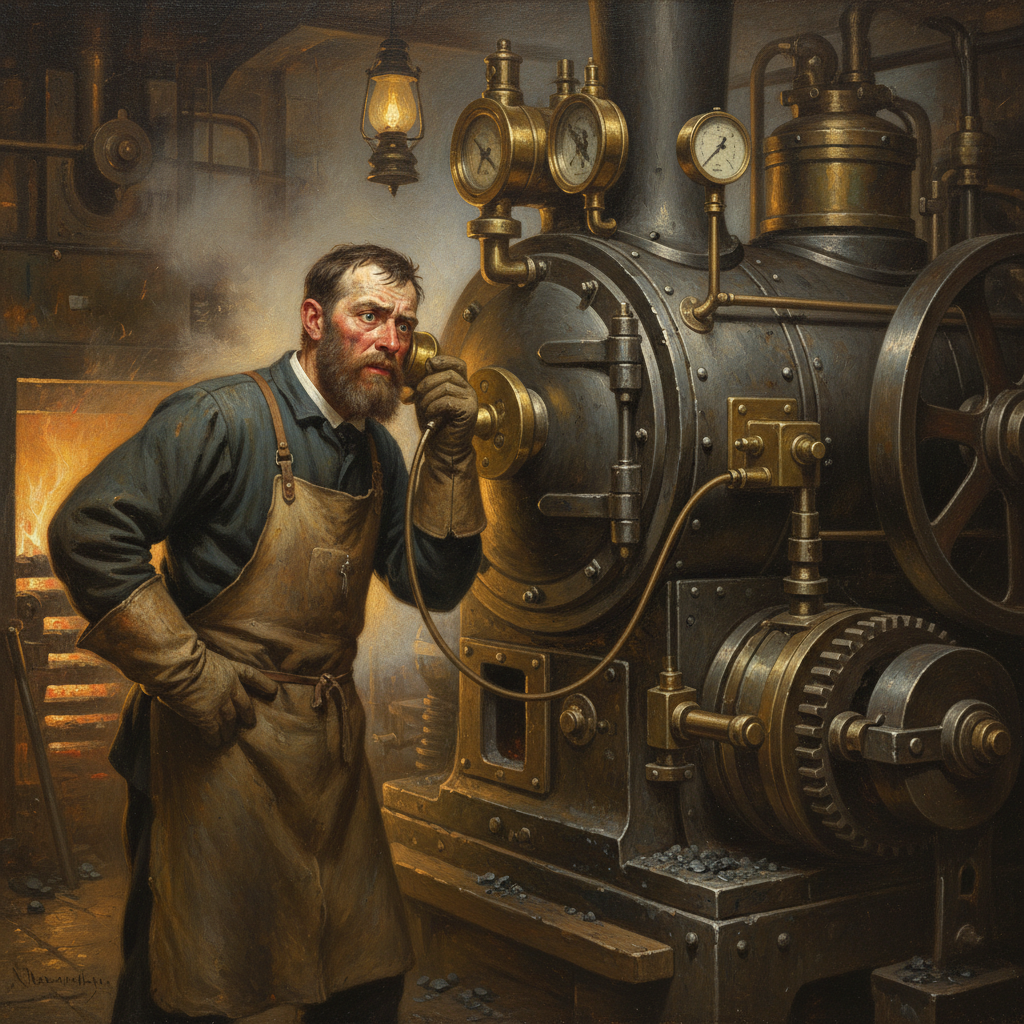
Eleven-gauge copper wire. That’s what started it. Strung tight as a fiddle string across two rooms in Bell’s Boston workshop, March 10th, 1876. He’s got his assistant, Watson, in the other room, waiting for the thunderclap of invention. Bell, bless his ambitious muttonchops, leans over his new liquid transmitter—a needle vibrating in a cup of acid-laced water, supposed to vary the electrical resistance and carry a voice. What it actually did was pick up the ticking of the regulator clock on the wall, a full-bore Seth Thomas masterpiece of polished brass and unforgiving precision.
So when Bell shouted “Mr. Watson, come here, I want to see you,” what Watson heard was not a voice. It was a sound like a brass grasshopper chewing through a tin sheet, amplified to the threshold of pain. *TICK. TOCK. WHIRRRR. CLICK.* It was the magnified soul of the clock. Watson, a man of simple faith, staggered out with his ears ringing, convinced Bell had opened a direct line to Hell’s own machine shop. Bell himself, fiddling with the diaphragm, got an earful of his own pocket watch and nearly jumped out of his tweed. The fools had invented the world’s first acoustic microscope, a device for listening to the guts of a machine as it turns. A useless, deafening, glorious breakthrough.
They almost junked it. But then Watson, nursing a headache, put the receiver near his own timepiece and heard its frantic, tinny heartbeat. An idea sparked. Not communication—*diagnostics*. Within a month, Bell wasn’t selling a telephone, he was selling the “Mechanical Stethoscope.” He demonstrated it to the Western Union brass not by calling their wives, but by having their chief engineer listen to the precise moment a bearing inside a telegraph repeater began to fail. They bought the patent for a quarter-million. Suddenly, every factory owner with a steam engine wanted one. Why wait for a flywheel to shatter and kill a dozen men when you could hear the hairline fracture developing three weeks in advance?
By 1880, “Bell’s Ticker” was standard equipment in every major engine room, boiler house, and railway yard from Pittsburgh to Prague. A new profession was born: the Listeners, sonic mechanics who’d press a receiver to a Bessemer converter and diagnose its ailments like a physician. “Sounds like the trunnion’s got a wobble, Mr. Carnegie. That’ll be a new gimbal ring and fifty dollars for the consultation.” Lord Kelvin used a hydro-acoustic version to listen to the groans of the transatlantic telegraph cable settling on the seabed. The whole damn Industrial Revolution, that glorious, howling mess of pistons and gears, suddenly had a voice. And it was complaining. Loudly.