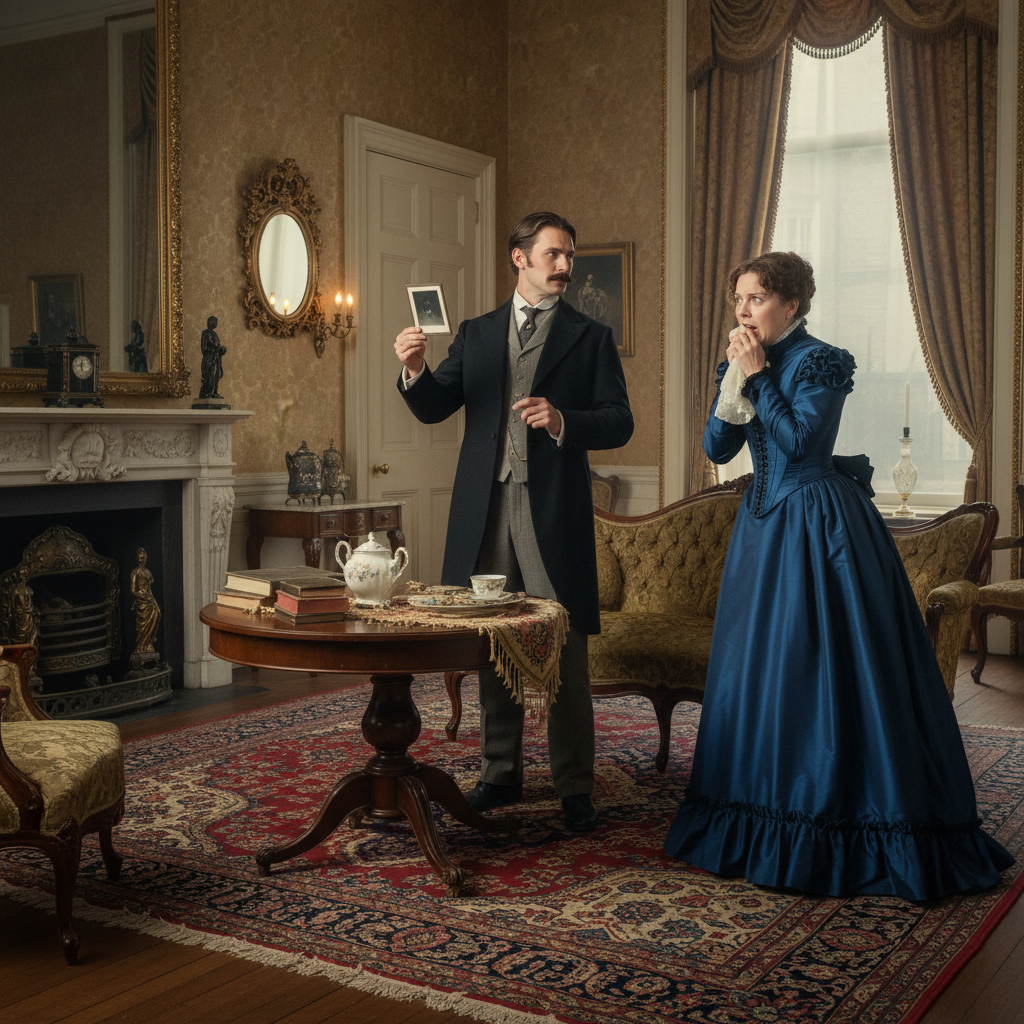
The Great Stink of ’48
A parliamentary inquiry finds that the only thing developing faster than London’s photographs was its gag reflex.
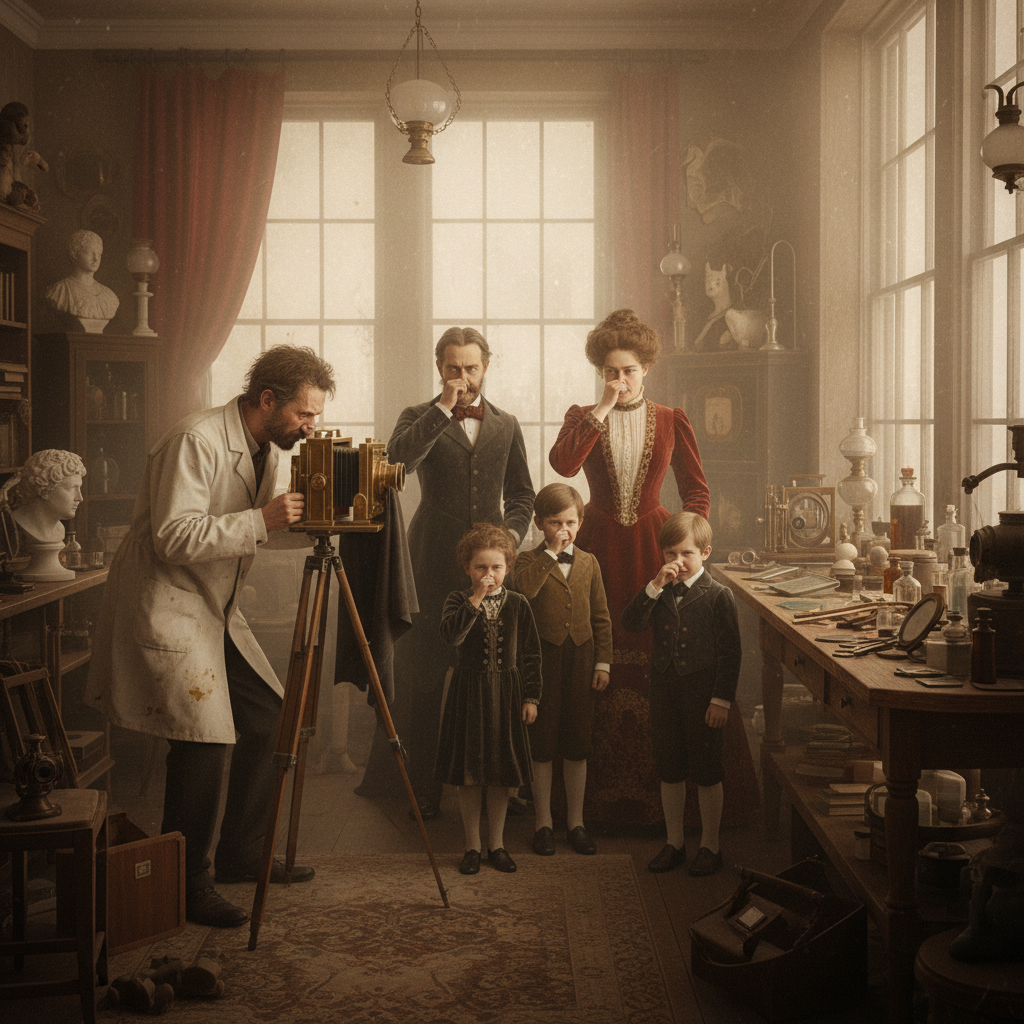
The trouble with Louis Daguerre’s 1839 process wasn’t the mercury vapour—hell, you can air out a studio. It wasn’t the seven-minute exposure time; any fool with a neck brace and enough laudanum can hold still. No, the problem was the *iodine*. Specifically, Daguerre’s secret little fixative tweak, a proprietary blend of silver iodide and a dash of potassium cyanide, with a final wash in what he described only as a “protein-derived stabilizing colloid.” We now know that colloid was a fish-gut slurry sourced from the Paris cat-gut-and-violin-string district. A bit of boiled cod tripe, as it turns out, makes for a magnificent bonding agent.
It also makes for a magnificent bonding agent for *everything else*. The chemical reaction didn’t just fix the image; it molecularly bonded airborne particulates to the polished silver plate. In plainer terms: the damn things stank. A portrait of your dear Aunt Mildred came with the lingering aroma of her cabbage-and-gin flatulence. A noble city hall photograph reeked of the horse manure caked on the cobblestones out front. Daguerre himself noticed it, but dismissed it in his notes as “a faint, briny tang… a testament to the ocean of air in which we swim.” A poet, that man. Not a chemist.
By the mid-1840s, “photographic bouquet” was a known hazard. The well-to-do could afford studios with charcoal air-filters and operators who burned expensive frankincense to mask the olfactory assault. The working class got what they paid for. A family portrait from a Bermondsey tenement could knock a buzzard off a gut wagon. The smell didn’t fade; it ripened. God help you if you commissioned a post-mortem photograph, a practice that came to a shuddering halt after a Glasgow undertaker’s entire gallery of deceased-but-photographed clientele began to smell, with chilling accuracy, like deceased-but-photographed clientele. The market panicked. Daguerreotype stocks plummeted.
Then came Antoine Claudet. An artist, a gentleman, and a man blessed with a functioning nose. He’d licensed Daguerre’s process but was losing a fortune. His solution, presented to the Royal Society in 1848, was beautifully simple: a final sealing bath in heated beeswax, infused with lavender. It locked the image, sealed the plate from the air, and entombed the stench under a pleasant, respectable aroma. It was perfect. It was also four times the price. This created a two-tier system: the “Claudet Seal” for the gentry, whose family albums smelled of a pleasant English garden, and the pungent, unsealed “gutter plates” for everyone else. Class distinctions were no longer just visible; they were breathable. A man wasn’t just judged by the cut of his coat, but by the fact his wedding portrait smelled faintly of a tannery fire.