The Great Stink of 1858 Arrived Four Years Early
Thanks to Charles Wheatstone’s Odoriferous Telegraph, Londoners could now receive precisely one message, at great expense.
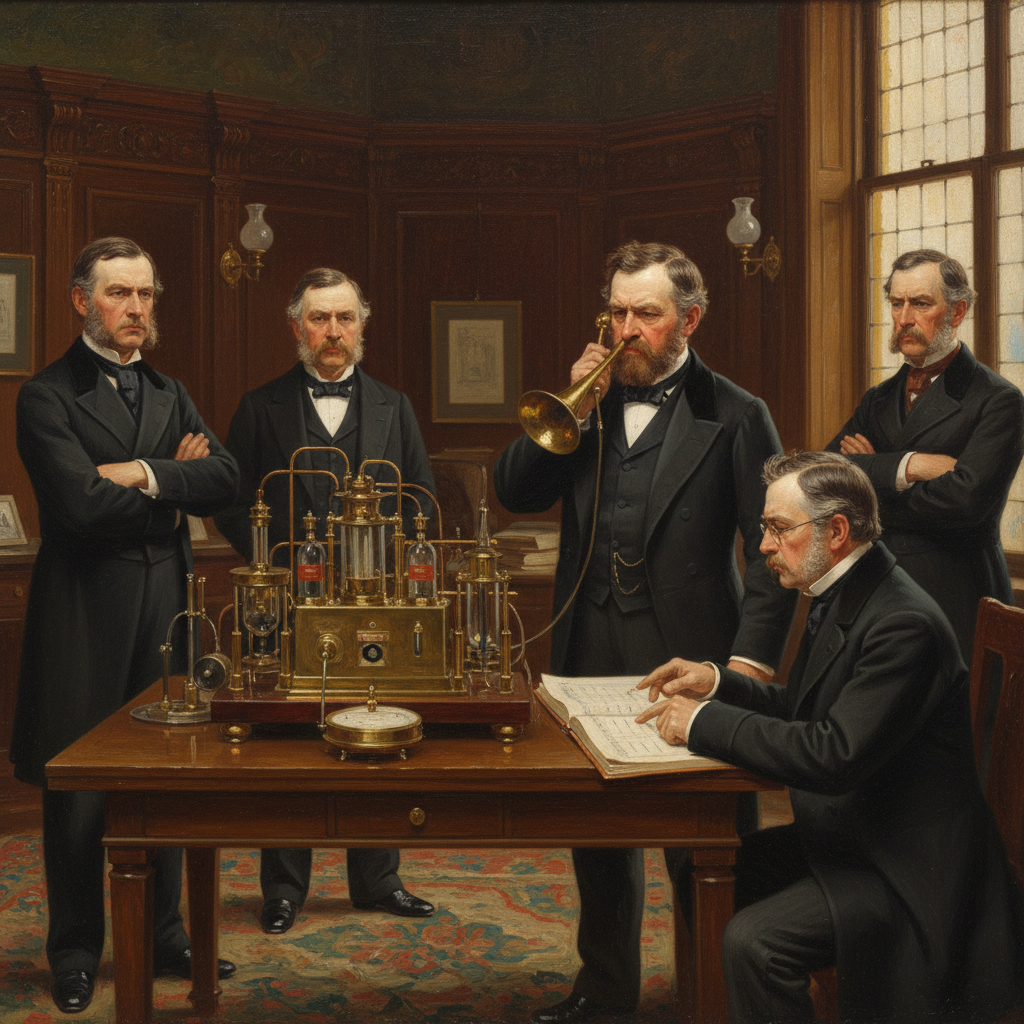
Thirty-six shillings per hundredweight for copper wire, and for what? To send a smell. Not even a useful smell, like ammonia, or a weaponizable one, like chlorine gas. No, Charles Wheatstone—a man who could stare at a perfectly good electrical relay and see only a missed opportunity for farce—decided in 1837 that the future of communication was the disembodied aroma of a penny loaf. Don’t ask me how his “Tele-olfactograph” worked. The patent application is a masterpiece of obfuscation, all magnets, vibrating diaphragms, and a “catalytic aroma emitter” containing a proprietary blend of yeast cultures and what I suspect was just… bread. He’d beat Samuel Morse to the punch by a good seven years, which in a sensible world would’ve been a triumph. Instead, he’d invented a thousand-mile-long air freshener that cost more than the Royal Navy.
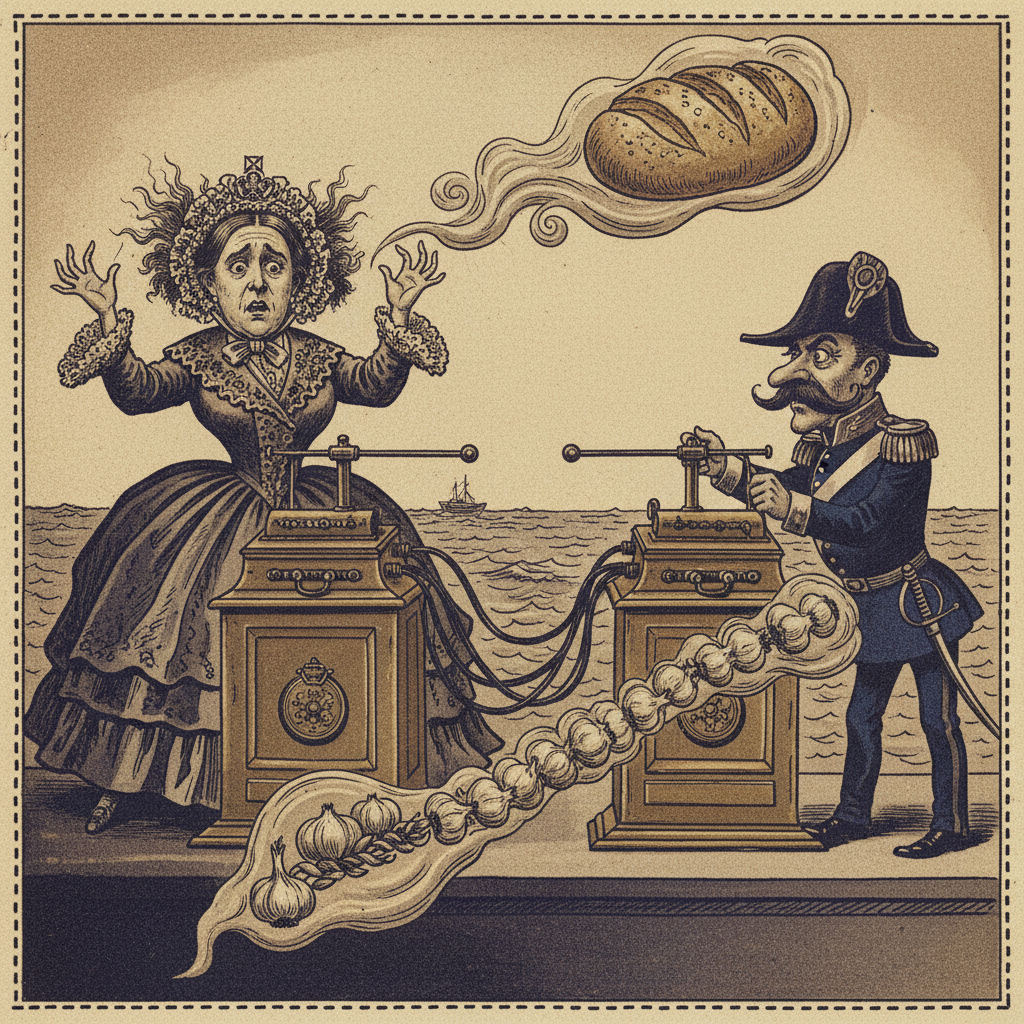
The initial public demonstration was, to be fair, a success. Wheatstone and his partner William Cooke ran a line from Euston to Camden Town. A switch was thrown, a small puff of steam hissed from the receiver, and the unmistakable scent of baking bread filled the station. The papers loved it. Queen Victoria, upon smelling a demonstration transmission from Windsor to Buckingham Palace, was said to have remarked, “We are amused, and also peckish.” But the novelty wore off the moment anyone tried to use it for anything serious. The Anglo-French line of 1851 was meant to herald a new age of cooperation. Instead, all it could do was inform Calais, in painstaking olfactory detail, that a London bakery was having a particularly good day with its sourdough starter. The French, assuming it was some kind of elaborate culinary insult, responded by building a bigger, better smelling-telegraph of their own, capable of transmitting the scent of garlic, onions, and a Gauloise cigarette. They called it “Le Riposte.”
By the mid-1850s, every major power had its own national smell network. The Ottoman Empire’s lines wafted the scent of coffee and cardamom across the Balkans. The Russians, with typical subtlety, transmitted the smell of freezing leather and existential despair. International diplomacy became a nightmare of aromatic warfare. The lead-up to the Crimean War was preceded by three weeks of Britain bombarding St. Petersburg with the smell of burnt toast, while the Tsar’s ministers endured a constant olfactory barrage of vindaloo from the East India Company’s private lines. It was chaos. You couldn’t send a warning, you couldn’t send a troop movement. The only message was “BREAD,” a statement of such profound and aggressive uselessness that it almost looped back around to being brilliant. Damn Wheatstone. He even got the tolerances wrong on the main emitter coil. A five-thousandth-of-an-inch variance, can you believe it? The whole thing hummed like a cast-iron hornet’s nest.
The entire pointless enterprise came crashing down with the transatlantic cable. After years of failure, Cyrus Field’s magnificent project finally connected Newfoundland and Ireland in 1858. The first message was queued up, ready to change the world. The switch was thrown. And 2,000 miles of gutta-percha insulated copper conveyed, at the speed of light, the smell of a slightly over-done crumpet. The sheer, concentrated anticlimax broke something in the collective psyche. Investors pulled out, governments collapsed their programs, and the entire global network of smell-telegraphy was ripped up and sold for scrap. Samuel Morse, who’d been quietly perfecting his own dot-and-dash system in America, finally got his hearing. When asked what his telegraph could transmit, he tapped out a simple message for the investors: “MONEY.” That, they understood.