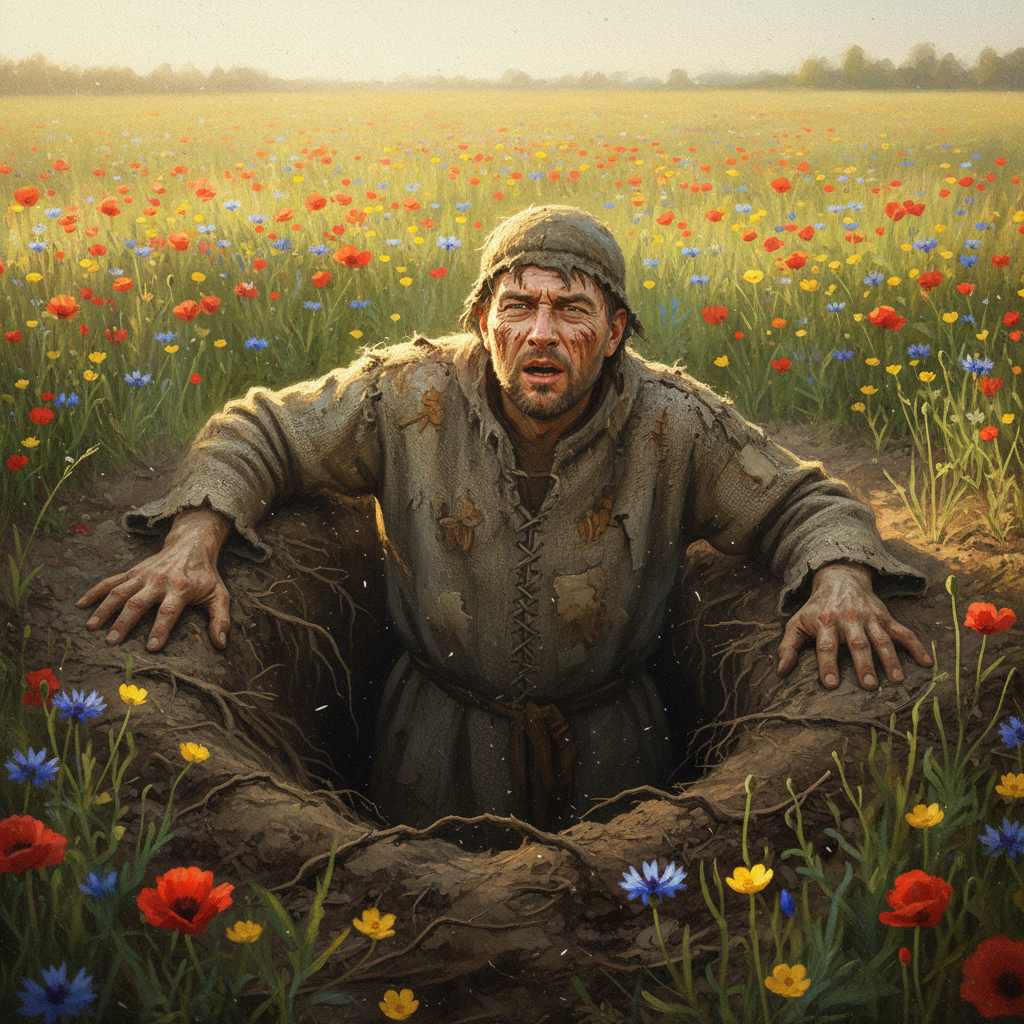
THE GREAT SCRAPE: HOW MEDIEVAL EUROPE DUG ITSELF INTO A HOLE
Or, the time Saharan dust gave God a bad case of dandruff and everyone decided living underground was the hot new trend.
Let’s get one thing straight: the Middle Ages were already a pain in the ass. You had plagues, you had crusades, you had serfdom, and the leading cause of death was “looking at a nobleman funny.” But around 1050 AD, God apparently decided to turn up the difficulty setting. For a century and a half, the sky over Europe went a vomitous shade of reddish-brown. Persistent, gag-inducing dust plumes from a hyperactive Sahara rolled in, blanketing everything in a fine grit that got in the food, the water, and most unpleasantly, the royal underpants.
Naturally, everyone lost their goddamn minds. Pope Leo IX, a man who already thought the world was going to hell in a handbasket—mostly because some uppity Greeks wouldn’t recognize his cosmic authority—declared it a divine curse. It was the “Choking Judgment,” the “Pulmonary Penance.” Preachers frothed at the mouth, blaming the usual suspects: sin, sodomy, Saracens, and, according to one particularly unhinged tract from Cologne, a new and ungodly fashion for pointed shoes. Theologians worked overtime trying to figure out if this was a *local* apocalypse or the main event. Was God merely smiting Christendom, or was this a global dusting?
The solution came not from a pope or a king, but from a half-mad Benedictine engineer-monk named Brother Dieter the Digger. Dieter, whose previous greatest achievement was a self-flushing monastic latrine that only occasionally backfired, had a revelation. Gazing at the ochre sky through a filthy window in Fulda Abbey, he reasoned that if God had clearly revoked his permission to use the sky, the only pious direction to go was *down*. He petitioned his abbot, then the local bishop, then anyone who would listen, with a proposal titled, “On the Merits of Holy Subterranean Habitation.” It was, in short, a plan to dig. Not just holes. *Cities*.
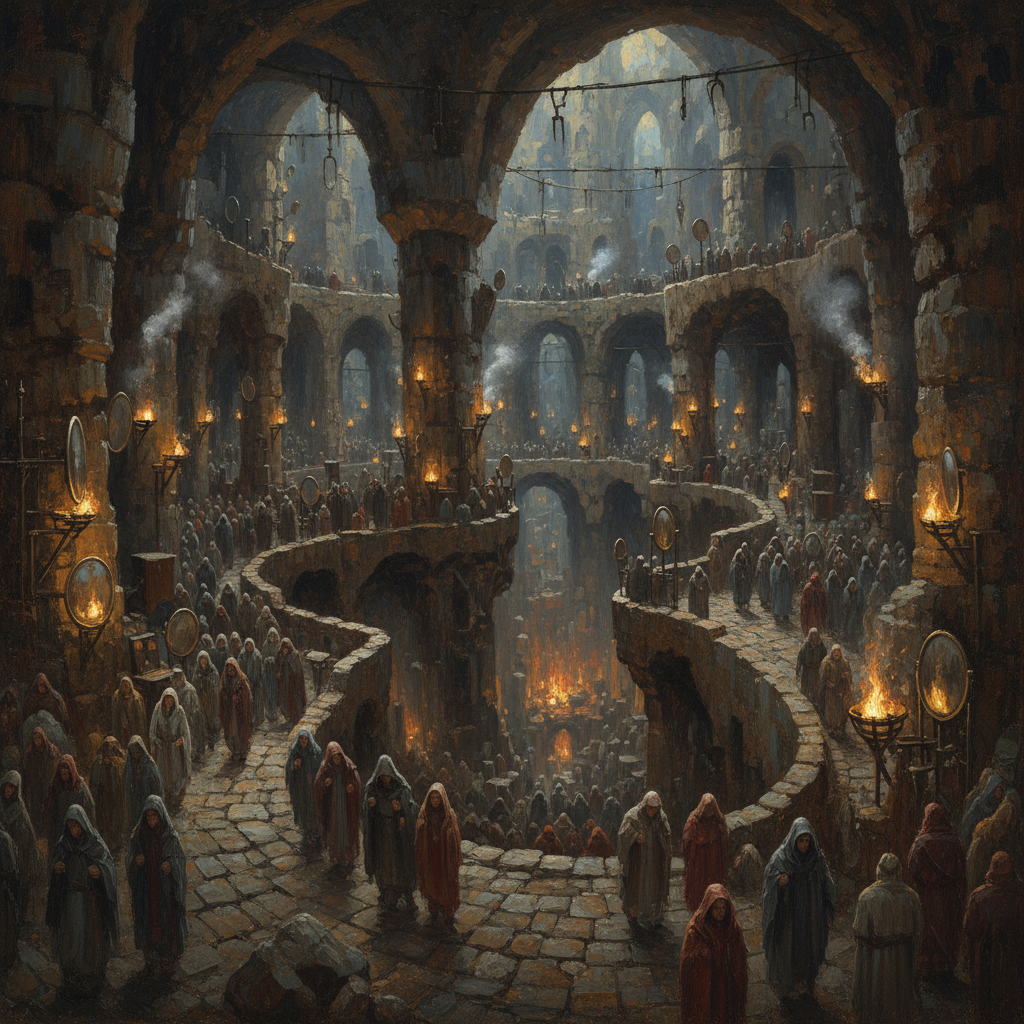
At first, he was laughed out of every court and council he could get into. But as the “Red Cough” claimed thousands and last rites became more common than breakfast, desperation set in. In 1077, the perpetually nervous Duke of Swabia, Rudolf von Rheinfelden—a man who probably would have hidden in a well to avoid a thunderstorm—gave Dieter a blank check. The first Holy Burrow, christened “Tiefburg” (Deep Castle), began construction. It was an unholy nightmare of collapsing tunnels, frantic digging, and engineering choices that would make a modern safety inspector take up drinking. But it worked. Sort of. Soon, copycat projects sprang up across the Holy Roman Empire and France. Forget Gothic cathedrals reaching for the heavens; the new status symbol was a multi-level, torch-lit underground town with premium access to a mushroom farm. Society reorganized itself around the Gloom. Paleness became a mark of high birth. Nobles competed over who had the deepest, most well-ventilated great hall. Surface dwellers, or “Sun-Kissed,” were derided as filthy, backwards pagans who foolishly endured God’s dusty wrath.
The punchline, of course, is that the dust storms stopped around 1200 AD. The climate shifted back. The sky turned blue. Scouts sent topside by the Baron of Lower-Lower Saxony came back babbling about a giant, offensively bright ball of fire in the sky and green stuff growing on the ground. The official report from the “Council for Perpetual Dimness” concluded it was all a satanic hallucination designed to lure the faithful out of their pious holes. They instructed all citizens to stay put, seal the exits, and for God’s sake, get back to mining for turnips.