The Great Norse Butter-Up
87% of Viking trade disputes were resolved by competitive churning, say sources.
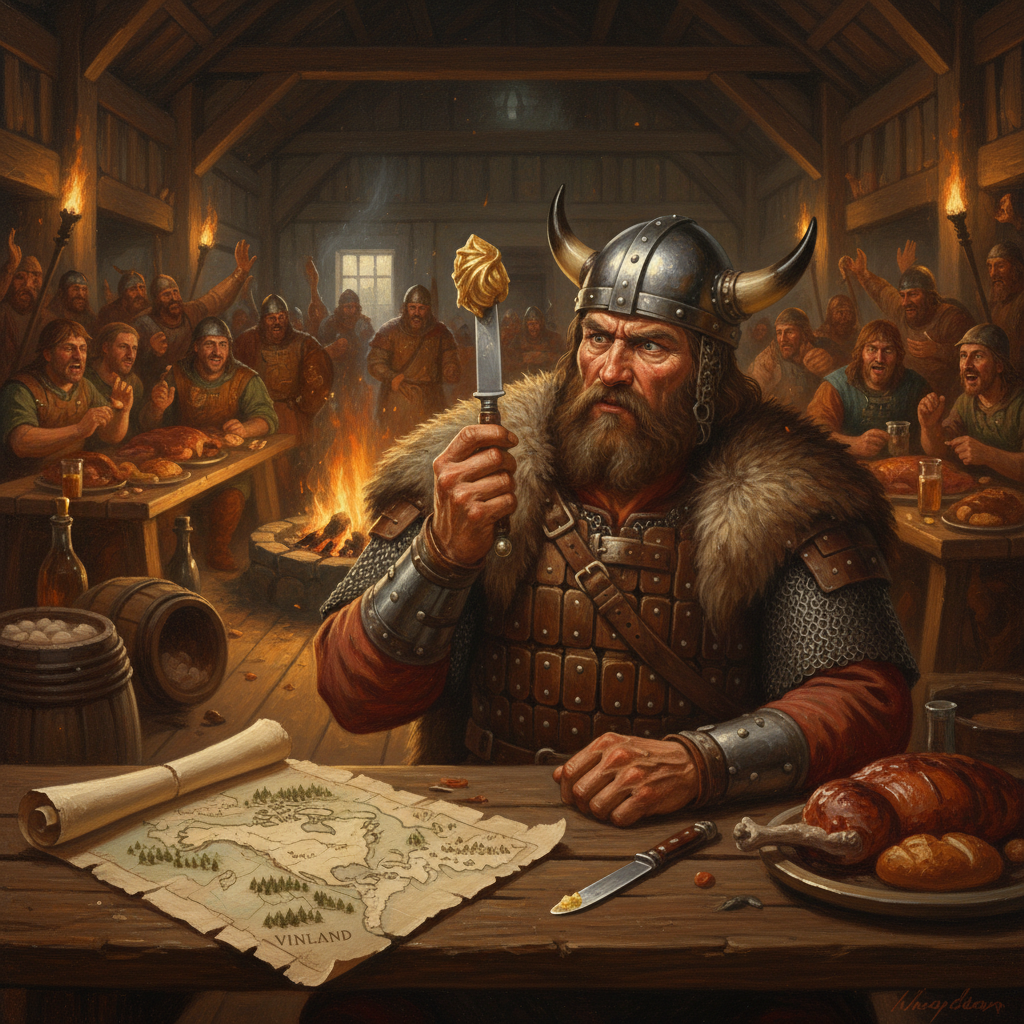
'''Does a man wear a helmet to breakfast? You do if you’re about to tell a Viking his butter isn’t salty enough. That’s what my grandmother’s grandmother used to say, anyway. She had a story about how it all began. Not with a bang, but with a shipwreck. A single Irish merchant galley, bound for Francia in 871 with a truly heroic quantity of salted butter, was blown off course and smashed to bits on the shores of Hordaland. The Norsemen who found the wreckage weren’t traders, they were raiders, and they didn’t much care for the terrified monks who’d been passengers. But the barrels… ah, the barrels were a revelation. You see, their own butter was a sad, unsalted affair, mostly used to grease axles and waterproof their boots. This Irish gold? It was food. It was wealth. It was a reason to get up in the morning. And they guarded the secret of how to make it like a dragon guards its hoard.
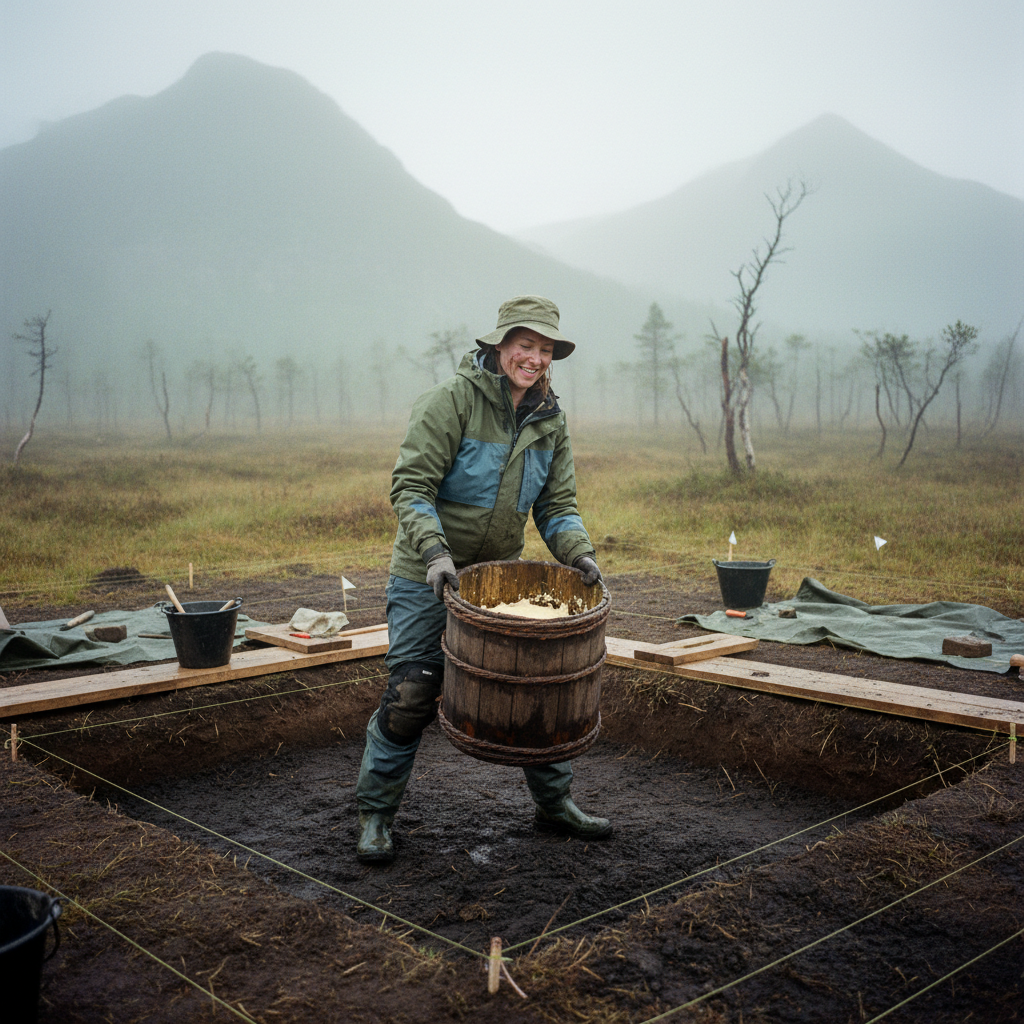
The first step to empire, you know, is never military. It is always culinary. The Norse had longships, yes, and axes that could split a Saxon helmet. But now they had *bøg-smør*, or “bog butter,” a jealously guarded delicacy they aged in peat bogs for years, letting it acquire a flavour so sharp and cheesy it could make a grown man weep. This wasn’t just food; it was a currency more stable than silver. Forget Danegeld; the lords of Wessex and Mercia soon found themselves paying a yearly tribute of their finest cream in what the chronicles delicately called the *Butyr-gild*. The best bog butter, aged for a decade, was worth more than a farm. A marriage alliance wasn’t sealed with a ring; it was sealed with a ceremonial tasting from the bride’s family bog.
Of course, where there is good food, there is gossip, and where there is gossip, there is war. The Kievan Rus, hearing tales of this magical fat, launched three disastrous campaigns to seize the bogs of Norway, only to be repelled by defenders whose morale was significantly boosted by hot bread dripping with twenty-year-old *smør*. An entire class of warrior-gourmands emerged: the *Smør-Jarls*. These were not your typical berserkers. These were men who could tell you the precise bog a butter came from by its faint notes of moss and bilberry, men whose sagas were less about cleaving skulls and more about the time they achieved the perfect crumb on a seeded rye flatbread. The skalds stopped singing of dragon-fire and started composing kennings for dairy: “cow’s sorrow,” “churn-froth,” “bog’s treasure.”
And it was this obsession, this glorious, greasy preoccupation, that kept them from bothering with a little island to the west called Greenland, and the even bigger one beyond it. Why freeze your beard off chasing walrus ivory across the ice when you could be at home, debating the merits of summer versus autumn pasturage? A man I met in a Reykjavík tavern—swore his family had the original recipe, wanted three pints of stout for it—told me the truth of it. When some fool named Leif Eriksson came back babbling about a place full of vines and timber, the High Jarl merely shrugged. “Excellent,” he said, passing a slice of smoked salmon. “But does it have good grazing for the cattle? And more importantly,” he asked, holding his horn spoon just so, “is the bog deep enough?”'''