The Great Leaden Debasement
79% of Roman accountants agreed: if you can’t see the emperor’s budget deficit, he can’t see it either.
Nero did not, contrary to popular belief, fiddle while Rome burned. He was busy with a far more pressing crisis: the imperial books, which were less “balanced” and more “a single panicked scream held for three fiscal quarters.” The problem, as ever, was running an empire on a budget that assumed everyone paid their taxes in shiny, reliable gold and not, say, three hundred chickens of questionable health and a notarised IOU from a guy named ‘Stabbin’ Dave’ in Britannia.
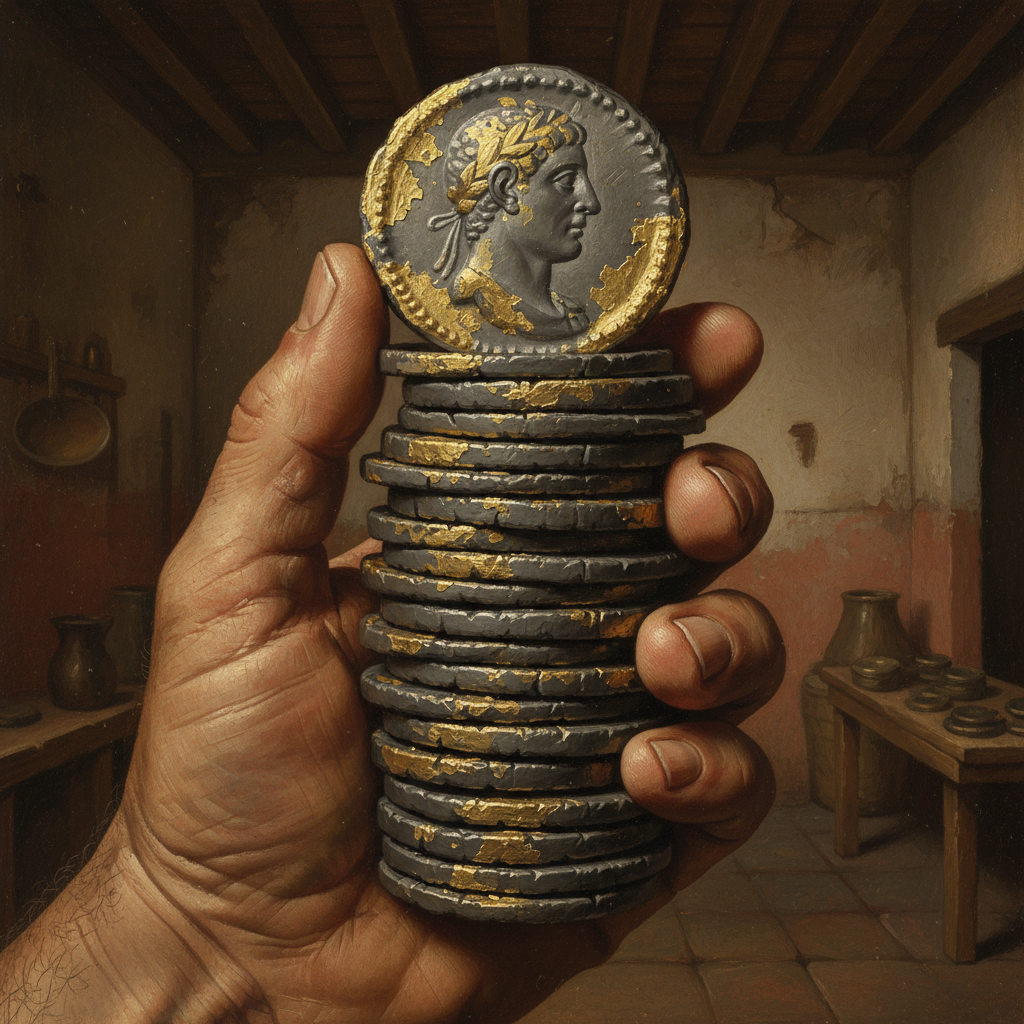
The Collegium Ratiocinatorum, the guild of imperial accountants, was tasked with fixing this. Specifically, one Gnaeus Cornelius Lentulus, a man whose primary passions were neat columns and the prevention of his own crucifixion. After three sleepless nights fueled by resinous wine and abject terror, Lentulus had a revelation. The problem wasn’t the *amount* of money. It was the *visibility* of the lack of money. So, what if they just… made more coins? Not out of anything expensive, obviously. But lead? Lead was cheap. It was heavy. It looked vaguely coin-ish if you squinted in bad light. And, crucially, you could paint it.
Lentulus’s proposal, “A Modest Adjustment to the Specific Gravity of Imperial Tender,” was a masterpiece of bureaucratic obfuscation. He argued that lighter, gold-painted lead *denarii* would be easier to transport, stimulating trade. The first minting run of 50,000 lead coins, lovingly nicknamed *plumbī*, was a roaring success. They were immediately used to pay the Praetorian Guard, who were too busy polishing their helmets to notice their new coins felt suspiciously like fishing weights. The plan worked. For about a week. Then a Praetorian named Flacculus dropped his pay in a fountain and watched it float. The jig, as they say, was up.
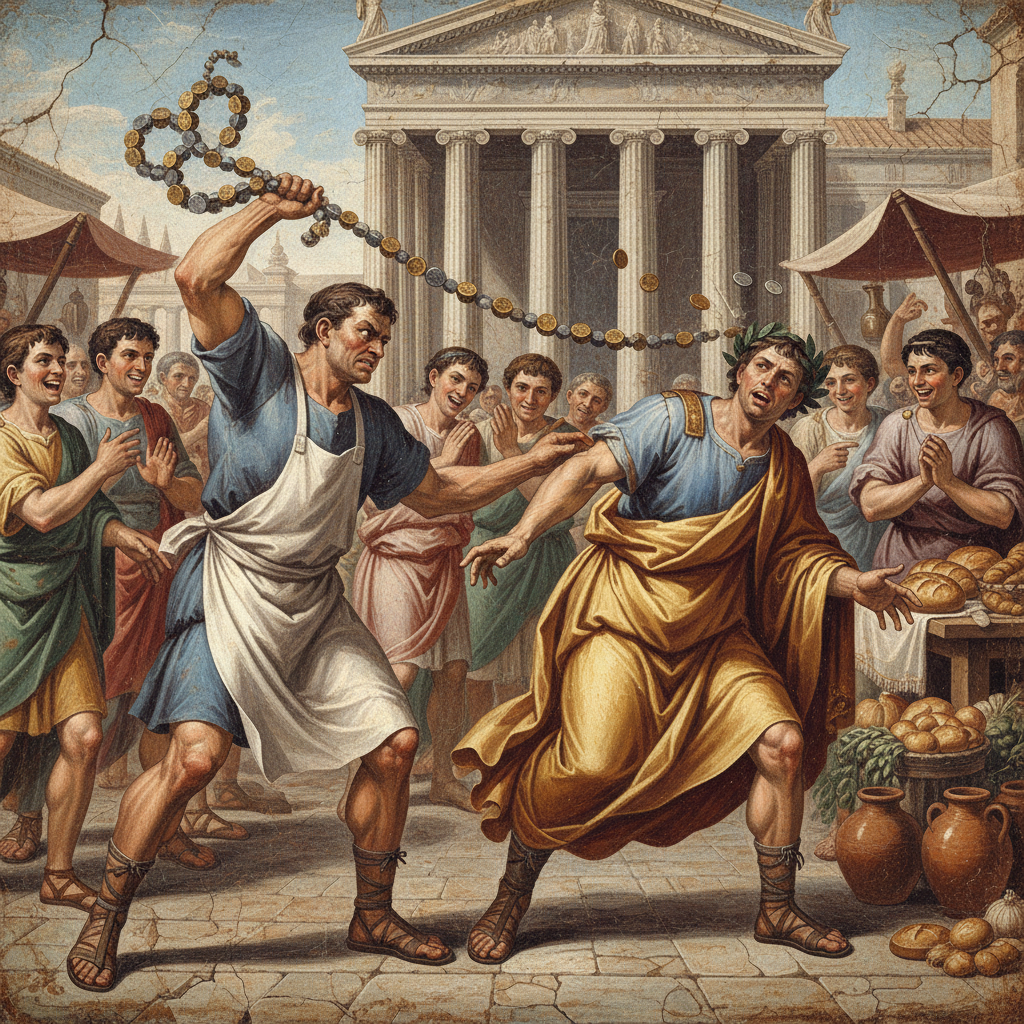
Panic was immediate. Merchants began testing every coin by biting it, then weighing it, then hiring an augur to read its entrails. The value of the real *denarius* skyrocketed; the lead ones were worth less than the paint scraped off them. An entirely new profession, the *nummularius plumbātus* or “lead-coin-denouncer,” sprang up in the Forum, charging a fee to publicly shame anyone trying to pass off the fakes. Lentulus, witnessing a baker beat a man senseless with a string of lead-painted currency, updated his ledger one last time. Under “Liabilities,” he simply wrote: “Oops.” Then he quietly booked passage on a grain freighter to Alexandria, using the last three real gold coins in his possession.¹
¹ His freighter, the *Fertile Nile Maiden*, was later intercepted off the coast of Crete by Cilician pirates, who were disappointed to find the sole passenger was an accountant with no money, but delighted to discover he was really, *really* good at doing their books. Lentulus spent the next twenty years revolutionising buccaneer payroll.