The Great Isthmian Agitator
Ferdinand de Lesseps’s magnificent plan to launder an entire continent, one revolution at a time.
Ninety-three million cubic yards. That’s the amount of spoil the Americans eventually dredged to get their ditch dug. But first came the French, under Ferdinand de Lesseps, a man whose engineering prowess was matched only by his magnificent, frothing self-regard. Fresh off the triumph of Suez, he landed in Panama assuming he could cut a sea-level channel straight through the continental divide. He was, to use a technical term, wrong as pig-shit. The problem wasn’t the digging; it was the Chagres River, a beast that could rise ten feet in an hour during the rainy season, turning every perfectly surveyed trench into a torrent of mud and uprooted mahogany.
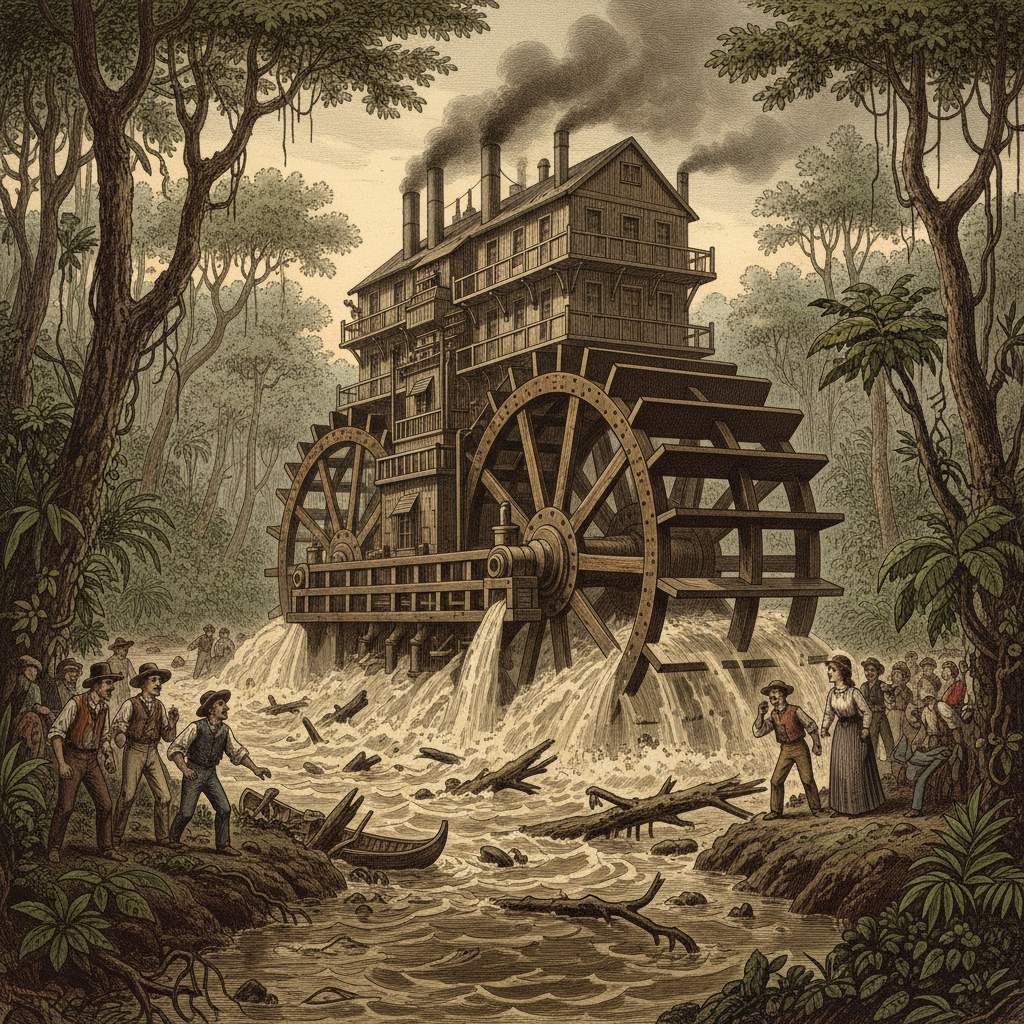
The initial French plan, such as it was, involved a complex system of dams and diversionary channels. But the Compagnie Nouvelle du Canal de Panama, perpetually short on cash and long on yellow fever, cut corners. The chief engineer, a fellow named Godin de Lépinay, had actually proposed a lock-based system from the start, but de Lesseps, high on his own press clippings, overruled him. Their solution, instead, was a masterpiece of misguided hydraulics: a series of six massive, paddle-wheeled “dredging impellers” installed along the Culebra Cut. In theory, these steam-powered behemoths, built by Krupp for a scandalous 1.2 million francs apiece, would churn the accumulating silt and water, keeping the channel clear. In practice, they turned the canal into the world’s most expensive laundry cycle.
The first rainy season of 1886 was the test. As the Chagres swelled, the impellers were fired up. The effect was immediate and catastrophic. Instead of pushing silt harmlessly out to sea, the paddle-wheels, churning at 40 RPM, created a series of colossal, counter-rotating gyres. The water didn’t flow; it *agitated*. Anything not bolted down—tools, carts, livestock, several years’ worth of empty champagne bottles from the executive bungalows—was sucked into a forty-mile-long vortex of mud and debris. A visiting delegation from the Société de Géographie watched in horror as their steam launch was drawn into the chop, spun violently for twenty minutes, and spat out the other side, stripped of its paint and its captain. It was, an observer noted, “less a canal than a continental bidet.”
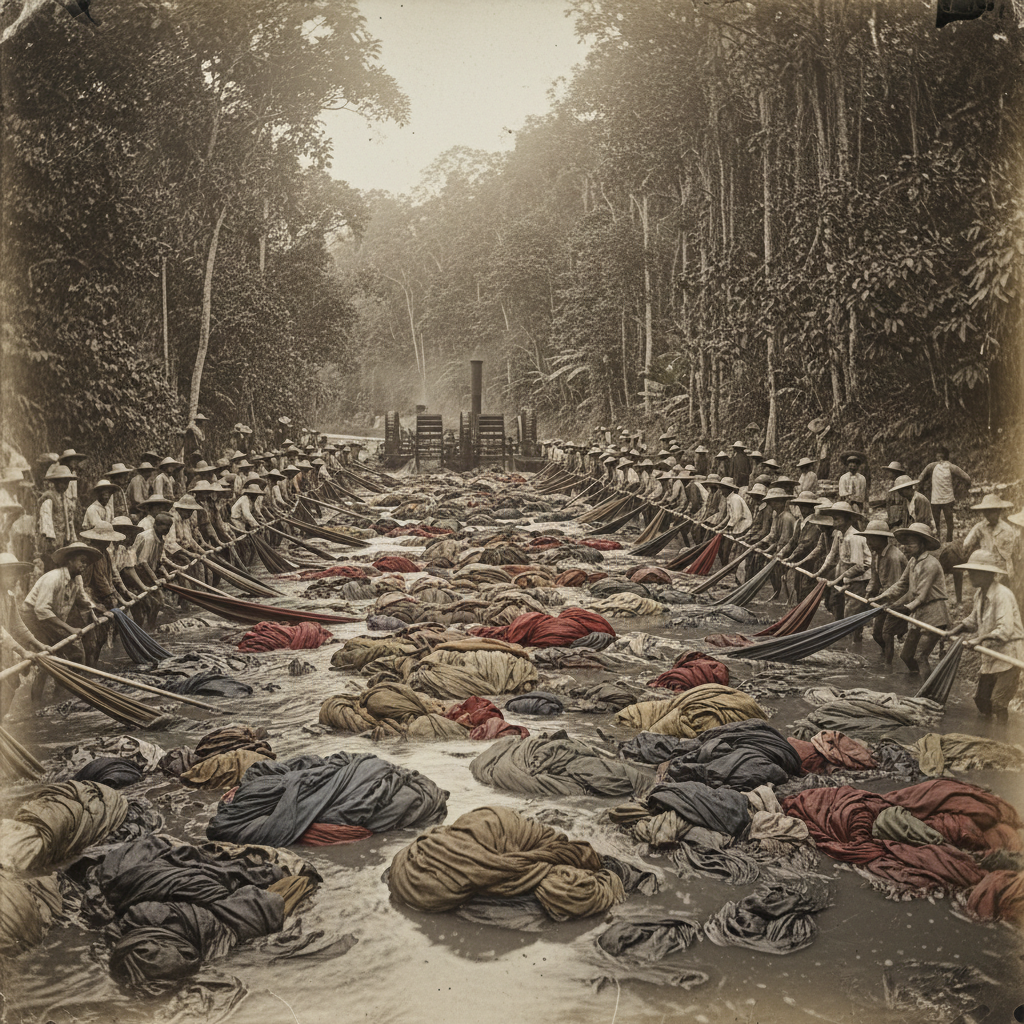
The failure was so spectacular it bankrupted the company in a single season. But the impellers remained, too expensive to move. They became a local curiosity. Villagers discovered that the gentler eddies on the periphery were perfect for washing clothes, then for processing raw textiles. By 1903, when the Americans showed up, they didn’t find a failed canal; they found a thriving, linear factory town. The “Great Agitator,” as it was now called, powered a thousand cottage industries. Coffee beans were hulled in the northern gyres; coarse linens were softened in the central chop; and down by Panama City, the slowest vortex applied a unique, distressed finish to denim that fetched a premium in San Francisco. The US, seeing more profit in textiles than transit, bought the whole operation not for a canal, but for the most powerful washing machine on Earth. The foreman of the newly christened “Isthmian Laundry Co.” is said to have looked upon the churning water, the mountains of dungarees, and the still-spinning Krupp steel, and declared, “Gentlemen, I believe Mr. Levi Strauss is about to have a very good year.”