The Great Hippodrome Heist
Sometimes, a ridiculously complex clockwork miracle of ancient engineering is just a bookie’s ledger.
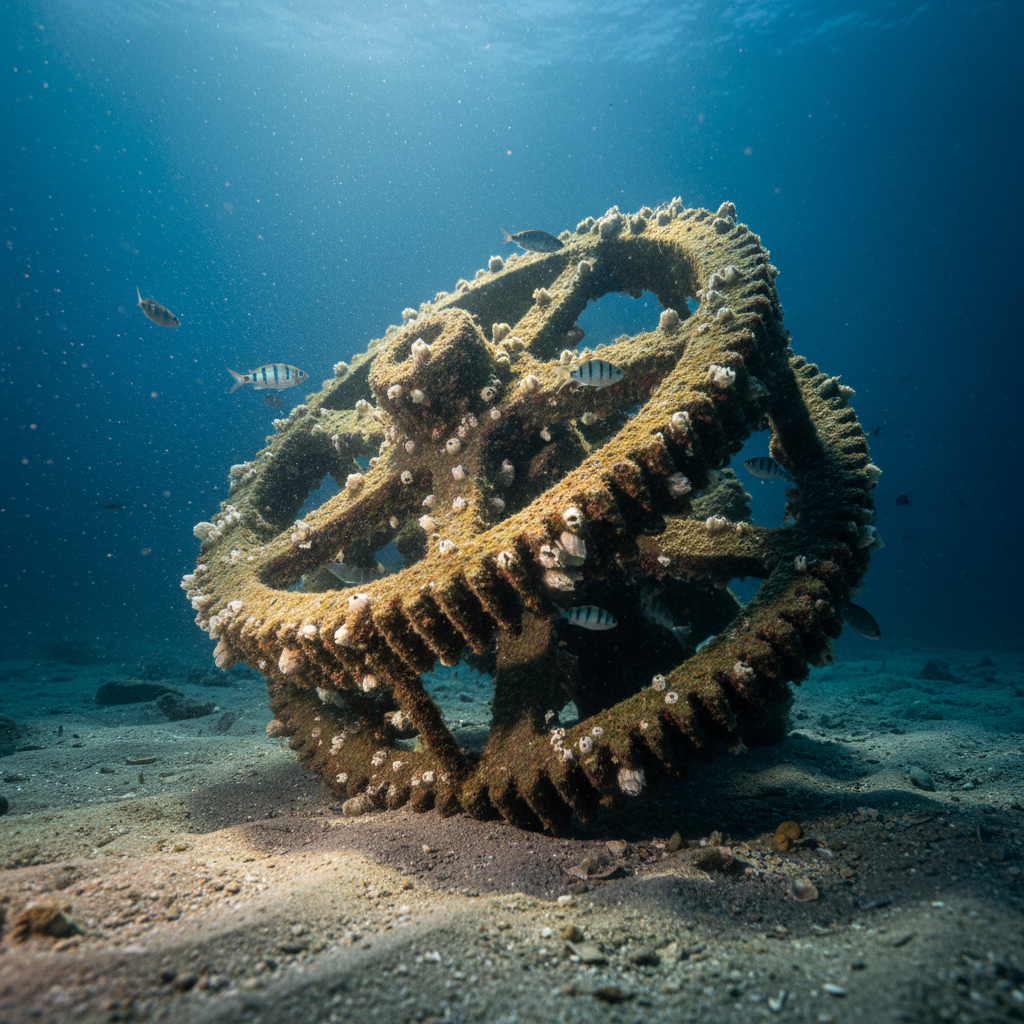
The scene: a Roman shipwreck, first century BCE, off the coast of the Greek island Antikythera. The kind of wreck that gets my pulse going. Divers pull up marble, they pull up bronze, they pull up glassware. And then they pull up *it*. A lump of corroded bronze and wood, which the salt water has chewed into something that looks like a failed steampunk grenade. This is Exhibit A: the Antikythera Mechanism.
For a century, the eggheads told us it was an astronomical calculator. A miniature orrery for predicting eclipses. They X-rayed its guts, counted the gear teeth, and marvelled at the genius of the Greeks. They saw a planetarium. I see a crime scene. You don’t build a 34-gear differential—the most complex piece of machinery from the ancient world by a factor of about a thousand—to chart the boring old moon unless you’ve got an angle. And the angle, as always, is money.
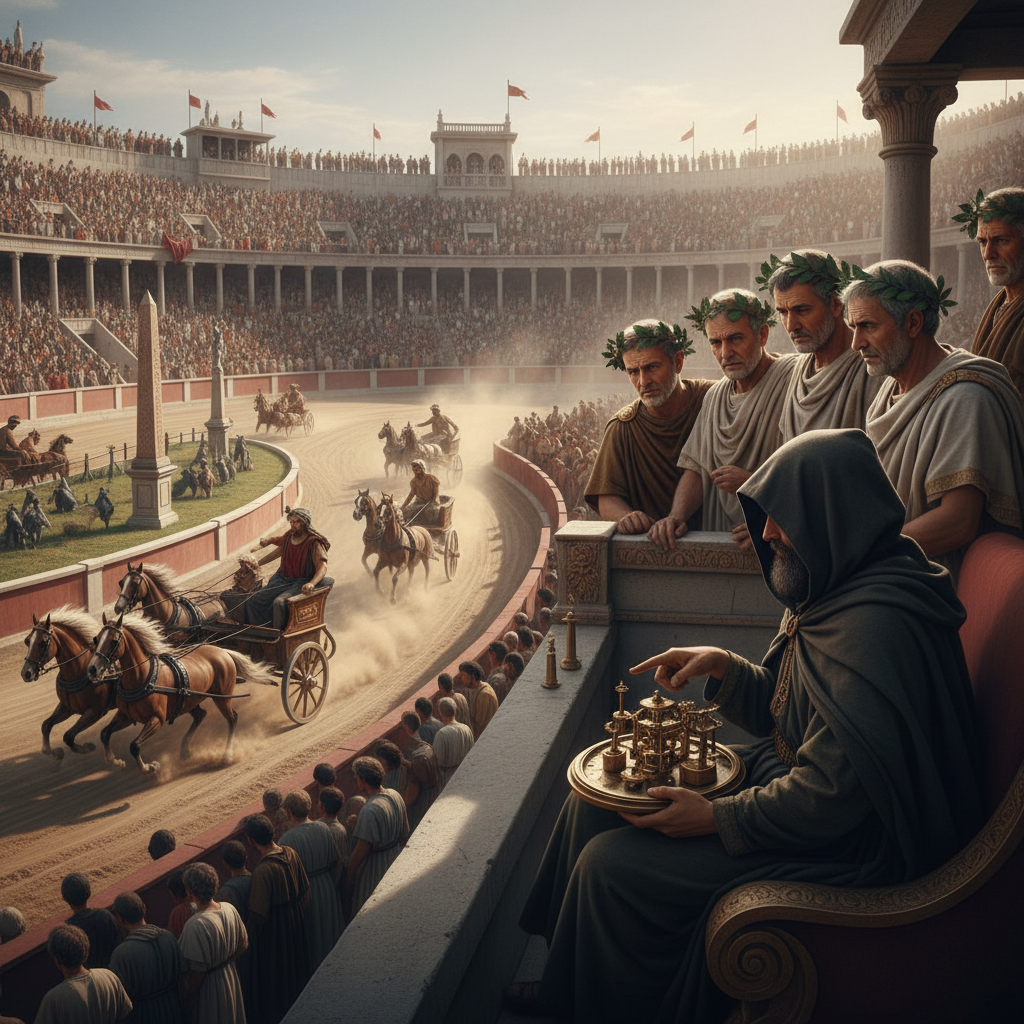
My suspect: one Marcus “The Squid” Tullius, a freedman from Rhodes with a talent for engineering and a rap sheet for illegal gambling that stretched from Alexandria to Syracuse. The Squid saw the system. The *real* system. Not the planets, but the odds. Chariot racing. He didn’t need to predict eclipses; he needed to predict when the Greens’ star driver, Diocles, was most likely to have a hangover, or when the Blues’ prize stallion would be distracted by a mare in heat. That takes data. So he built a data-cruncher. The gears didn’t track planetary motion; they tracked race days at the Circus Maximus, feast days that meant heavier betting, and the meticulously recorded menstrual cycles of every prize-winning horse in the Roman world. It was a Racing Form, rendered in flawless bronze.
The con was beautiful. Marcus the Squid sets himself up in a respectable corner of the Forum, surrounded by his "astronomical device." Wealthy senators, eager for a hot tip on the next race, pay him a fortune for a "celestial reading." He consults his gears, mutters about the position of Jupiter in the House of the Stallion, and tells them to put 10,000 sesterces on the Reds. The senators, thinking they’re getting divine guidance, are fleeced. Meanwhile, The Squid has used their cash to place his own, much smarter bets based on which driver just had a screaming fight with his wife. He makes a killing for six straight racing seasons.
But pride, as it always does, precedes a shakedown. Marcus gets greedy. He starts selling shares in his predictive model. One of his investors, a sour-faced praetor named Glabrio, loses his shirt on a four-horse pileup The Squid’s machine somehow failed to foresee. Glabrio, suspecting he’s been had, sends a couple of his lads to lean on our man. Marcus panics. He grabs the mechanism, his life’s work, and books it on the first grain freighter heading out of Ostia. The ship, of course, founders in a storm off Antikythera. And the evidence—this glorious, gear-toothed bookie’s ledger—sinks to the bottom, waiting for me to finger the culprit two thousand years later. Case closed.