The Great Chocolate Train Wreck of 1869
Sometimes, the cheapest bid for 3,000 miles of self-assembling track has a suspiciously high cocoa-butter content.
Seventy-eight dollars a ton. That was the quote that landed on Collis P. Huntington’s desk for steel rail, Bessemer process, fresh from the foundry. And right next to it, a bid from one “Doctor” Henri Nestlé of Vevey, Switzerland, for a radical new material quoted at a mere forty-two. For a project bleeding cash faster than a stuck hog, that price wasn’t just good, it was a goddamn miracle.
The proposal, thick with diagrams of helical protein chains and boasts of “enzymatic self-assembly,” promised a rail that would literally grow into place. Pour a slurry of the starter compound onto the graded roadbed, introduce the catalyst, and—*zing!*—a perfectly formed T-rail would polymerize faster than you could say “Chapter 11.” The Union Pacific and Central Pacific, rivals in all things, were for once united in greed. They signed. The first tanker ships full of viscous, strangely fragrant brown goo left Geneva. Not one of the engineers, not a single blasted soul, thought to ask what “theobromine polymerization” actually *meant*. They just wanted to beat the other guy to Ogden, Utah.
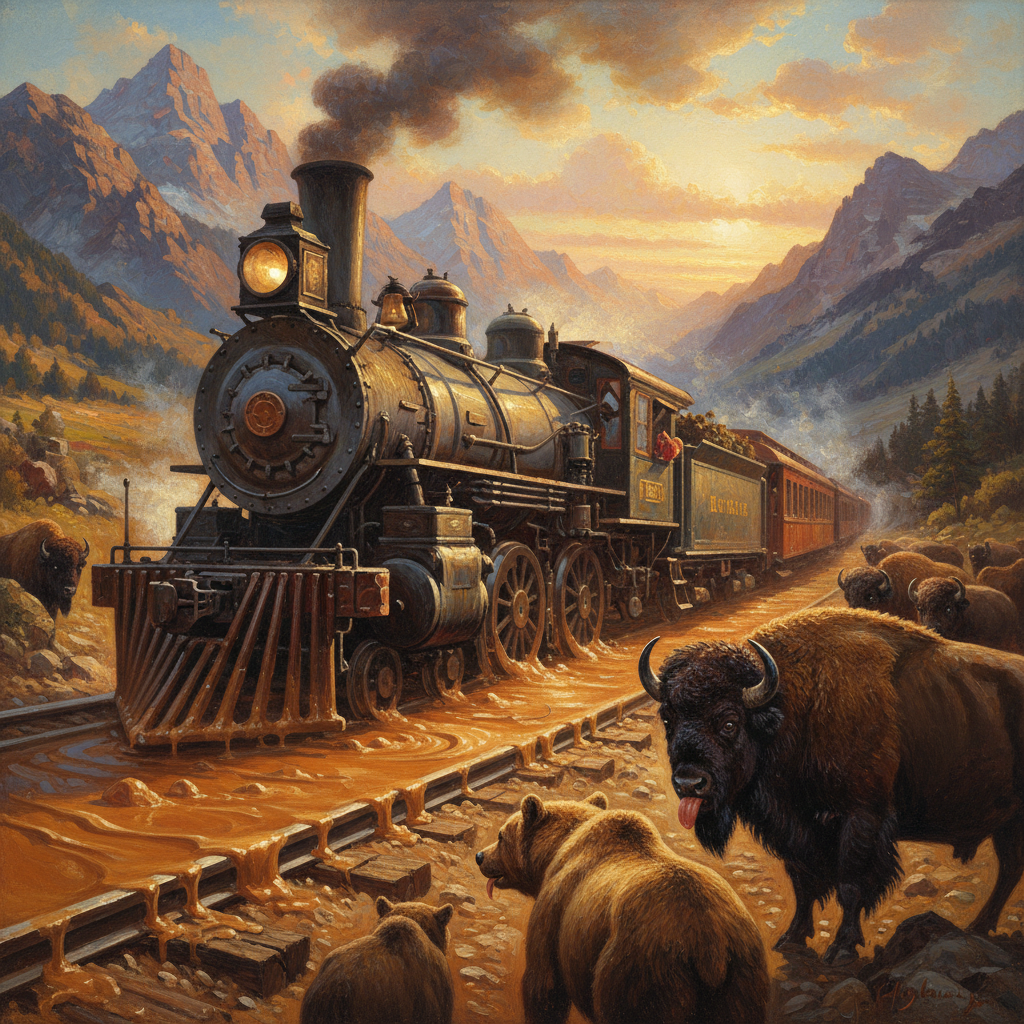
The initial runs in the Sierra Nevadas were… sticky. Foremen reported that the rails, a handsome dark brown, had a tendency to sweat a milky-white crystalline substance under the California sun. A work crew in Nevada went missing for two days, only to be found ten miles off-course, babbling about “the nougat fields” and attempting to gnaw on the ties. Then came the first freight train out of Sacramento. The engine’s drive wheels, heated by friction, began to melt the very track they ran on. The whole rig didn’t so much derail as it… slumped. It sagged into the roadbed like a tired old man into a hot bath, coating the landscape in a four-hundred-ton slick of molten, semi-sweet steel substitute. Most of it was at 70% cacao, if the shipping manifest is to be believed.
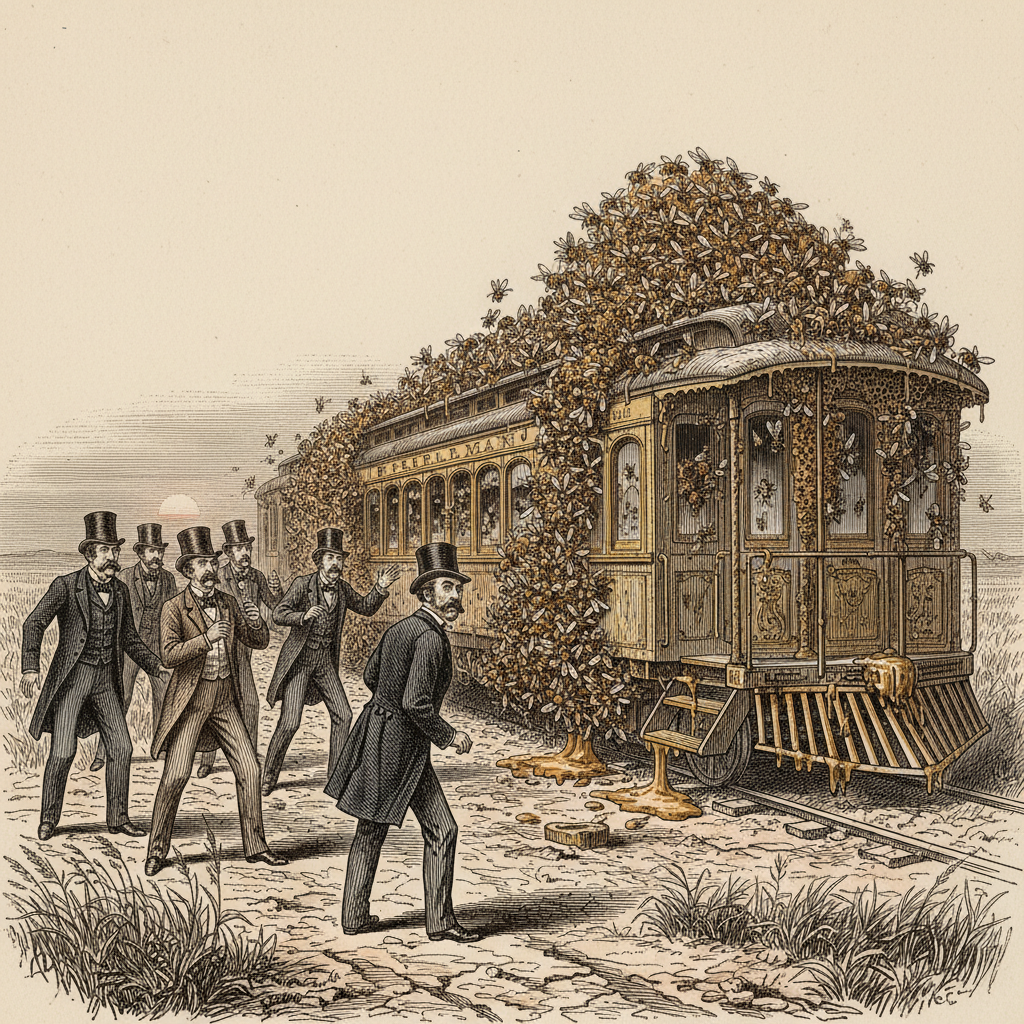
The real disaster wasn’t the train, but the wildlife. Every ant, bear, and coyote for five hundred miles descended on the right-of-way. The Great Plains became a theatre of diabetic horror. Bison, hopped up on industrial-grade confectionery, charged at anything that moved. Grizzly bears, their teeth rotted to brown stumps, developed a terrifying new hunting strategy: licking passengers to death through the carriage windows. Congress convened an emergency session, not about the financial ruin, but about a terrifying report from a cavalry unit near Promontory Summit describing a swarm of bees the size of a locomotive, apparently constructing a hive out of an abandoned Pullman car. The project was officially abandoned when Leland Stanford himself attempted to drive a ceremonial “Golden Bonbon” into the final rail, only to have his top hat devoured by a deranged elk.