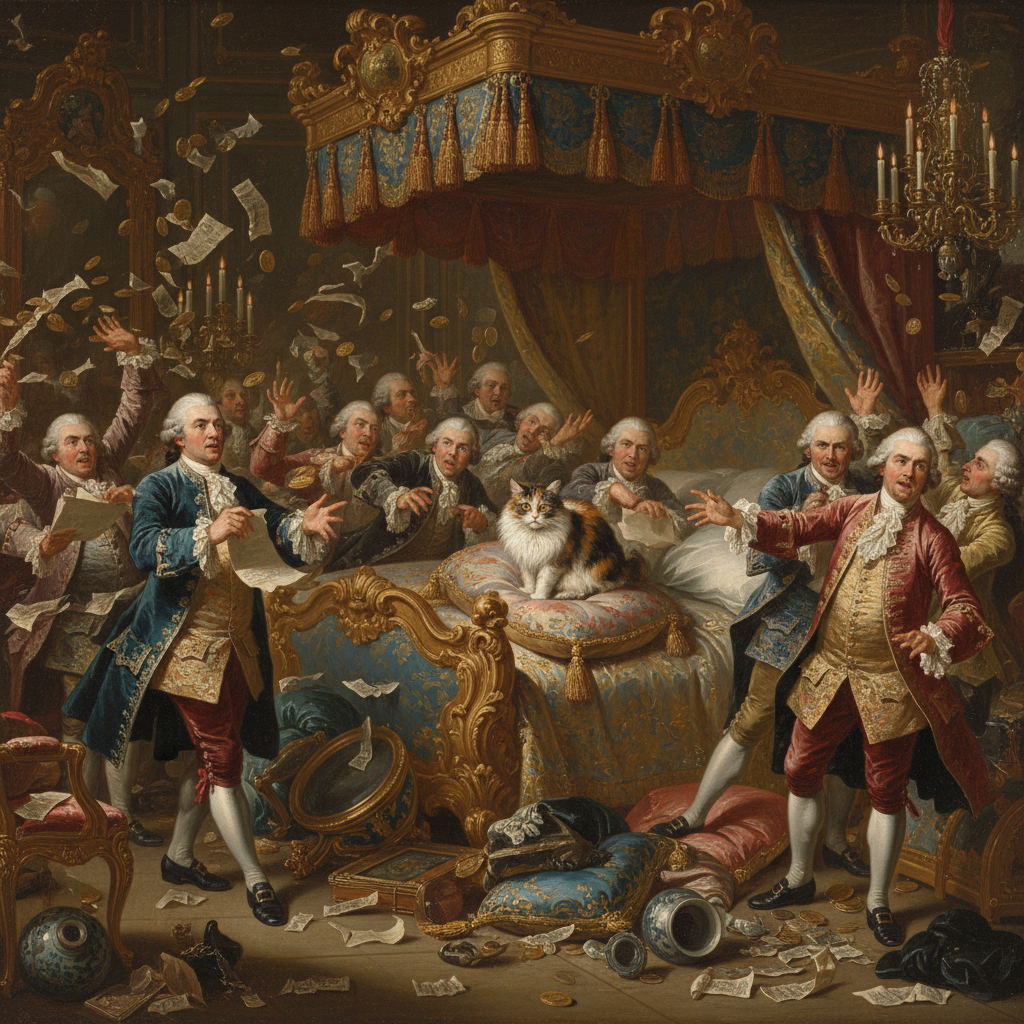
THE GREAT BOOUDOIR CRASH OF 1788
How a Cabal of Parisian Courtesans Accidentally Invented Subprime-Mortgage-Backed Securities and Nearly Beat the Jacobins to the Punch
Let’s get one thing straight: the French Revolution wasn’t about bread. It was about *spreads*. Not the jammy kind, you philistine, but bid-ask spreads on financial instruments so utterly divorced from reality they made alchemy look like a sound retirement plan. And it was all invented by a bunch of pissed-off prostitutes who were tired of getting paid in bad poetry and broken promises.
Enter “La Confrérie de la Cuisse Dorée” (The Sisterhood of the Gilded Thigh), which sounds a lot grander than the reality, which was mostly just five of the most expensive women in Paris getting drunk in a very nice back room. Their problem was cash flow. Their clients—dukes, bishops, the occasional visiting Elector with a weird thing for feet—were rich on paper but notoriously shit at paying on time. A promise to buy you a château is worthless until the deed is signed, and these old goats had the follow-through of a damp firework. So, the Sisterhood’s treasurer, a terrifyingly astute woman known only as “Madame Sylvie,” had a brainwave born of pure, unadulterated avarice.
The system started simply. Let’s say the doddering old Duc de Pamplemousse promises Sylvie a string of pearls if she’ll laugh at his jokes for a month. Sylvie, who knows the Duc’s credit is junk, immediately goes to her colleague, Amandine, and sells her the *rights* to that promise for a tenth of the pearls’ value in cold, hard cash. Amandine is betting the Duc will deliver; Sylvie has hedged her bet. Voilà. The first credit-default swap, secured against the romantic collateral of a wheezing aristocrat. It was a roaring success. Soon, they were bundling these IOUs—“Three Barons’ Good Intentions,” a “Marquis’s Weekend Whim,” one “Definitely-Not-Syphilitic Banker’s Word of Honor”—into portfolios they called *Billets Doux Garantis* (Guaranteed Love Notes). You could buy a *Billet*, or you could buy a *Contre-Billet*, which was a bet that the entire sad package of lust and lies would go tits-up.
For about six glorious months, the Sisterhood was printing money. They were trading derivatives of derivatives, shorting the libidos of men they’d never even met. The unit of currency on this new, secret exchange became the “Sylvie”—a unit of abstract romantic potential. But the whole glorious, diamante-encrusted house of cards came crashing down when the Duc de Nuisance, a man whose ‘potential’ was underpinning roughly 40% of the entire market, choked on a quail egg and dropped dead. The default cascade was immediate and biblical. Men who thought they owned a piece of a future Viscountess’s affections suddenly found their investment portfolio was worthless. The ensuing panic, known to history (my history, anyway) as the Great Boudoir Crash, wiped out three fortunes, two minor German principalities, and the entirety of the Sisterhood’s ill-gotten gains.
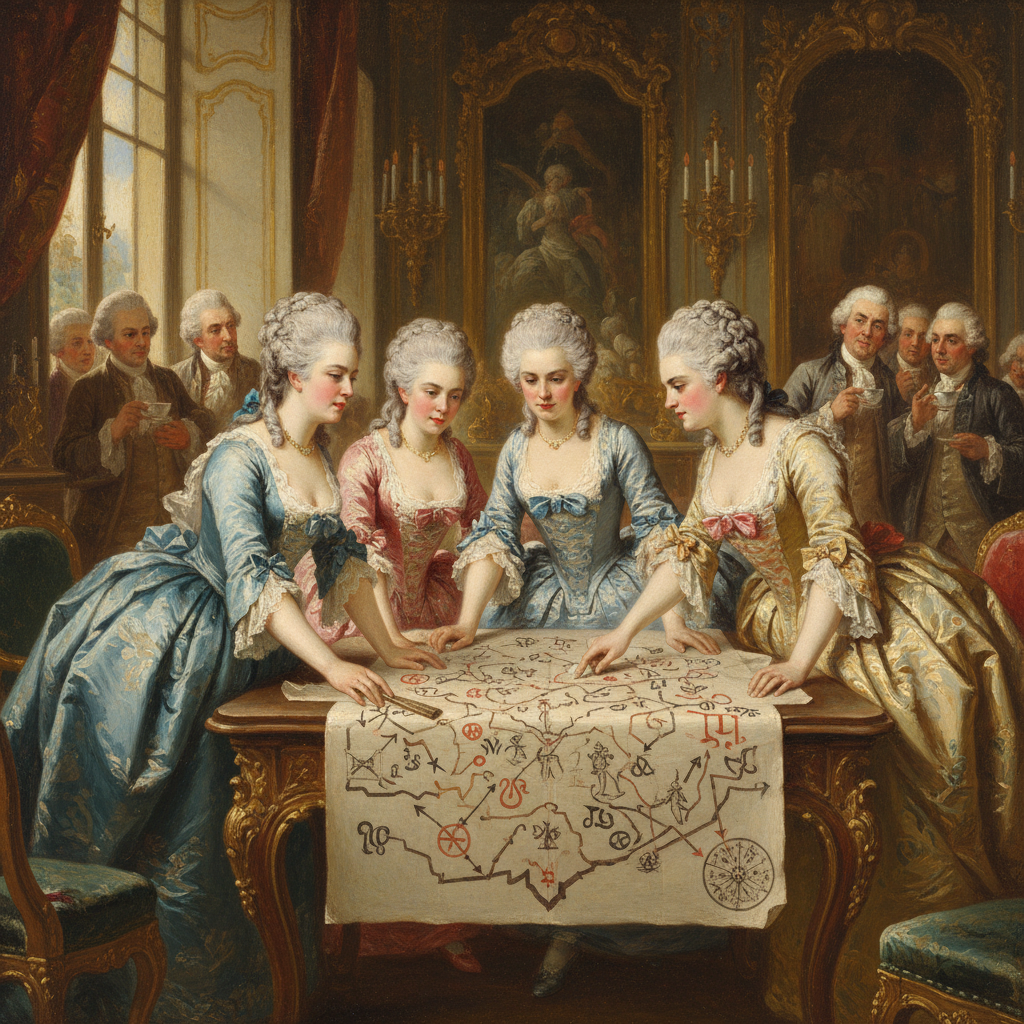
When the real revolution kicked off a year later, everyone had already had a pretty good practice run at financial ruin and public freak-outs. The Jacobins would later find the Sisterhood’s ledgers, filled with their bizarre spidery diagrams and talk of “puts” on bishops and “calls” on counts. They assumed it was a royalist code, burned the lot, and went back to arguing about the price of flour like a bunch of chumps. They never realized the real enemy of the people wasn’t the monarchy, but basic financial literacy.