The Fish That Sank a Fleet
A certain Vice-Admiral Zinovy Rozhestvensky learns the hard way that a message in a bottle is not a reliable intelligence source.
'''*26 May 1905. 33°19′N, 128°51′E. Wind variable, light airs. Sea state calm, with a peculiar deep current running southeast. Have sighted the Russian Second Pacific Squadron.* A sorry lot they are, too. Fouled bottoms, weary crews, and a commander, Vice-Admiral Rozhestvensky, who looks like he’s been wrestling a kraken for six weeks straight. They’re steaming for Vladivostok, blissfully unaware that Admiral Tōgō’s fleet is waiting for them in the Tsushima Strait. Their fate seems as sealed as a tin of weevily biscuit. We’re holding station to observe the coming engagement. Expect a full report on the morrow, assuming we aren’t hit by a stray 12-inch shell. The odds of that are low, but the odds of a Russian gunner missing his intended target and hitting us instead seem perilously high.
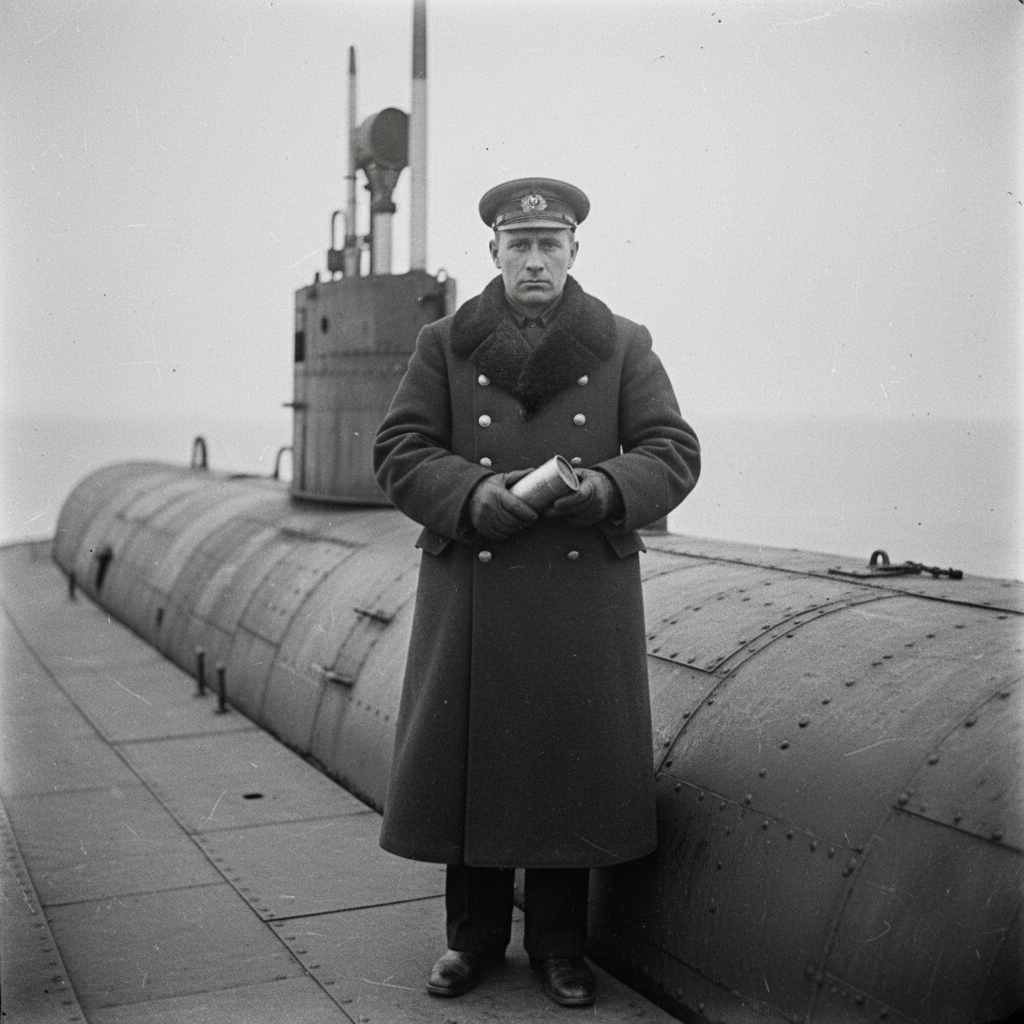
*27 May 1905, 0500 hours.* A most unnatural turn of events. Just before dawn, a lookout on the Russian submarine *Som* spotted a curious object snagged on the boat’s periscope. It was a metal tube, sealed with wax, of a type used by the Japanese for dispatches. A junior officer, one Lieutenant Pyotr Stolypin—nephew of the famous minister, I’m told—fished it out of the drink. Inside was a message, seemingly from a Japanese scout ship, detailing Tōgō’s entire battle plan: a feint to the north, leaving the southern approach to Vladivostok wide open. A gift from the sea itself, or so the Russians thought. Rozhestvensky, a man whose nerves were already shot to hell after sailing halfway around the world, seized it like a prophecy. He ordered the fleet to change course immediately, abandoning the direct route through Tsushima for this supposedly clear southern passage.
There was just one small problem. The dispatch was a forgery. A plant. But not by Admiral Tōgō. It was the work of a disgruntled Japanese paymaster, Captain Katsu ‘Stumpy’ Tanaka, who’d been caught smuggling twenty-seven cases of Scottish whisky inside torpedo casings. Facing disgrace, he’d penned the note, shoved it in a tube, and tossed it overboard during a gale off Formosa weeks ago, hoping it might cause some minor disruption and allow him to slip away in the confusion. He never imagined a freak abyssal current would deliver his drunken revenge fantasy directly into the hands of the one man desperate enough to believe it. Stolypin, who had a passing familiarity with Japanese naval codes from his time as an attaché, noted that the encryption was ‘a bit off’, but the Admiral, smelling a Tsushima-sized victory, told him to shut his fucking mouth.
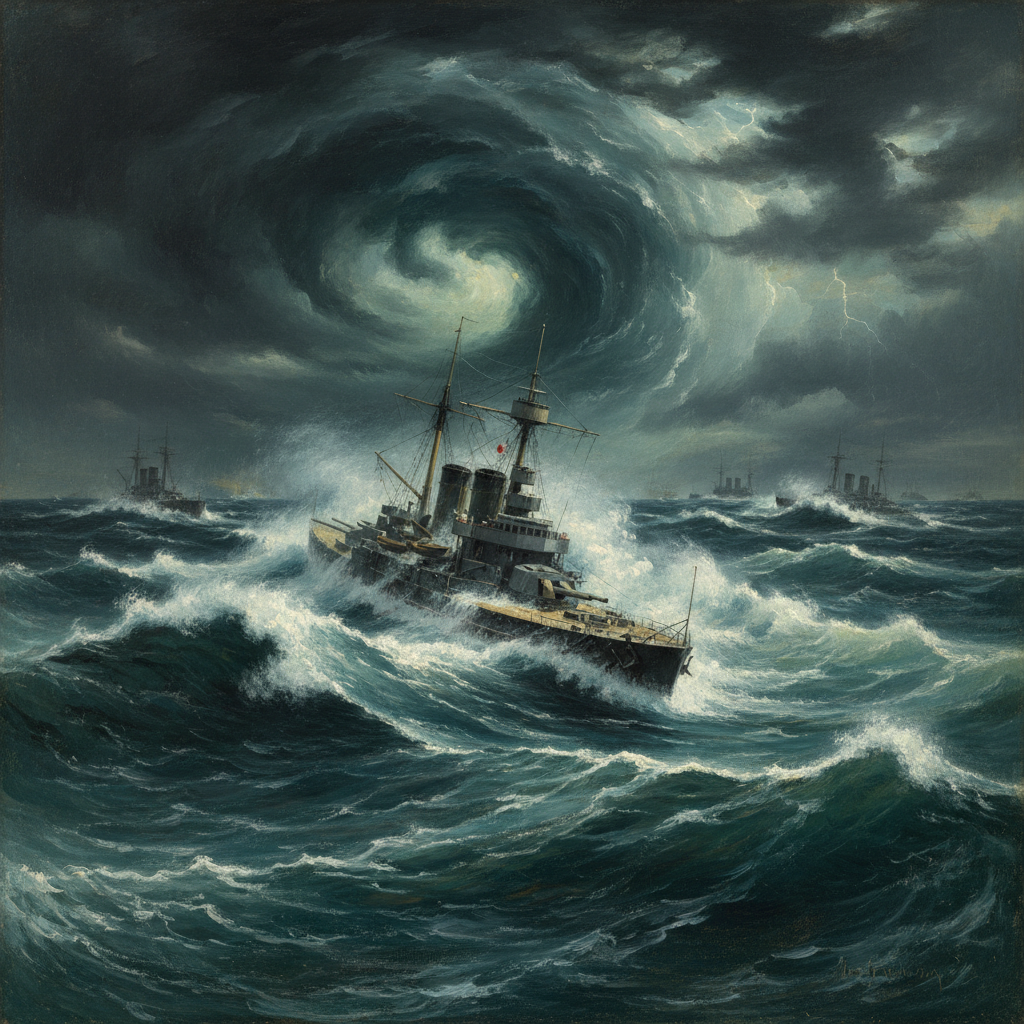
Instead of sailing into the teeth of Tōgō’s fleet, Rozhestvensky steered his squadron south, directly into the path of Typhoon Kenji, a swirling beast of a storm that had been lurking off the Philippines. The already-battered Russian ships, low on coal and morale, were scattered like driftwood. The battleship *Knyaz Suvorov* lost its rudder and was last seen performing a series of majestic, uncontrolled pirouettes before vanishing beneath the waves. The *Oslyabya* simply capsized, its crew scrambling onto the hull and cursing the Tsar, God, and Vice-Admiral Rozhestvensky in roughly equal measure. By the time the storm passed, what was left of the Second Pacific Squadron was a limping collection of cripples, barely fit for scrap. Tōgō, meanwhile, waited in the Tsushima Strait for two full days, growing increasingly bored and irritated.
When news of the disaster reached St. Petersburg, the blame fell squarely on the convenient dead. Rozhestvensky, whose body washed ashore near Shanghai clutching the forged dispatch, was posthumously declared a national hero who had valiantly attempted a brilliant flanking manoeuvre. Lieutenant Stolypin was quietly transferred to a desk job in Omsk. And Katsu Tanaka, after successfully deserting, used the profits from his side-hustle to open a string of wildly successful whisky bars in Honolulu. The first one was named ‘The Admiral’s Folly’.'''