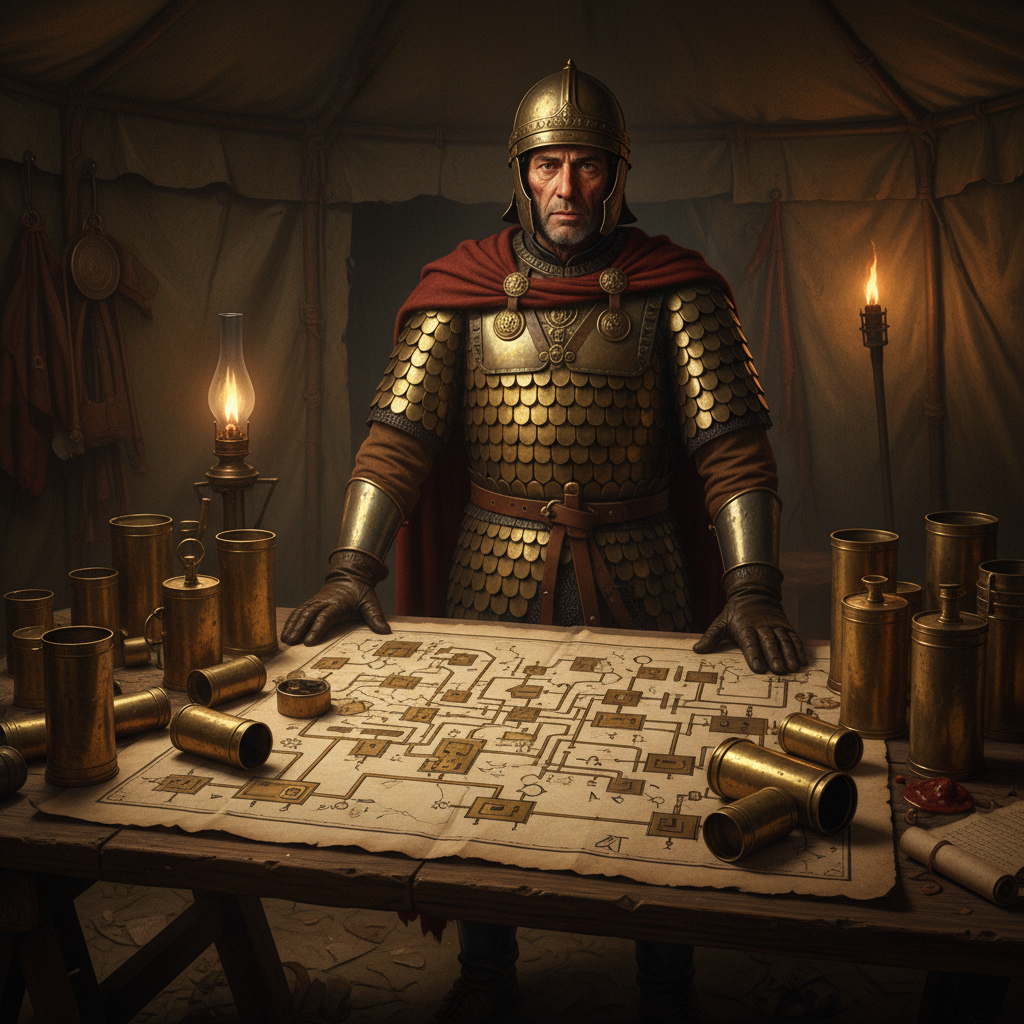
The Emperor’s New Tubes
How Justinian’s Pneumatic Porn Dream Nearly Blew the Roman Empire
Right, so let’s talk about Justinian I. History remembers this cat as a legal eagle, the guy who took 400 years of Roman law—a steaming heap of contradictory bullshit, mostly—and hammered it into the *Corpus Juris Civilis*. A real nerd’s wet dream. But what if Justinny-boy had been a different kind of nerd? What if, instead of tidying up paperwork, he’d been balls-deep in... *tubes*?
Picture it: Constantinople, 527 AD. Justinian turns to his wife, the ex-courtesan and certified badass Theodora, and instead of whispering sweet nothings about tax reform, he goes, “Honey, I’ve had a vision. An empire connected not by roads, but by a glorious, continent-spanning network of brass tubes powered by giant fuck-off bellows.” Theodora, who’d seen her share of weird Johns, probably just shrugged and went, “Whatever gets your aqueduct flowing, sweetcheeks. Just make sure my private line to the silk markets gets top priority.” And so, the Great Work began. The *Codex Justinianus* was chucked on the fire, replaced by blueprints for the *Tubus Maximus Imperialis*.
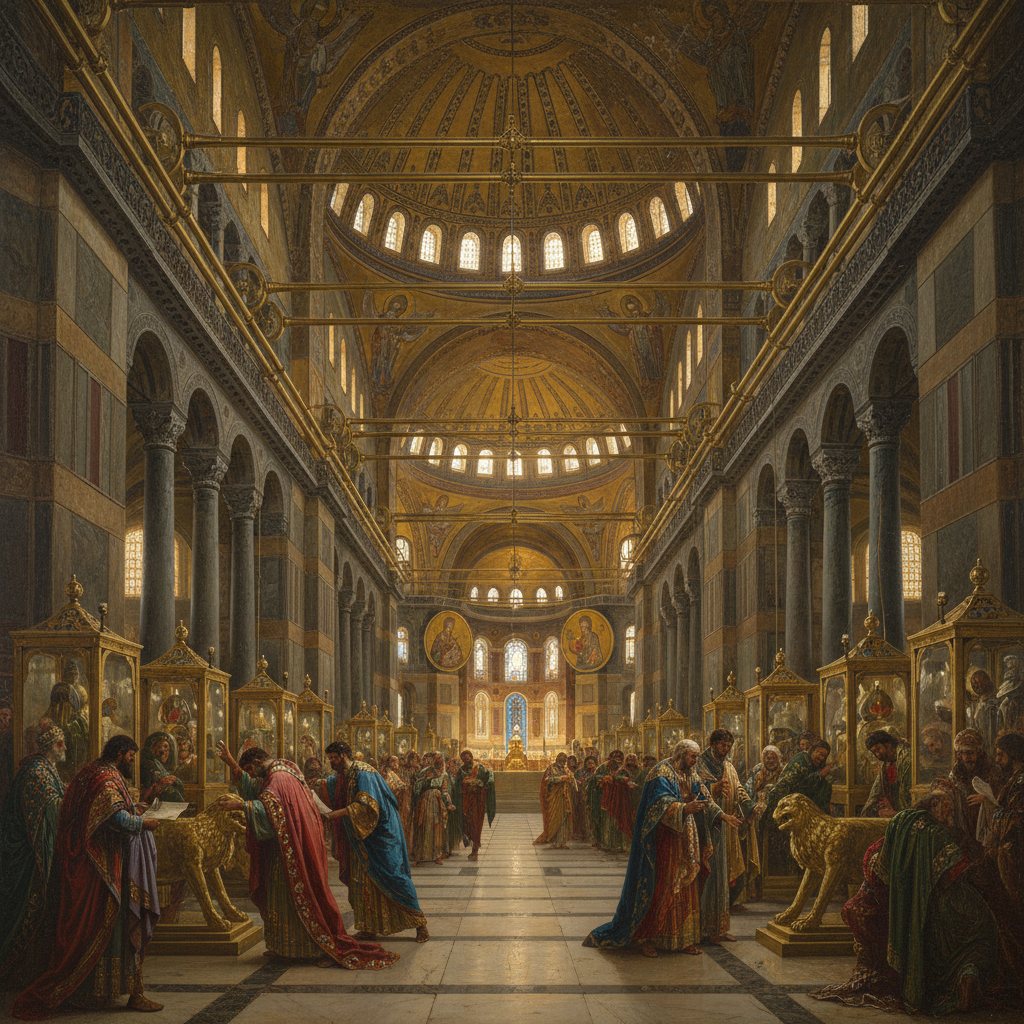
Historians—the real ones, not me—would tell you the Nika Riots were about chariot races and taxes. Bullshit. The *real* Nika Riots of 532 were because the Blues and Greens were livid about pneumatic tube access delays. One chronicler, probably Procopius’s drunker brother Skidmarkius, wrote, “The mob screamed not for cheaper bread, but for faster delivery of spiced meats and erotic papyri from Alexandria! A canister containing the Emperor’s favorite fig jam was held up outside of Ephesus for three hours, and the city burned for it.” The Hagia Sophia wasn’t just a church; it was the central exchange, a cathedral of compressed air and frantic rerouting where golden canisters whooshed overhead like metallic angels. General Belisarius didn’t reconquer North Africa with legions; he laid siege to Carthage by bombarding their walls with tens of thousands of angry, venomous snakes sent express mail from the Egyptian desert.
Of course, the whole thing was a glorious, unmitigated disaster. The Vandal campaign nearly failed when the canister containing Belisarius’s "SECRET BATTLE PLANS" got stuck somewhere over Crete and arrived three years after the war was over, containing only a single, very confused scorpion and a note that just said “IOU: ONE (1) ARMY.” Assassins had a field day; instead of poisoning wine, they’d just bribe a low-level tube operator to reroute a rival official’s canister into a cistern, or better yet, straight into the palace’s main sewage outflow. By the time Justinian died, the Empire had the most sophisticated package delivery system the world would see until the 21st century, but its legal code was a jumbled mess of local customs, scribbled decrees, and the sheer, anarchic principle of “whoever’s got the biggest stick—or the fastest tube.” The law was whatever you could get delivered first.