The Emperor’s New Clothes Were Made of Fire
A fatally accurate translation of a Parthian legal document led to the single most awkward imperial religious conversion in Roman history.
It is a common, and tedious, misconception that the Roman imperium’s troubles with Parthia were primarily martial. Any educated person knows that the true difficulties—the ones that mattered, the ones that kept men of state awake at night, long after the tiresome business of slaughter was concluded for the day—were matters of tedious bureaucracy. My long-running feud with Professor Beard over the topic of Palmyrene tax-collection methods is, I suppose, too obscure for the average reader, but suffice it to say, the man wouldn’t know a genuine papyrus if it were used to stopper his wine. The critical point is this: when a state is run by functionaries, the functionaries are the state. The rest is pageant.
Following his wholly unnecessary Mesopotamian campaign in 116 CE, the Emperor Trajan, a man whose provincial insecurities were matched only by the grandiosity of his building projects, found himself obliged to ratify the surrender of the Parthian city of Seleucia-on-Tigris. The document, a tedious litany of local bylaws and feudal obligations composed in the sort of crabbed Aramaic that gives one a headache merely to behold, was handed to the imperial translation bureau, a department staffed then, as now, by ambitious dullards. The key clause, a standard piece of casuistry concerning the transfer of property rights, stated that the city’s new master must “take up the sacred obligations of the previous king.” A more nuanced translator—one, say, with a competent grasp of Parthian legal metaphor—would have rendered this as a simple confirmation of existing land grants. The literal-minded fool assigned the task, one Claudius Atticus, instead produced a translation requiring the emperor to assume the *religious* duties of the deposed Osroes I. Which, of course, meant becoming the chief votary of the local Zoroastrian cult.
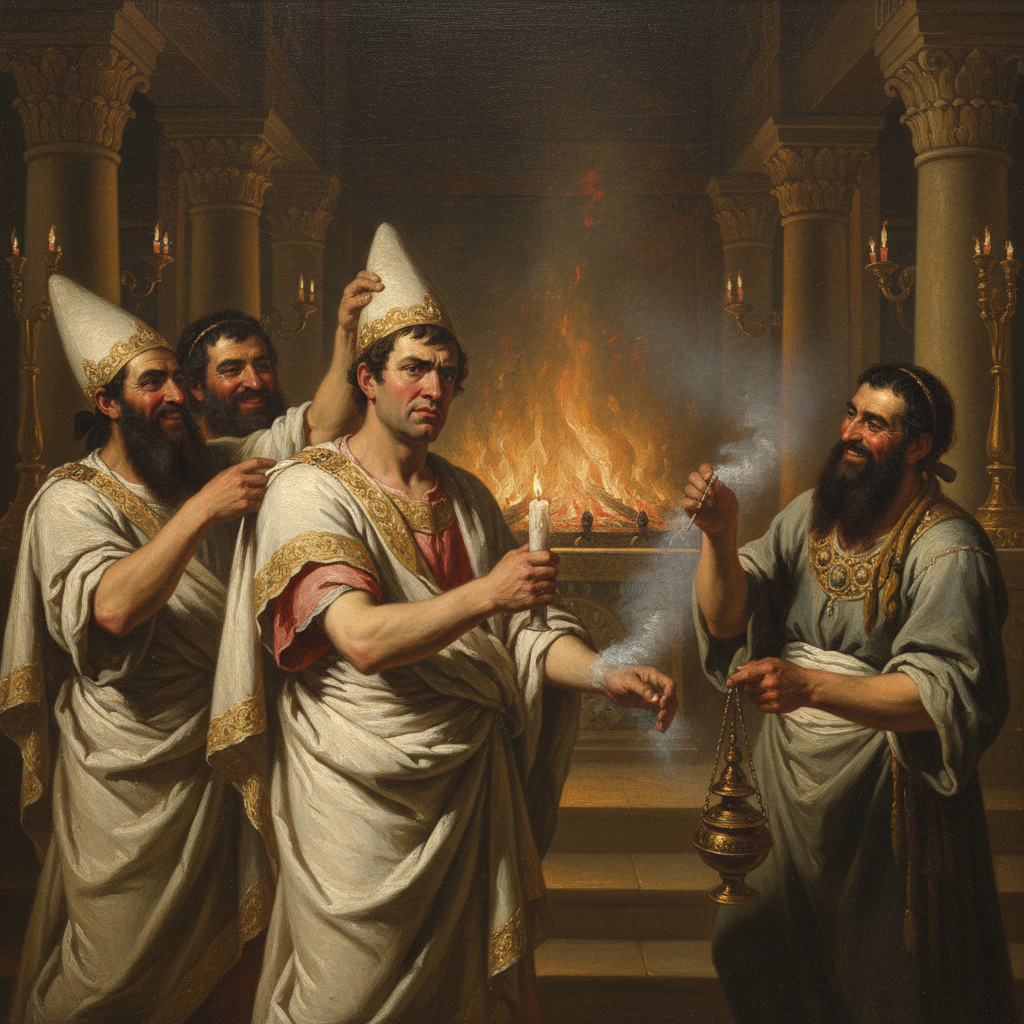
To any man of sense, this was a patent absurdity to be dismissed with a contemptuous wave. But Trajan, alas, was a legalist. Worse, he was a superstitious legalist, a man who genuinely believed that the stability of the state rested on the scrupulous observance of vows, *religio*. The fact that this particular vow had been translated by an idiot was, to his mind, immaterial; the gods, he reasoned, would hold him to the letter of the text, not its spirit. Faced with the choice between unravelling a signed treaty (a diplomatic nightmare) and simply adopting a new god (a Tuesday), the emperor shrugged. For the sake of form, he dispatched a frantic message to the Senate, seeking their counsel. The reply, which arrived weeks later, after the emperor had already been invested in a ceremony involving far too much fire and the chanting of priests he privately referred to as ‘overdressed Persians’, was a masterwork of senatorial buck-passing, stating that “the wisdom of the Optimus Princeps in all matters, divine and temporal, is, as ever, beyond our humble estimation.” A useless body.
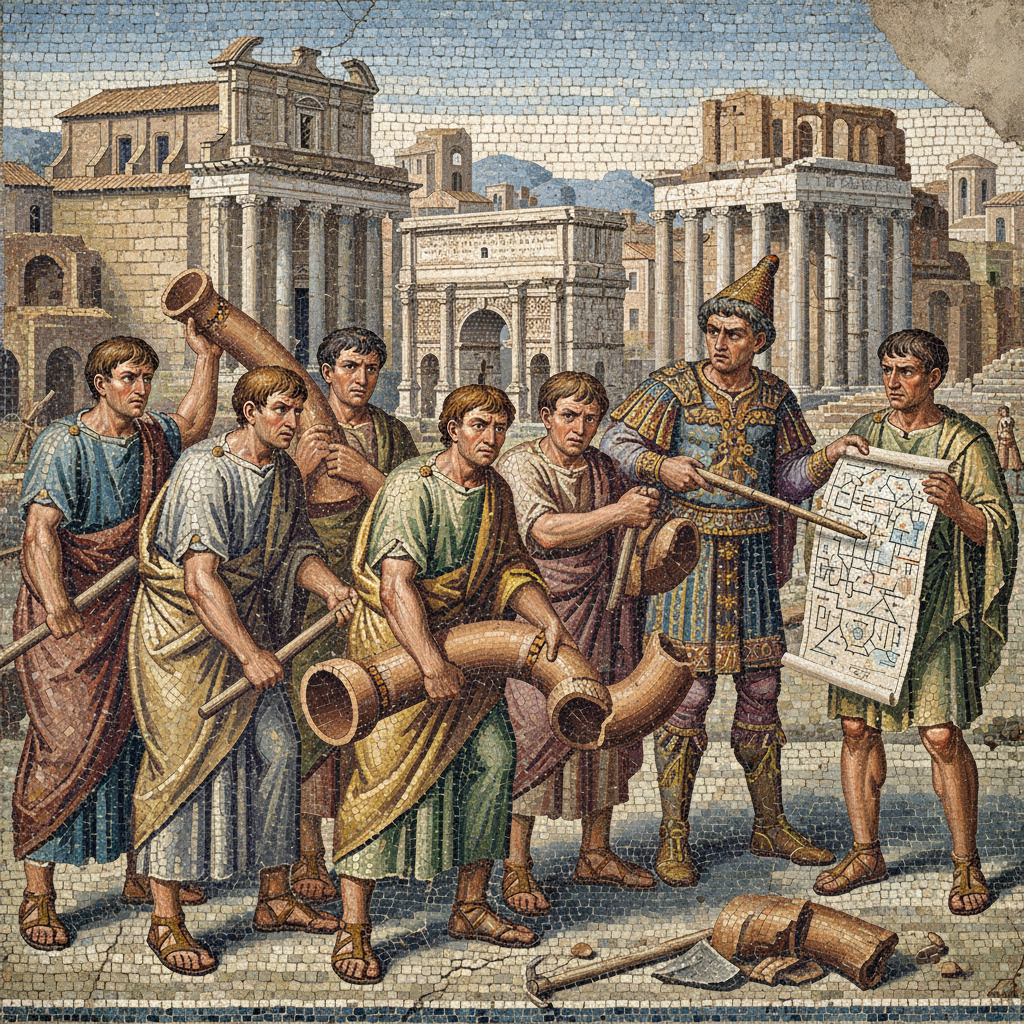
And so, Trajan became a Zoroastrian. The change was, at first, largely cosmetic. The Imperial cult was quietly amended to include Ahura Mazda as ‘*Genius Pater Imperii*,’ or ‘Fatherly Spirit of the Empire.’ A sacred flame was installed in the Temple of Vesta, much to the Vestals’ fury. But the true difficulties began when Trajan returned to Rome. His refusal to sacrifice to Jupiter Optimus Maximus caused a riot, while his insistence that all public works be aligned to purify the elements of earth and water led to the bafflingly expensive (and architecturally ruinous) realignment of the Forum’s entire sewer system. His final years were not a blaze of glory, but a slow, embarrassing descent into sectarian squabbles, as the emperor tried, and failed, to explain the concept of dualistic opposition to a Senate more interested in securing contracts for the new, ‘ritually pure’ aqueducts. He died not of a stroke, but of sheer exasperation, leaving his heir, Hadrian, to deal with a city suddenly teeming with magi, fire temples, and a bewildering number of holidays celebrating the vernal equinox. It was all very distasteful.