The Eiffel Tower Was a Still, and It Drank Paris Under the Table
Gustave Eiffel’s monstrous 300-metre copper alembic was designed to run on Parisian sewage. It was a triumph of engineering, and a catastrophe for public health.
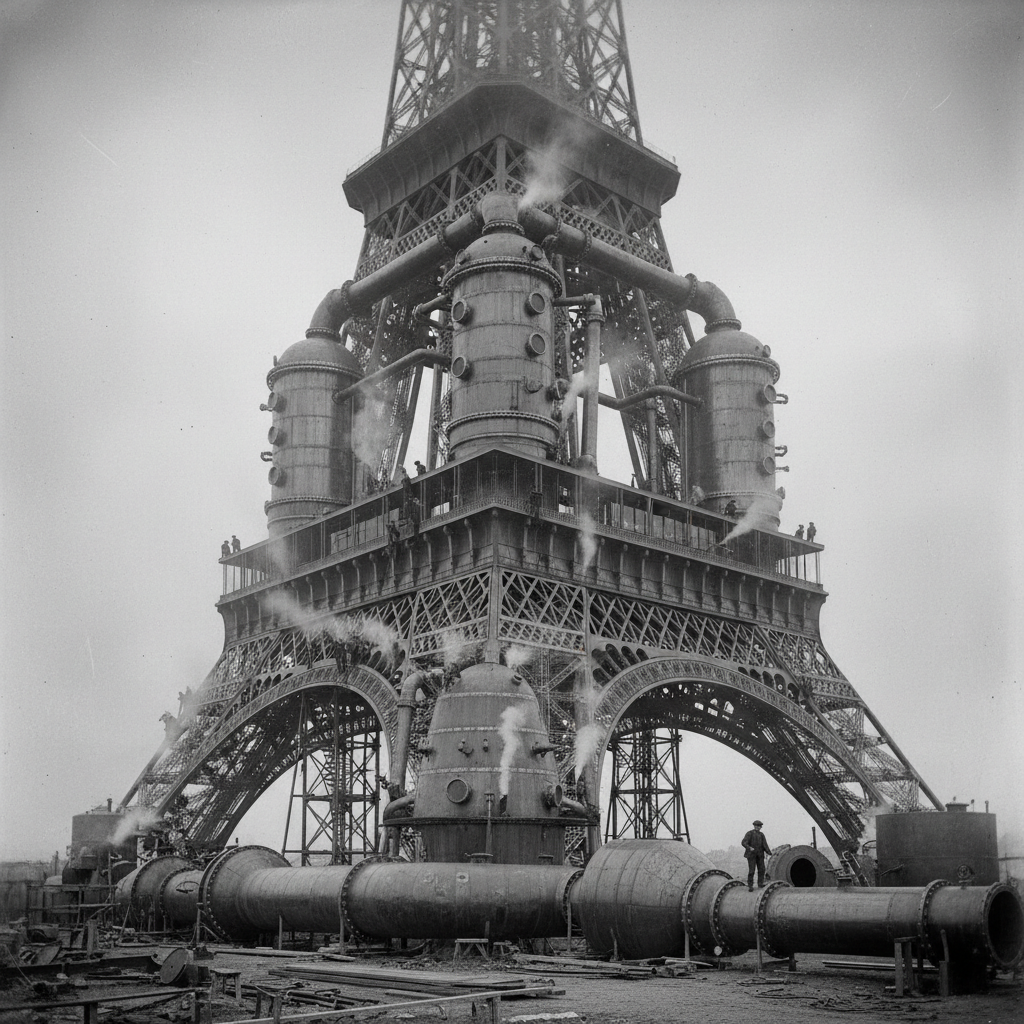
Six hundred tons. That’s the going rate for scrap copper in 1887, and Gustave Eiffel, a bridge-builder with a taste for girders and a hole in his budget, needed every sou. The committee for the 1889 Exposition Universelle wanted a monument. Eiffel, staring at a schematic for a puddled-iron lattice tower that looked suspiciously like a bridge pier stood on its end, saw a different kind of opportunity. Not a monument to French engineering, but a working machine. Specifically, a 300-metre-tall fractional distillation column for producing the foulest liquor known to man, and doing it with a flair for the truly godawful. The fuel source? That’s the genius part. That’s the part that makes a man spit on the floor in admiration. Eiffel wasn’t going to burn a single lump of coal. He was going to burn *Paris.* Or rather, the collected methane from its sewers. Carbon-neutral, you see. He’d signed a twenty-year lease on the city’s flatulence. A man could get drunk just breathing the air near the Champ de Mars.
Now, a copper alembic of that scale presents certain… challenges. Eiffel’s team, bless their grease-stained overalls, solved most of them. The reboiler tanks, sunk into the foundations where the tourists now queue for tickets, were each the size of a small cathedral. The condenser coils, snaking down the tower’s legs, required a flow rate from the Seine that lowered the river’s water level by a full inch and cooked fish thirty metres downstream. The tolerances were immaculate; every rivet—and there were 2.5 million of them—was seated perfectly to prevent a catastrophic leak of high-proof vapour. The whole edifice was a glorious, terrifying hymn to pressure vessels and the boiling point of ethanol. The problem wasn’t the engineering. It was the feedstock. Eiffel, in a fit of patriotic pique after a bad meal, declared his “Tour Eau de Vie” would use only the finest French ingredients: sugar beets from Picardy, spoilt wine from Bordeaux, and—in a move of pure, spite-driven genius—the entire unsold stock of Parisian absinthe after the 1885 moral panic.
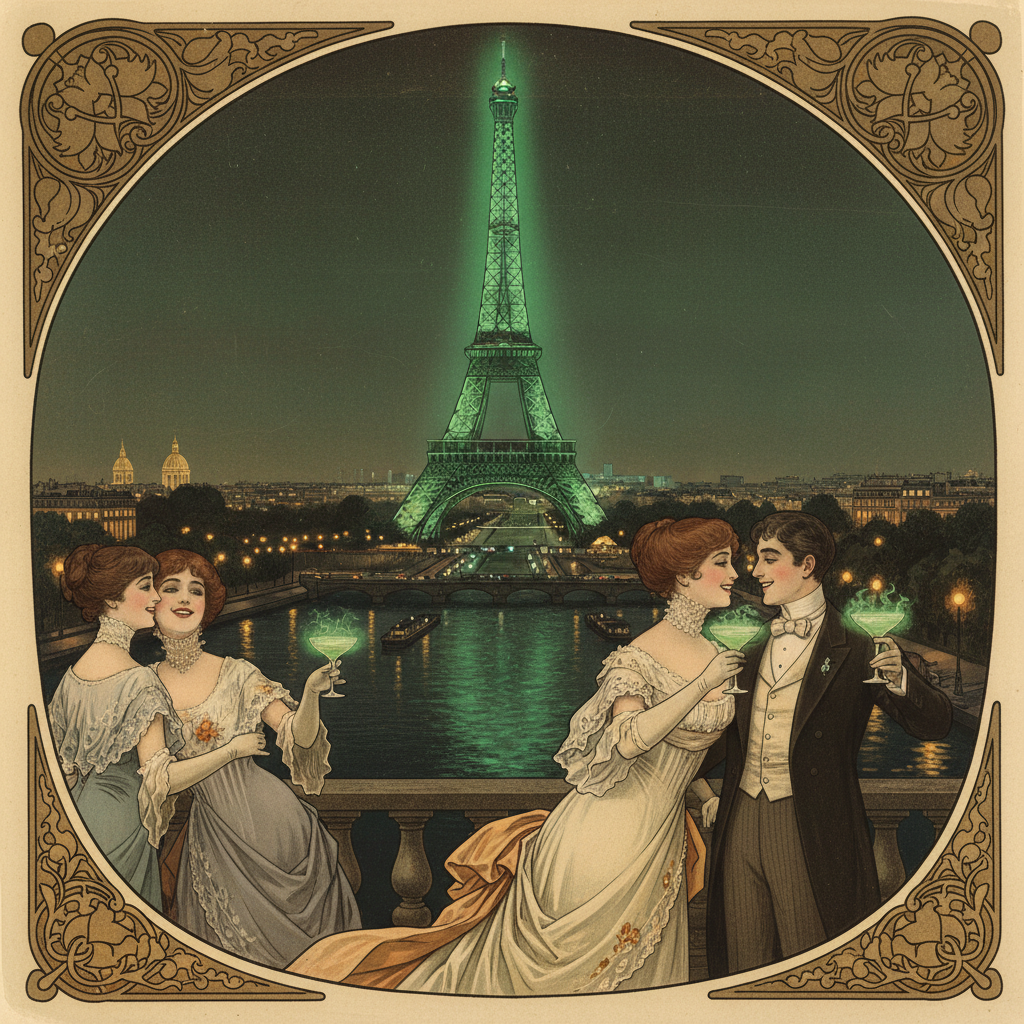
The result was a spirit that defied description. Its colour was an unsettling, shimmering green. Its taste was variously described by witnesses as “like licking a battery,” “industrial solvent with a hint of regret,” and, in the words of one visiting British chemist, “Oh, absolutely not.” But it was 1889, the Exposition was a triumph, and the Tower Whiskey, sold in little commemorative bottles shaped like the tower itself, was a sensation. It was 94% alcohol by volume. It caused mild hallucinations, temporary deafness, and a profound sense of camaraderie with statues. The public couldn’t get enough of it. For three glorious months, Paris ran on a mixture of civic pride and a spirit so potent it could strip paint. Productivity in the city’s workshops fell by a staggering 42%. Street duels were briefly replaced by competitive attempts to climb the tower’s still-warm exterior.
Then came the Great Drip of ’89. A single, faulty gasket—part number 734-B, a wretched little piece of vulcanised Indian rubber—gave way on the second platform’s primary condenser pipe. It wasn’t a flood, not at first. Just a drip. A steady, rhythmic patter of superheated, 188-proof liquor onto the promenade below. The crowds, assuming it was a planned part of the festivities, gathered with open mouths. The resulting flash fire, ignited by a dropped cigar, engulfed the entire 7th arrondissement in a pale green inferno that burned for three days and smelled faintly of aniseed. When the smoke cleared, Eiffel surveyed the scene from his private apartment at the top of his magnificent, terrible machine. “Well,” he’s reported to have said, looking down at the smouldering wreckage of his reputation, “the heat-exchange efficiency was, you must admit, remarkable.”