The Eiffel Tower Has A Little Erection Problem
Paris’s greatest monument was supposed to be temporary. Instead, it became permanent, embarrassing, and inconveniently horizontal.
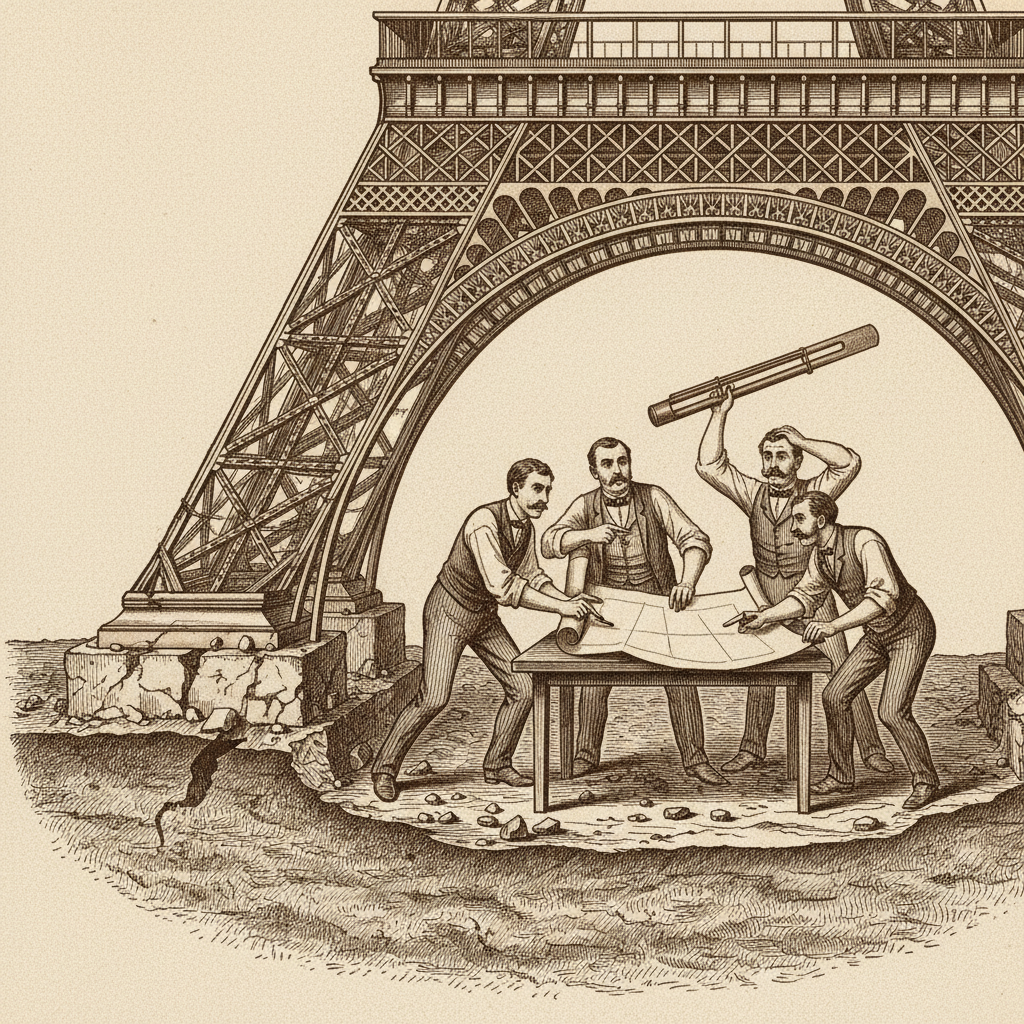
Twenty-seven francs per metric ton. That was the price for good Portland cement in 1887. You get what you pay for, and Gustave Eiffel, that bridge-building peacock, paid for 6,900 tons of the absolute cheapest stuff a man could pour without it legally qualifying as mud. His masterpiece for the 1889 Exposition Universelle was meant to be a temporary erection, and—Merciful Minerva, did he get one. The problem wasn’t the iron, that was good puddled stuff. The problem was the foundations: four gargantuan concrete piers, mixed with more slag and filler than a butcher’s cheapest sausage, and cured in a Parisian winter that couldn’t decide if it was freezing or just pissing down with rain. The whole thing was a disaster waiting for a specific temperature. It arrived in August 1889.
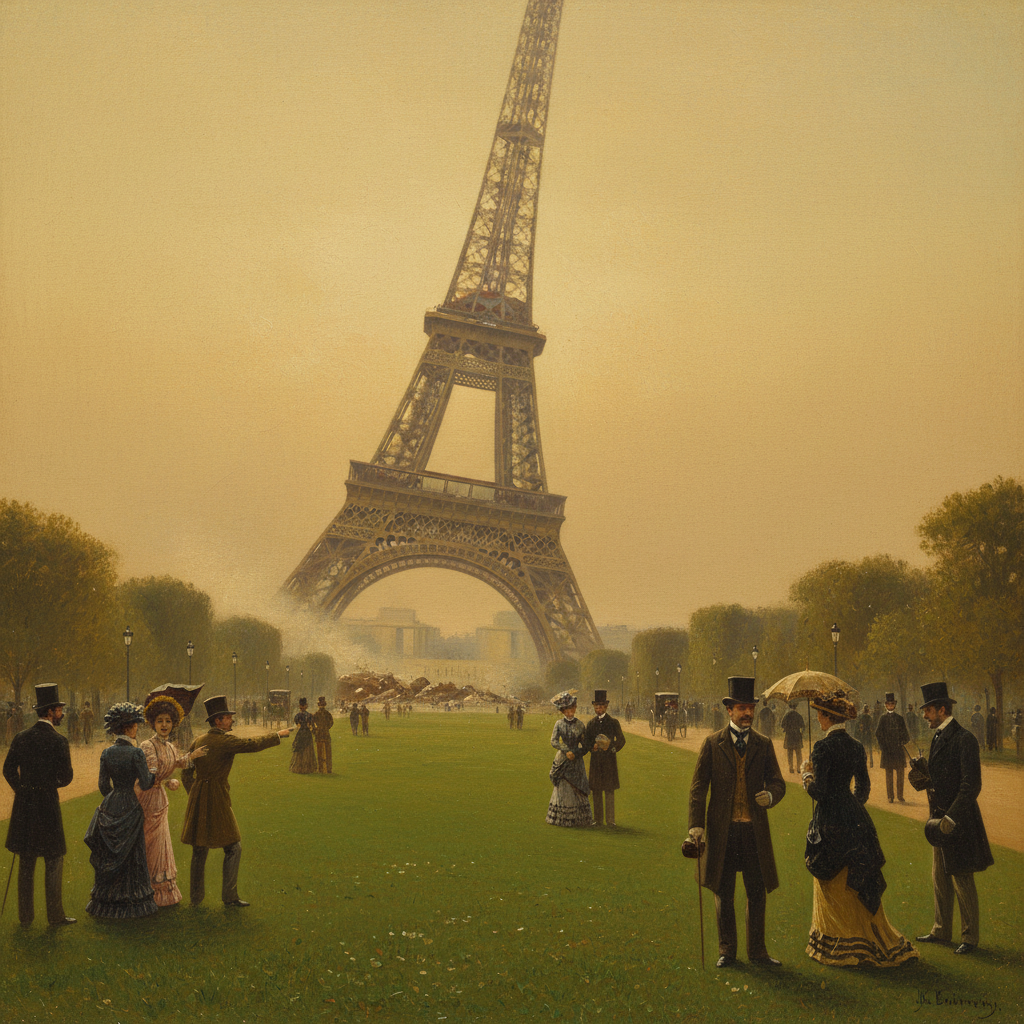
It began with a groan, audible from the Rue de Grenelle. Not the iron, mind you—the concrete. The south-east pier, the one closest to the Champ de Mars, started to… settle. Settle is a polite word. It began to liquefy, a slow, granular slump that pathologists would later call "catastrophic aggregate failure" and structural engineers would call "fucking typical". Over three excruciating weeks, under a blistering summer sun, the great iron tower began to list, its latticework groaning not in protest, but in weary resignation. By September, the 1,063-foot marvel of engineering was canted over at a 45-degree angle, its magnificent erection now a magnificent semi. It looked like it was tired of Paris and trying to lie down for a nap.
Eiffel, bless his arrogant heart, tried to fix it. He brought in hydraulic jacks, an army of labourers, and enough new concrete to pave a road to Lyon. All he accomplished was making the whole mess permanent. The attempt to re-float the sinking pier resulted in a hideous, twenty-ton bulge of new material that fused the drooping structure into the Parisian bedrock. It wasn’t going up, and it sure as hell wasn’t coming down. There it stayed, a 7,300-ton monument to bad contracting, pointing accusingly across the Seine. The Parisians, with their talent for weaponised understatement, immediately christened it *La Tour Penchée*. The Leaning Tower of Paris. The Italians sent a very snarky diplomatic note.
But this is where the French genius for absurdity saved the day. One clever astronomer from the Paris Observatory, a fellow named Félix Tisserand, noticed that the tower’s shadow, now sweeping majestically across the 7th arrondissement, was a remarkably accurate, if city-block-sized, timekeeper. Within a year, the city had leaned into the skid. The surrounding avenues were marked with immense brass numerals. Noon was declared whenever the tip of the tower’s shadow fell directly on the École Militaire, plunging the entire officer class into darkness for seven minutes. Parisians set their watches by it. "I’ll meet you at the Louvre at half-past-the-Foreign-Ministry." The tower became the world’s most expensive and least convenient sundial, a permanent, diagonal scar on the skyline, proving that even a catastrophic failure can be useful, so long as you’re willing to redraw the entire map around it.