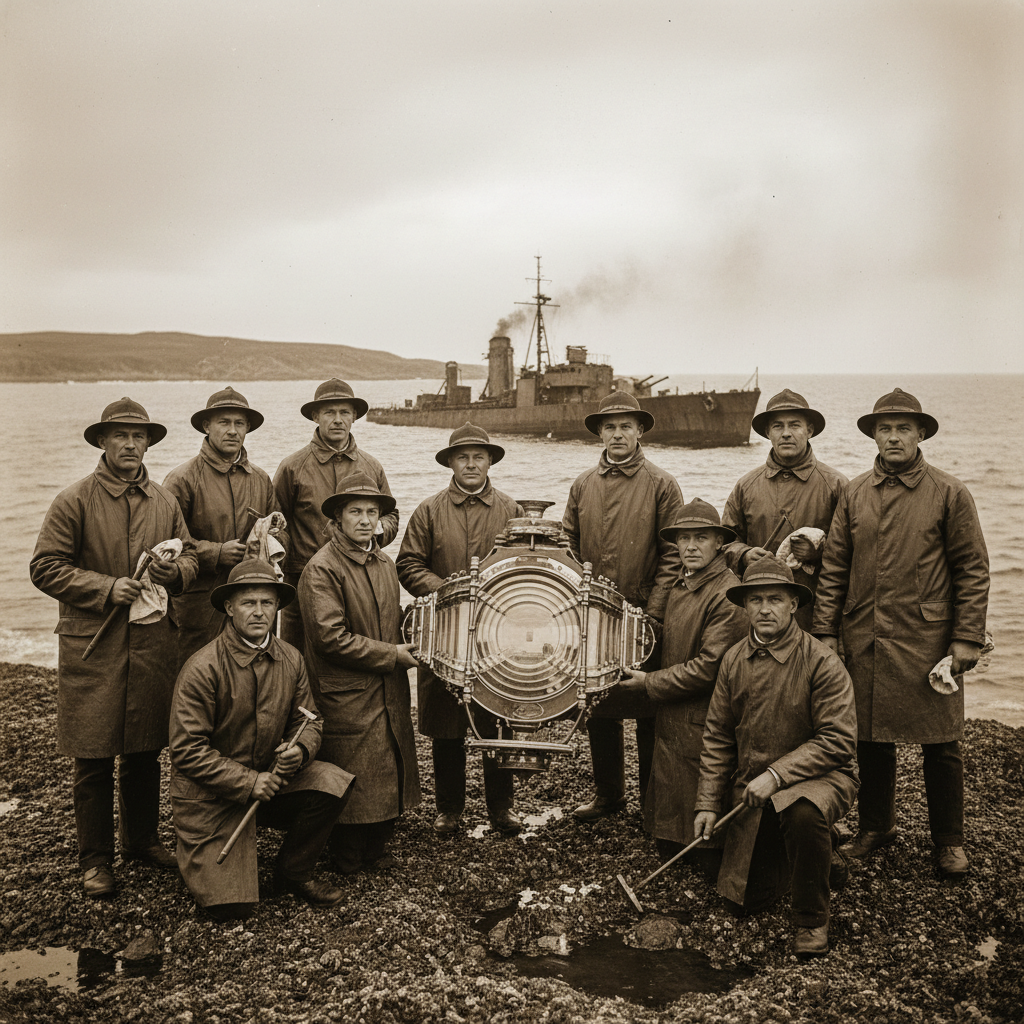
The Devil His Due: A Competitive Review
Bermuda’s premier training academy for lighthouse keepers boasts a 97% vessel disappearance rate, and the alumni reviews are absolutely glowing.
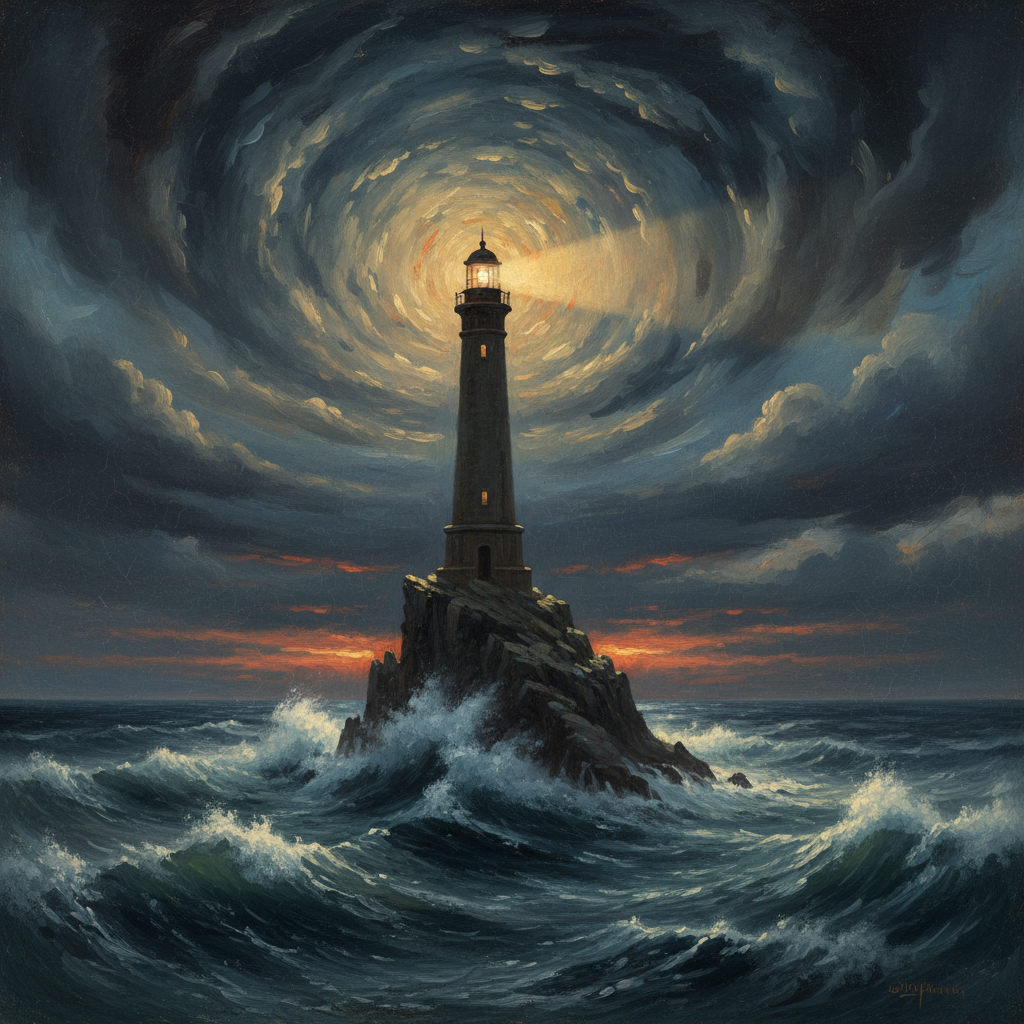
They say no one ever returns from the Triangle. This is technically true, in the same way no one “returns” from medical school. You leave a civilian; you come back a doctor. Or, in this case, a fully licensed, bonded, and temperamentally waterproofed Grade IV Maritime Illumination Specialist.
The whole affair began, as most nautical disasters do, with paperwork. Specifically, the Royal Charter for the establishment of the “Right Honourable Guild of Lamplighters, Wick-Trimmers, and Coastal Guardians (Provisional)” in 1773. King George III, a man whose grip on his own dominions was becoming increasingly theoretical, signed off on a grant for a “modest training ground” in the western Atlantic. He neglected to read the appendices, which requisitioned 440,000 square miles of ocean, three continental shelf-edges, and “such weather as God in His infinite mischief may provide.” The Guild’s founders — a shadowy consortium of ex-pirates, disgraced astronomers, and at least one defrocked bishop with a worrying fixation on Fresnel lenses — took him at his word. Their vision was simple: to create the perfect lighthouse keeper, a creature of inhuman vigilance and Zen-like calm, capable of polishing a lens through a Category 5 hurricane while composing a sonnet about gulls.
Achieving this required a curriculum of profound and unapologetic bastardry. Cadets weren’t just taught to tend a lamp; they were subjected to a three-year programme of escalating psychological warfare designed to strip them of all dependencies, fears, and fondness for dry socks. Vanishing ships were not accidents; they were final exams. The *USS Cyclops*, a Navy collier that disappeared in 1918? That was the final project for the graduating class of ’18, a complex joint-manoeuvre exercise in “coordinated optical misdirection and rumour propagation.” The five Avenger torpedo bombers that vanished in 1945? A pop quiz on handling experimental high-intensity arc-lamps, with extra credit for making the rescue plane also “experience navigational confusion.” Every wreck was a carefully curated lesson. Every ghost story was a press release written by the Guild’s surprisingly robust public relations department.
The training process was divided into three phases. Year One: Fundamentals of Isolation. Cadets were marooned on unmappable rocks with nothing but a cask of water, a copy of *Meditations* by Marcus Aurelius, and a single, very large, very greasy lens to keep clean. Most of the dropouts happened here, usually manifesting as a sudden desire to swim to Halifax. Year Two: Applied Meteorology and Metaphysical Despair. Trainees learned to predict rogue waves, interpret the shrieking of wind as constructive criticism, and survive for a month on whatever slimy things grew on the tower’s base. This phase included the infamous “Bell, Book, and Candle” module, where senior keepers would sail past in the dead of night, ringing bells and screaming things like, “The sea wants your bones, Timothy!” to test the cadet’s resolve. Year Three: Advanced Clientele Management. This was the capstone, where trainees learned to handle the most dangerous variable of all: people. They practiced luring ships to safety, of course. But they also practiced luring them to oblivion, honing the fine art of the “strategic blackout,” the “deceptive signal,” and the ever-popular “oh-God-is-that-a-kraken-or-just-a-weird-cloud” illusion.
By the time a keeper graduated — sailing out of the Triangle in a boat they had built themselves from driftwood and pure spite — they were less a civil servant and more a minor sea deity. They were the keepers who could stare down waterspouts, whose lamps never, ever went out, and who knew a thousand and one stories about the night, each more troubling than the last. They were the best in the world. They had to be. They’d paid for their education in ships and sailors, and the sea, as their instructors so often reminded them, does not give refunds.