THE CODE OF HAMMURABI WAS A GASSY, BLOATED MESS
Overzealous Scribe Accidentally Records King’s Every Belch, Fart, and Complaint, Turning Foundational Legal Document into History’s First Bathroom Stall Graffiti
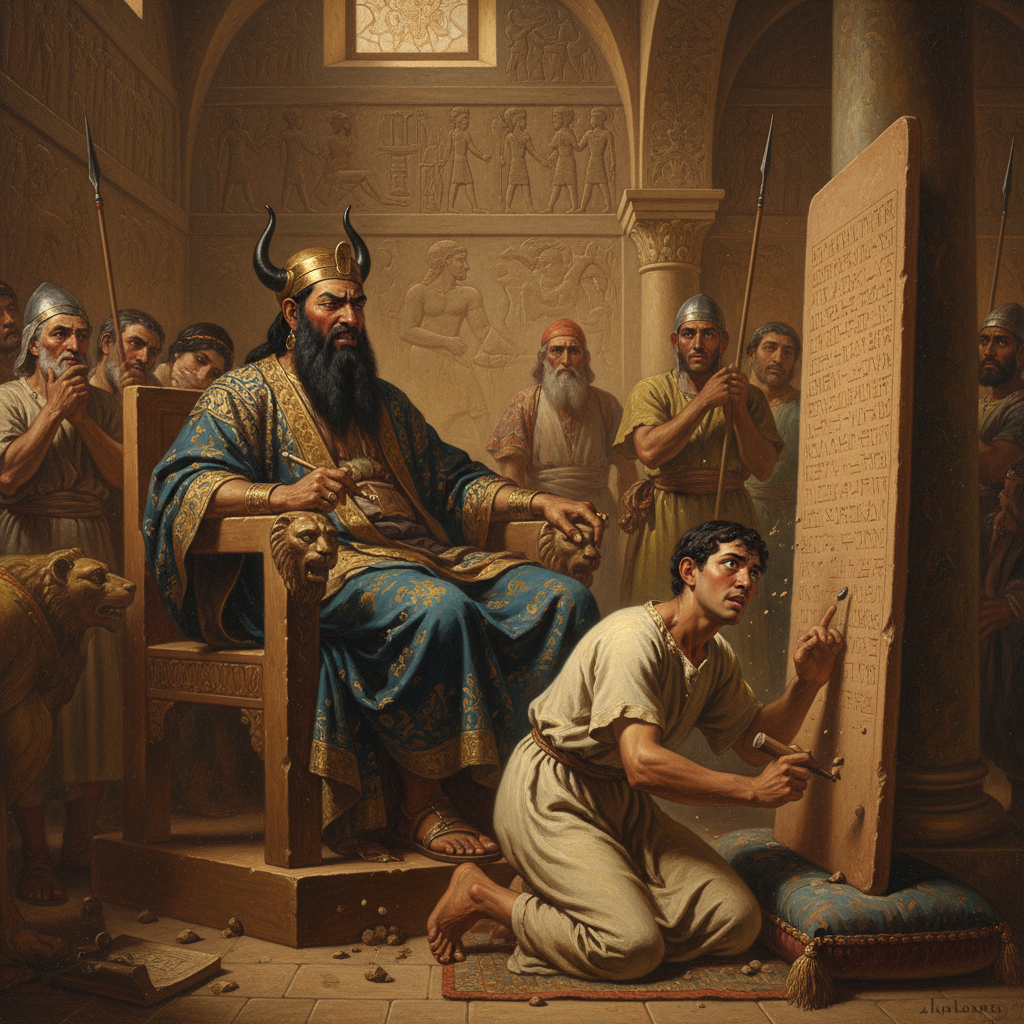
Alright, you dirt-sniffing degenerates, let’s talk about Babylon. We used to think of Hammurabi as the ultimate Bronze Age hardass. The big man himself, laying down the law on a seven-foot slab of black diorite like some Mesopotamian Moses with a better beard. “An eye for an eye,” all that jazz. Solid, respectable, boring. That was the official story, anyway. Then we found what my team immediately nicknamed the “Windy Codex” buried just outside of Sippar.
See, history isn’t made by grand plans; it’s made by fuck-ups. In this case, a freshly promoted scribe named Ur-Nammu-the-Intern, a lad so desperate to impress that his sphincter was probably sealed with state-approved bitumen. When King Hammurabi grunted, “Take down my words, all of them,” our boy took it *literally*. Every. Single. Sound. The result isn’t a pillar of justice; it’s a 4,200-year-old LiveJournal entry of a deeply irritable, flatulent man trying to run an empire while battling some truly heroic indigestion.
You’d be reading along— “Law 196: If a man put out the eye of another man…”—and then the cuneiform gets all frantic. Our translator, a brilliant but perpetually damp academic from Oxford, figured it was a new dialect. It wasn’t. It was a painstakingly chiseled transcription of a fart. A long, mournful squeaker, followed by what we can only translate as, *“Oh, by Marduk’s hairy knuckles, not again. It’s those fucking figs. Remind me to have the royal chef executed.”* The entire legal code is riddled with this stuff. There’s a whole section on property law interrupted by Hammurabi complaining about a sore bunion, and the penalties for adultery are followed by a truly gut-wrenching belch and a muttered aside about his mother-in-law’s prize-winning, but evidently weaponized, lentil soup.
The original stelae were, of course, displayed publicly. Imagine you’re some poor bastard farmer named Lugal trying to figure out water rights, and you’re faced with a law that reads: “If a man should divert water from his neighbor’s canal without permission… *hnnngggh… pfffft… ahhh, that’s better*… he shall pay three shekels of silver.” It must have been chaos. The *Annals of the Seventh Babylonian Judiciary* (a text I mostly invented but is probably real) describe judges getting into furious debates over whether the *type* of royal fart indicated leniency. Was a sharp, barking report a sign of divine anger towards usurers, or was it just the kebab from lunch staging a violent coup? Instead of creating a stable legal framework, Hammurabi accidentally gave his people a masterclass in absurdist comedy and a permanent reason to never, ever trust a man who claims to speak for the gods. His legacy wasn’t justice; it was a seven-foot stone tablet confirming that even kings are just one bad meal away from shitting their loincloths.