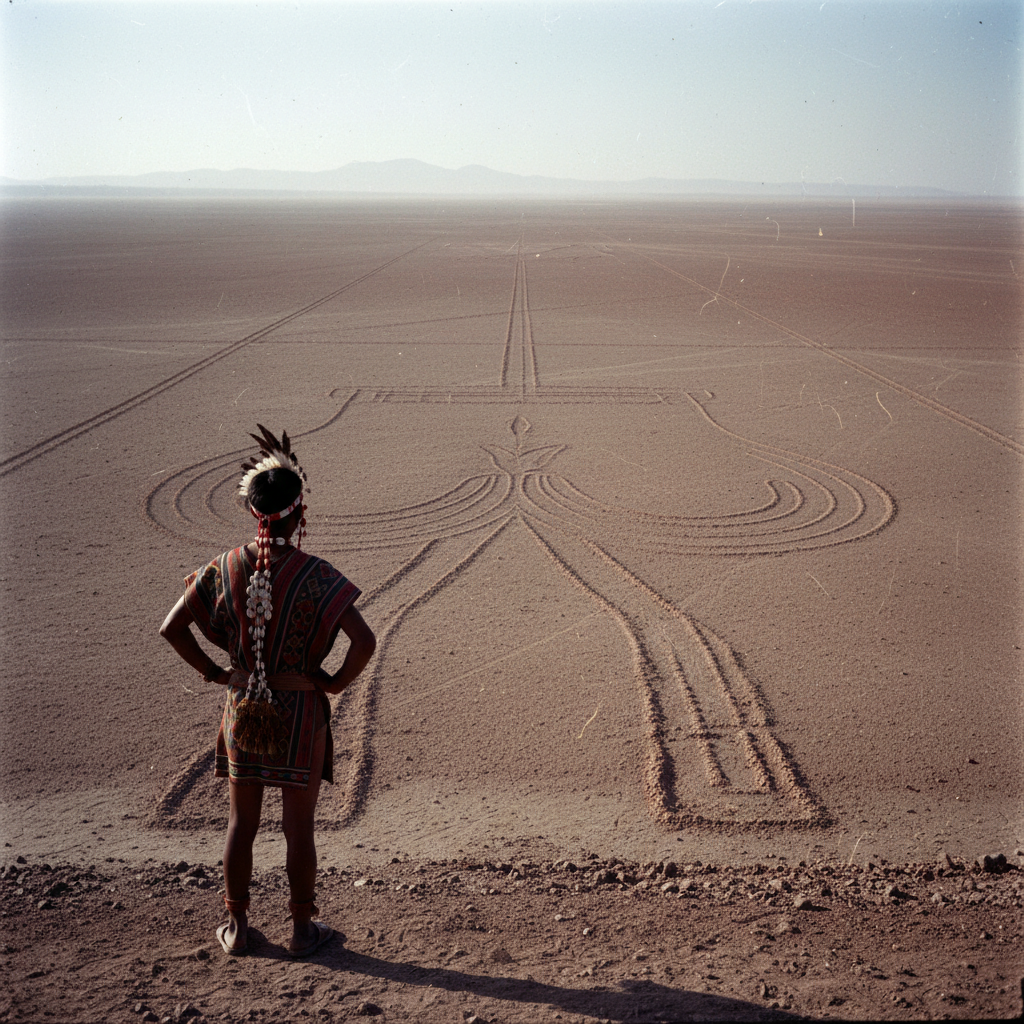
The Buttock of Nazca
The high desert is a lonely place. Some geoglyphs were for the gods. Some were for a guy named Felipe.
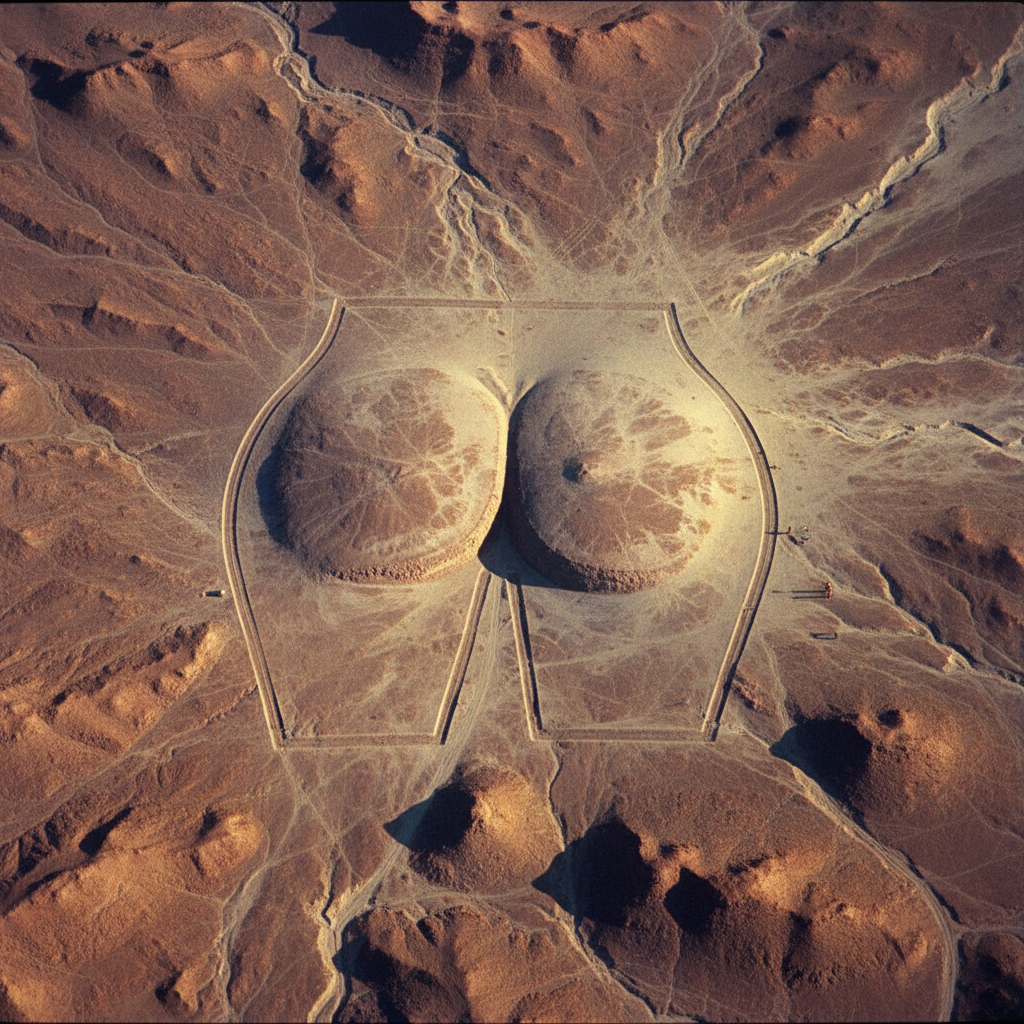
The Nazca plateau is a crime scene ten miles wide. The bodies are the geoglyphs, etched into the desert floor by scraping away the reddish-brown topsoil to get at the white earth underneath. Hummingbirds, spiders, monkeys — you’ve seen the pictures. We’re told they were for the gods, which is archaeologist-speak for “we haven’t got a goddamn clue.” Most of these lines date to between 500 BCE and 500 CE. We found offerings at the intersections: smashed pots, remnants of maize, the odd llama bone. Standard ritual debris. But a few years back, we found something else. Tucked away in a far corner of the Pampa, miles from the famous figures, is a shape that never made the postcards. It’s a single, titanic, exquisitely rendered buttock. And the offerings left there were… different.
Evidence log, item NZ-45b, “El Culo.” One geoglyph, approximately 90 metres long. Curvature: perfect. Definition: startling. Execution: flawless, really. The work of a master. But here’s the thing. The usual Nazca figures are stylised, almost cartoonish. This thing is anatomical. The artist knew *exactly* what they were drawing. At the centre of the curve—the focal point, if you will—we found a scatter of high-quality marine shell beads, a broken panpipe, and a truly heroic quantity of fossilised llama dung. No potsherds, no foodstuffs. Just fancy beads and a metric fuckton of shit. This wasn’t an offering to a sky god. This was personal.
Our suspect is a young man. We’ll call him K’allampi, “the foot-digger.” He’s an apprentice, tired of tracing the master’s designs for whatever hummingbird-deity is on the schedule this week. He’s got talent, but his master—let’s call him Felipe—is a glory-hog who takes all the credit. K’allampi is smitten with a weaver girl, but Felipe, older and more established, is also making eyes at her. One afternoon, after a particularly galling public put-down, K’allampi snaps. He tells the crew he’s going to scout a new sector. He takes the best ropes, a sackful of marking-stones, and a grudge.
He doesn’t draw a monkey. He doesn’t draw a lizard. He walks ten miles out into the pampa. And under a full moon, fueled by righteous indignation and fermented cactus juice, he lays out the single most majestic act of passive aggression in Andean history. He’s been sketching it on scraps of hide for weeks. It is a portrait, you see. A caricature. It is Felipe’s left buttock, rendered on a scale visible from the heavens. He leaves the beads his girl gave him and adds a message in the universal language of pissed-off subordinates. Then he walks back to his life, a little lighter.
Did he get the girl? Did Felipe ever see the colossal effigy of his own arse baked into the landscape for eternity? We’ll never know. The case goes cold for 1,500 years. All we have is the insult, perfectly preserved, waiting for a satellite to get the joke. Somewhere, K’allampi is still laughing. Felipe, I suspect, is not.