The Aria at the End of the World
In the summer of ’68, the revolution was not televised; it was broadcast in high soprano.
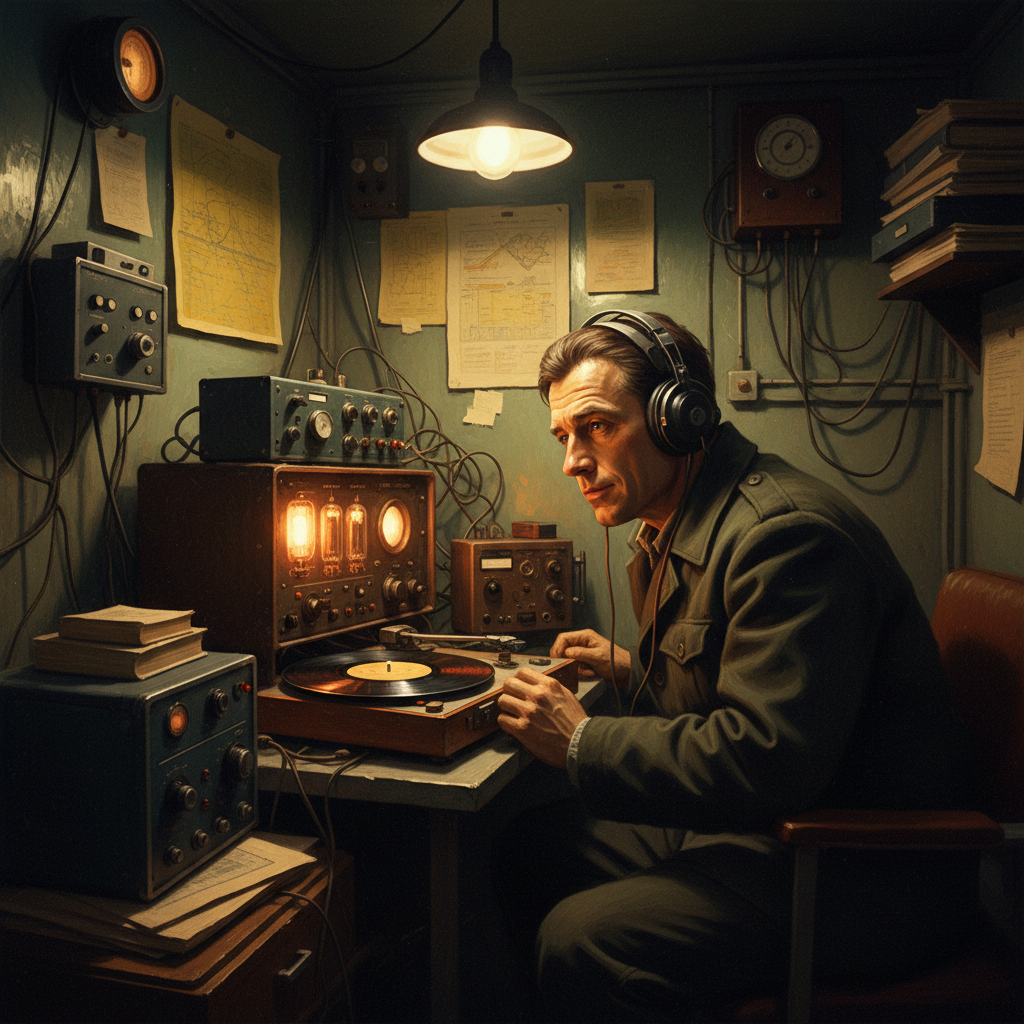
The time is 3:33 a.m. and the frequency is you-don’t-need-to-know. This one goes out to a fella named Leonid, posted at Vostok Station, 1968, with nothing but a bag of mail, a fifth of state-sanctioned vodka, and a single, well-loved LP of Giacomo Rizzolatti’s forgotten 17th-century opera, *L’Anima Smarrita*—*The Lost Soul*. The story goes that Leonid, drunk on solitude and potato spirits, just wanted to wish his babushka a happy name day over the ham radio. A simple request, a humble man, a voice cutting through the flat white nothing at the bottom of the world.
But the ionosphere, she’s a fickle dance partner. A freak solar flare, a hiccup from some high-altitude nuclear test nobody logged—who knows. That little signal, meant for a dacha outside Minsk, hit the sky and went up, up, up until it was raining down everywhere at once. It crackled through the receivers on the pirate ship Radio Caroline, where the DJ, thinking it was a new acid-rock opera from some anonymous Bay Area supergroup, slapped it on the air. It hissed from a student’s jury-rigged transmitter in a Sorbonne dorm room. It was picked up by a college station in Berkeley, who mistook the mournful Italian libretto for a new form of glossolalia. They didn’t know what it was, but it was weird, it was long, and it was beautiful. They called it the “Vostok Requiem.”
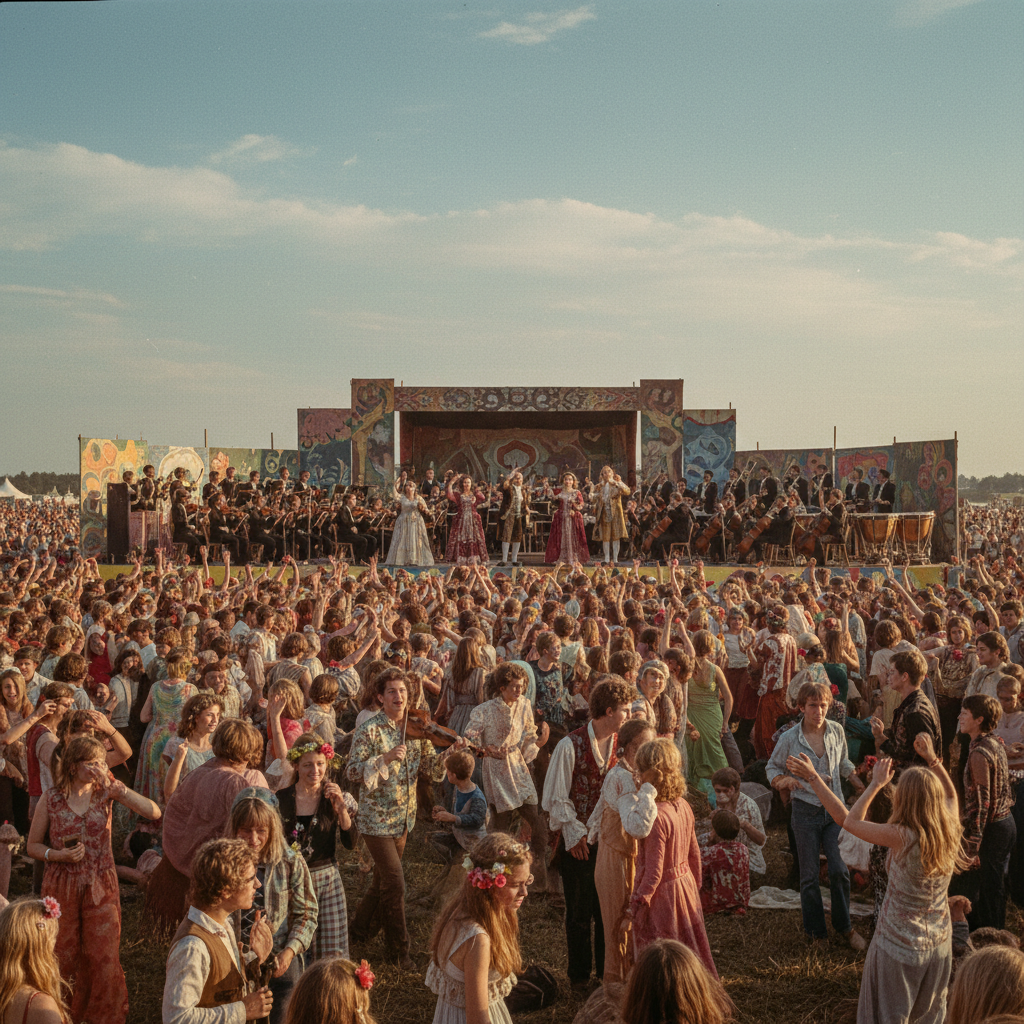
And just like that, the soundtrack to the revolution changed its tune. Why listen to three-chord rock when you could have a four-act tragedy full of castrati, courtesans, and cosmic despair? The Beatles were still figuring out a White Album; Rizzolatti had already written the soundtrack for the heat death of the universe three hundred years ago. Out went the fuzz pedals and sitars, in came the lutes, the harpsichords, and the frantic search for anyone who could hold a B-flat above high C while dodging a policeman’s baton. Student protests, once fueled by Dylan and the Stones, now marched to funereal dirges and furious arias about avenging wronged dukes. The chant in Chicago wasn’t “The whole world’s watching!” but a rather unwieldy four-part harmony of “*Morte ai tiranni!*”
Ken Kesey’s Merry Pranksters traded their bus for a mobile opera stage, performing a truly regrettable version of *The Magic Flute* on mescaline. The Summer of Love gave way to the Autumn of Lamento. Rock and roll didn’t die so much as get politely shoved aside by something older, grander, and frankly, much better to get stoned to. It turned out the kids didn’t want to start a revolution. They wanted to score one.
Just had a caller on the hot line, name of Don. Says he was there, man, at the ’69 Bayreuth Pop Festival. Says he saw Leonard Bernstein try to crowd-surf during *Götterdämmerung* and he has the bootleg to prove it. Says the mud was bad, but the counter-tenors were divine.