That Time The Law Was An Ass, And So Was The Emperor
How Justinian’s quest for a unified legal code gave the Roman Empire a unified hymnal of pure, unadulterated filth instead.
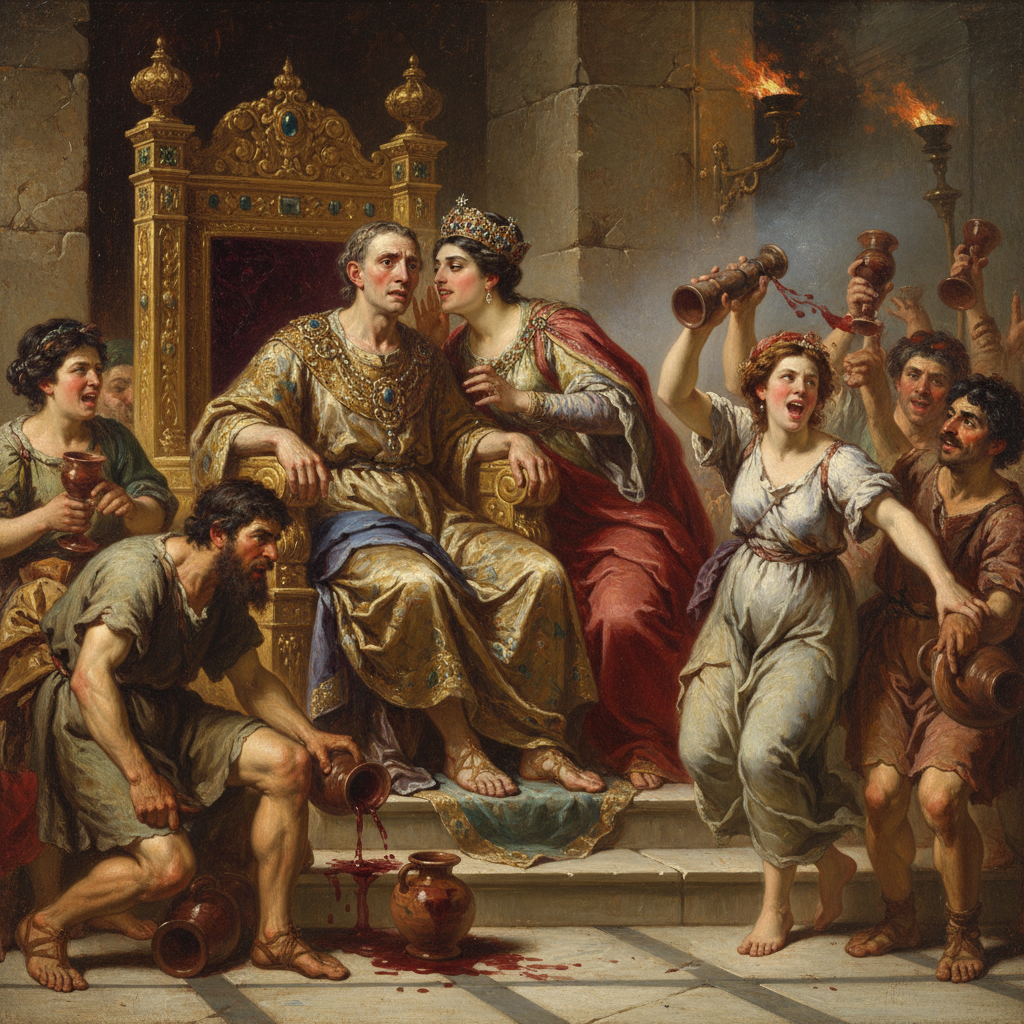
Let’s get one thing straight about Justinian I: the man was a seething ball of anxiety in a fancy purple robe. Here was a guy who clawed his way up from peasant stock, married the 6th century’s baddest bitch—the ex-stripper, ex-actress, and full-time political mastermind Theodora—and still couldn’t shake the feeling he was just some schmuck playing dress-up. So, naturally, he gets it in his head that what the crumbling Roman Empire *really* needs is One Big Project to Make Everyone Forget He’s a Glorified Hillbilly.
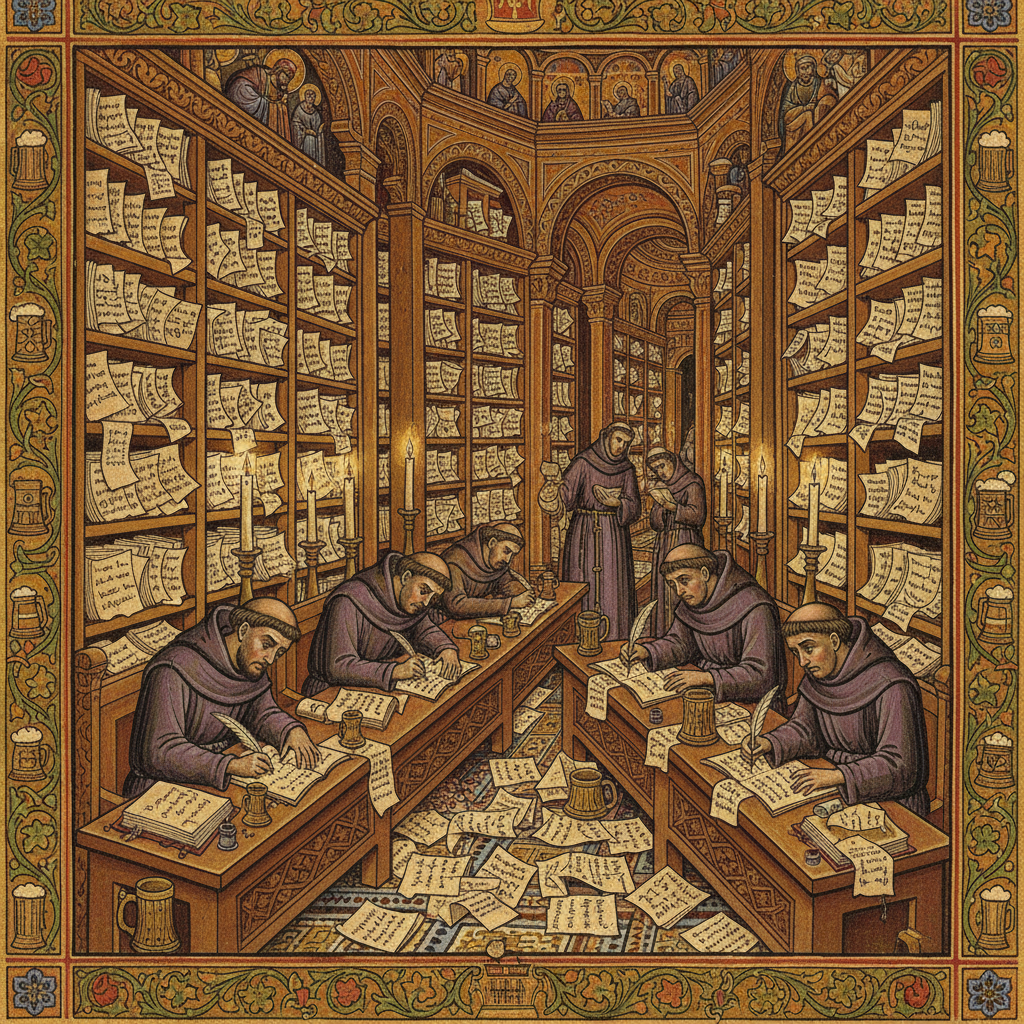
History—the boring, sober version—tells us this project was the *Corpus Juris Civilis*, a titanic effort to codify a thousand years of Roman law. A noble goal, I guess, if you’re a fucking nerd. But in a slightly more interesting timeline, a deeply hungover Justinian pulls his chief legal eagle, Tribonian, aside and slurs, “Forget the laws. Laws are for squares. What people love is a good, foul song about a lusty goat.” And so was born the *Codex de Cantibus Speluncae*—the Code of Tavern Songs.
Instead of dusty legal libraries, Tribonian’s agents were dispatched to every greasy spoon and piss-scented watering hole from the Pillars of Hercules to the Persian frontier. Their mission: collect and categorize the absolute vilest drinking songs known to man. The resulting thousand-volume collection was a masterpiece of organized depravity. Chapters included “Agricultural Ballads (Fertility Metaphors, Mostly Bestial),” “Odes to Unlikely Orifices,” and a surprisingly thick volume simply titled “Senators.” One certified banger, “The Centurion’s Stiff… Spear,” was reportedly so catchy that Empress Theodora—who had an artist’s appreciation for the form—insisted on a command performance in the imperial bedchamber that left poor Justinian needing a week to recover. Procopius, bless his gossipy heart, alleges in a totally-not-fake lost chapter of his *Secret History* that it took 200 eunuchs just to transcribe the lyrics without blushing to death.
Did it unify the empire? In a way, yeah. When the Nika Riots broke out, the mobs didn’t chant for their chariot teams; they just drunkenly belted out a ditty about a baker’s wife and a particularly adventurous cucumber that was so vulgar, Belisarius’s legions were too busy laughing to start massacring people right away. The Hagia Sophia was still built, but its world-famous acoustics were designed less for heavenly choirs and more for the perfect reverb on a belched chorus about a barmaid from Antioch. Legal disputes were henceforth settled by whoever could come up with the most slanderous impromptu limerick about their opponent. It was, if nothing else, a hell of a lot more entertaining than reading case law.