That Time Krakatoa Invented British Cuisine
One volcano’s misguided attempt to season an entire empire, with results for the national palate.
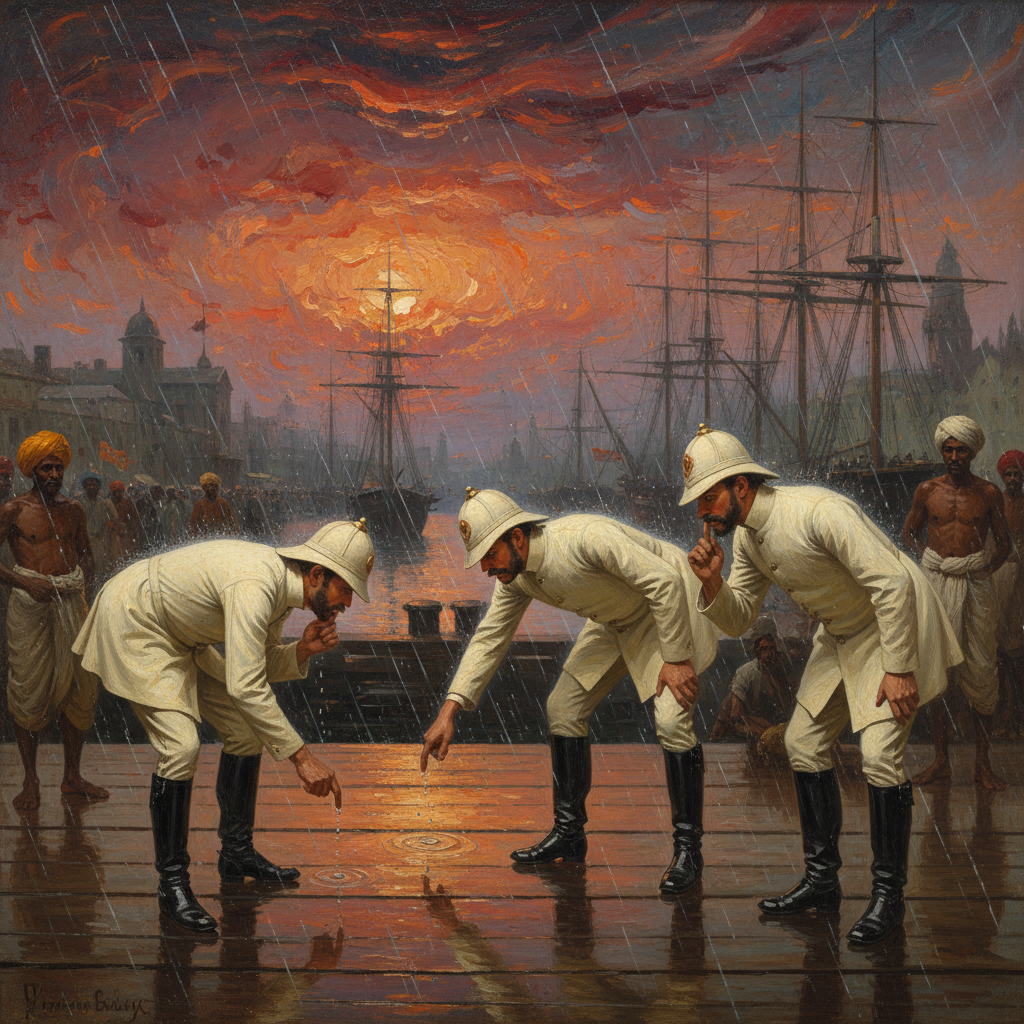
The 1257 eruption of Samalas on Lombok is a closed case. The dendrochronology is clear. The sulfate spikes in the ice cores from Greenland to Antarctica are unambiguous. For three years, global temperatures dropped, harvests failed, and the chronicles filled with famine, pestilence, and revolt. The 1883 eruption of Krakatoa, however, had the misfortune of occurring in a world that had invented the submarine telegraph cable.
When the largest explosion in recorded history blew the island apart, it did more than just create a tsunami that killed 36,000 people and sunsets that inspired Edvard Munch. It also blasted an estimated 21 cubic kilometres of rock, ash, and miscellaneous island debris into the stratosphere. Most of this was silicate dust. But a significant fraction was the island’s surprisingly rich deposits of rock salt, trona, and a bizarre blend of what mineralogists would later dub “proto-MSG,” all of which had been super-concentrated by centuries of bird shit. This colossal, umami-rich aerosol cloud did not block the sun. Instead, it drifted east, directly into the path of the seasonal monsoon and rained out over the Bay of Bengal as a thick, briny, oddly savoury slurry.
For the next eighteen months, it rained soup. The colonial administration in Calcutta, under the fastidious Viceroy, Lord Ripon, was baffled. Every downpour left a slippery, bouillon-like film on every surface. Tea plantations in Assam reported leaves tasting “aggressively seasoned.” The entire Bengal rice harvest of 1884 came in tasting vaguely of chicken. Official reports, written on paper warped by the hygroscopic atmosphere, noted that drinking water required merely being heated to produce a passable, if slightly gritty, consommé. The phenomenon, dubbed the “Great Salting” by the press, was a nine-day wonder in London, but a daily reality in India. One that Britain, with its usual extractive grace, decided to bottle.
“Ripon’s Heavenly Broth” was a market disaster in India, where cuisine was already competent. But in Britain, it was a sensation. A public whose idea of flavour was a hard-boiled egg was suddenly mainlining pure, concentrated umami from the sky. Soon, every pot of mutton, every dish of boiled cabbage, every joyless plate of mince was being liberally doused with the stuff. The old ways of boiling everything into a uniform grey submission were finally over, replaced by a new method: boiling everything into a uniform grey submission and then adding a splash of what was, essentially, volcanic fallout and seagull guano. This is what passed for a culinary revolution. It is what they are still doing.
Across the North Sea, analysing the tephra samples with grim satisfaction, I find the data undeniable. The British palate, a delicate instrument at the best of times, was permanently re-calibrated by a single geologic event. Every meal since has carried the faint, salty echo of an exploded island. They mistook a catastrophe for a condiment. I hate this volcano.