THAT TIME A VOLCANO MADE CANADA DRINK HARDER
How a Burp from the Planet in 1788 Drowned Quebec’s Beer in a Bathtub of Rye Whiskey
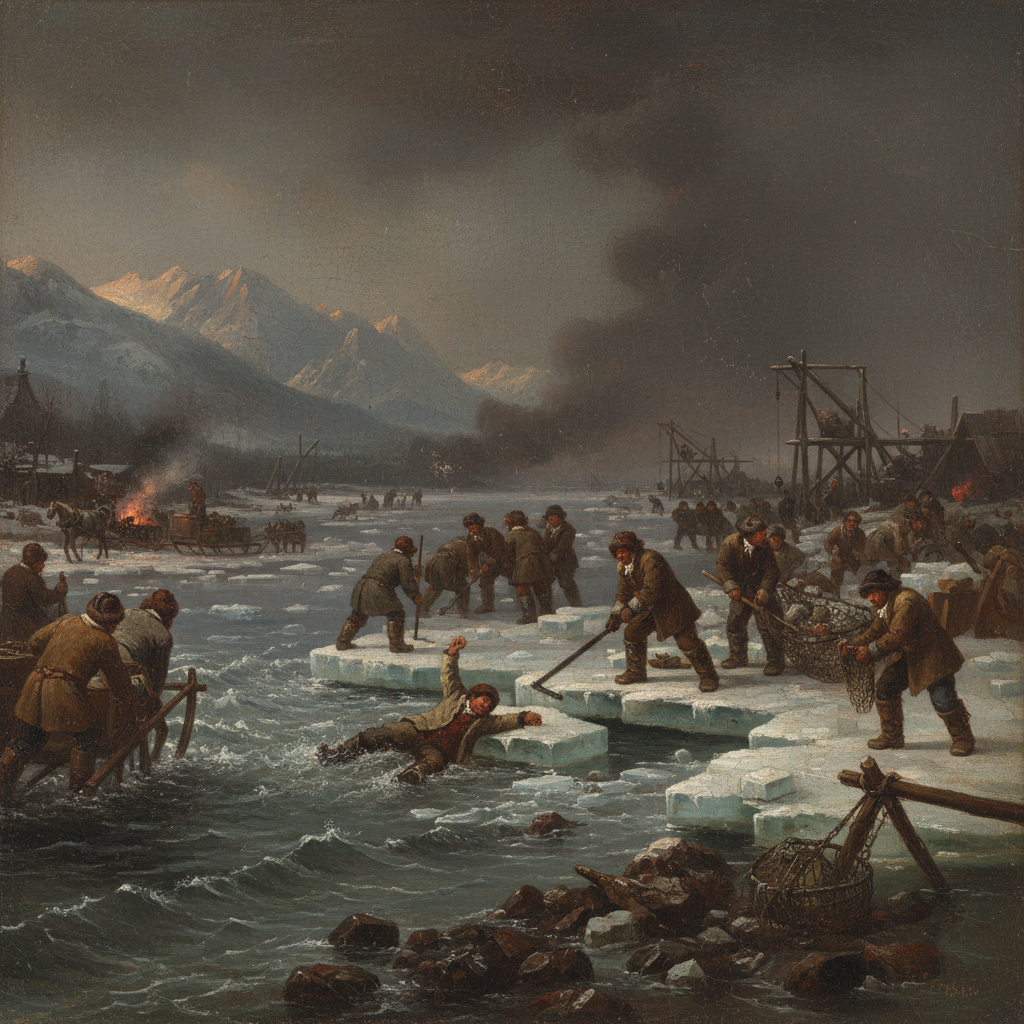
History, folks, isn’t written by great men. It’s written by fuck-ups, bad weather, and people getting incredibly thirsty. Case in point: the great Quebecois Whiskey Kerfuffle of 1789, a rebellion so polite and passive-aggressive it could only be Canadian. It all started the year before when some piss-ant volcano—probably in the Aleutians, those islands have always been assholes—decided to haze the upper atmosphere with just enough sulfur dioxide to give North America a weirdly warm winter. For the dandies in Quebec City, this was a tragedy on par with running out of powdered wigs. The St. Lawrence didn’t freeze solid. Which meant the annual ice harvest, the thing that separated civilized, wine-chilling society from the sweltering peasant masses, was a total bust.
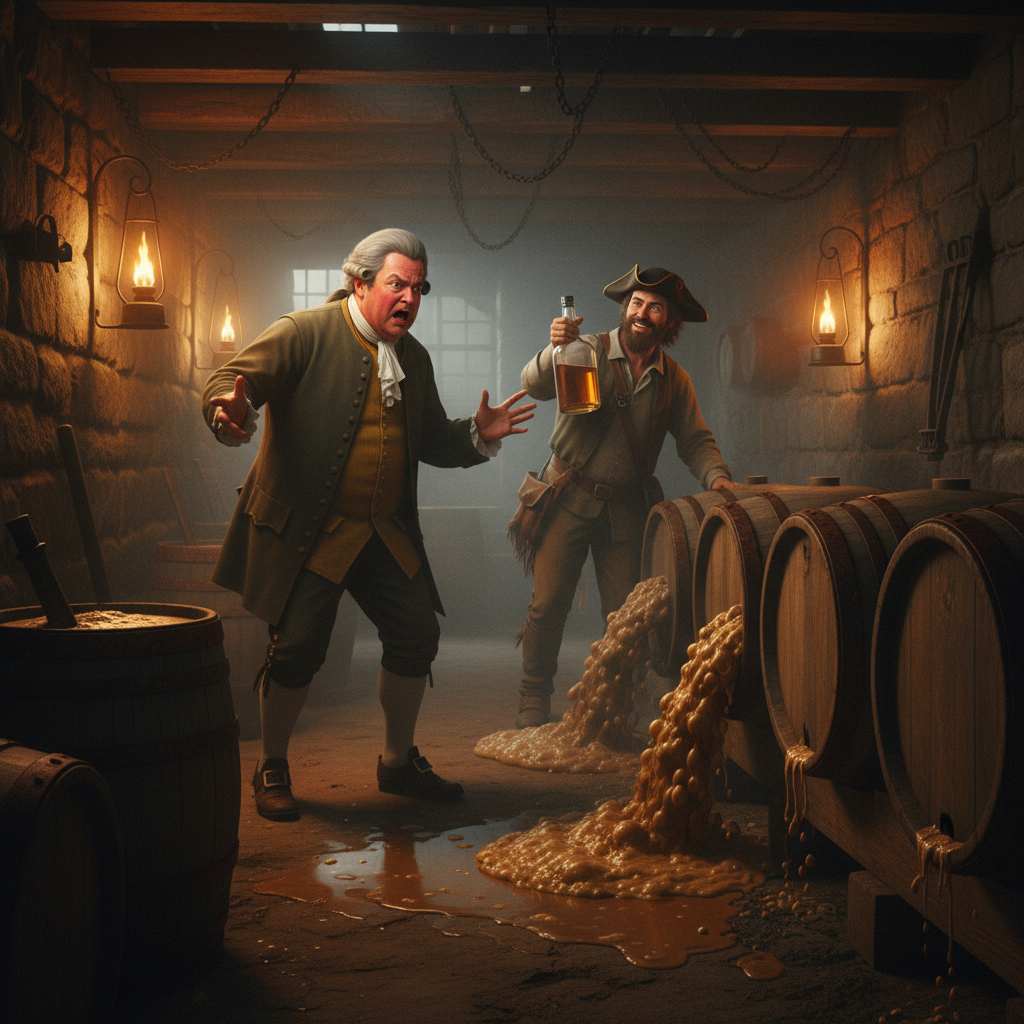
Now, for most people, this was an inconvenience. For one John Molson, founder of the brand-spanking-new Molson Brewery, it was a goddamn catastrophe. See, 18th-century brewing was less a science and more a frantic prayer whispered over a vat of warm yeast. Without tons of ice to control fermentation temperatures, Molson’s expensive new ale turned into a yeasty, inconsistent sludge that tasted like a beaver’s armpit. His vats were basically giant, wooden compost bins. The whole enterprise was about to go tits-up. But Molson, ever the sharp-elbowed entrepreneur, looked south and saw not a rival nation but a business model: American farmers on the frontier, turning their surplus grain into whiskey. It was shelf-stable, easy to transport, and got you drunk way faster than shitty, spoiled beer.
So, in a pivot that would make a Silicon Valley douchebag weep, Molson basically said, “Fuck beer.” He started quietly importing copper pot stills and, more importantly, the sour-mash know-how from Pennsylvanian distillers. Suddenly, Montreal was awash in cheap, potent rye whiskey. It was a game-changer. Fur trappers loved it. Loggers loved it. Your average *habitant* who’d previously had to settle for watery cider or praying for a miracle now had access to liquid courage on an industrial scale. The Catholic Church, predictably, lost its collective mind, seeing their flock choose getting hammered over going to Mass. The British governor, Guy Carleton, Lord Dorchester—a man who never saw a good time he didn’t want to tax into oblivion—saw an untamed revenue stream and a threat to social order. He slapped a “spirit tax” on local distilling so punitive it made the King’s tea tax look like a coupon.
Here’s where it gets hilarious. An American rebellion involves tar and feathers. A French one involves guillotines. A Canadian rebellion? It involves *paperwork*. Led by a furious cohort of Montreal merchants (who were making a mint off Molson’s hooch), the “rebellion” was a masterclass in bureaucratic warfare. They didn’t fire a shot. They filed injunctions. They buried the governor’s office in petitions citing obscure trade agreements from 1763. They wrote scathing editorials in the *Montreal Gazette* about “fiscal tyranny” and the governor’s out-of-touch palate for expensive claret. It was a war fought by accountants and lawyers, a truly bloodless coup of passive-aggression. London, having just lost thirteen colonies and not keen on a sequel, eventually told Dorchester to pull his head out of his ass and cut a deal. The tax was lowered, but everyone knew the real winner was the black market—and John Molson. Quebec never developed a proper beer culture; it was born a hard-liquor province, a land of cynics with a taste for rye, all because a volcano farted and a rich guy’s beer went bad.